Column: Supply hits galvanize zinc as expected surplus fails to show
(The opinions expressed here are those of Andy Home, a columnist for Reuters.)
What’s up with zinc?
London Metal Exchange (LME) three-month zinc hit a near four-year high of $3,633.50 per metric ton last week and is up by 13% since the start of the year.
The price strength is surprising.
Reuters‘ January poll of analysts generated a mean average price forecast of $3,041.50 per ton for the second quarter. The most bullish call from 25 participants was for zinc to average $3,318 per ton.
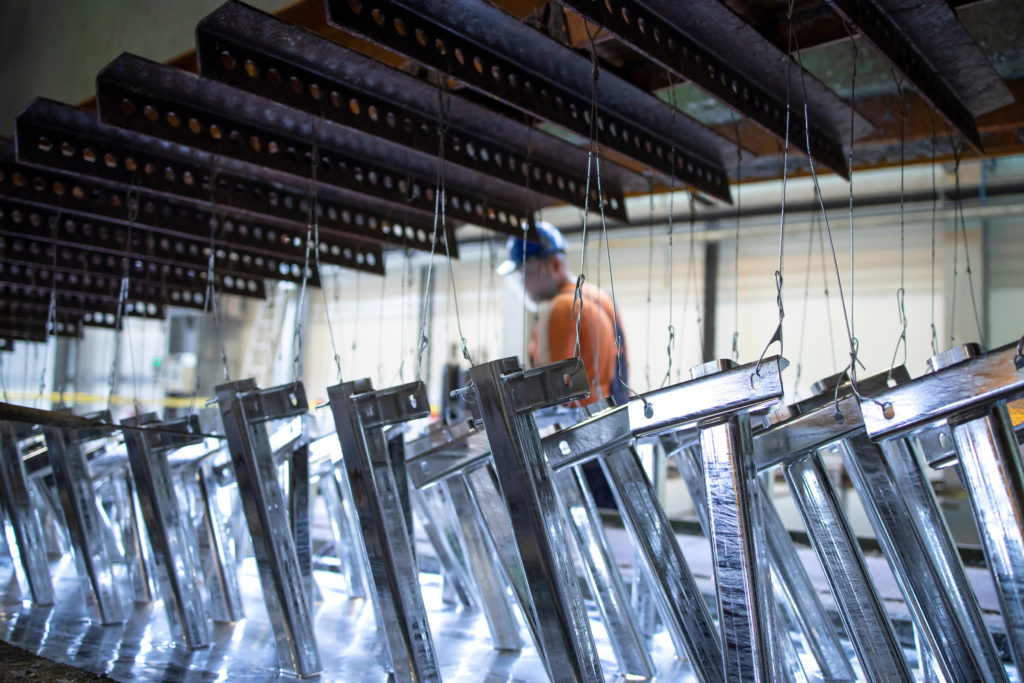
Demand is sluggish. Construction accounts for more than half of global zinc usage in the form of galvanized steel. China’s long-running property bust is a major headwind.
The zinc market was expected to be in a comfortable supply surplus this year.
But the recent price action suggests otherwise.
So too does the International Lead and Zinc Study Group (ILZSG), which came out with some major revisions to its forecasts at its twice-yearly meet in April.
Smelter hits
The trigger for the latest leg in what has become a one-year price rally was a double supply hit.
Glencore’s Kazzinc smelter in Kazakhstan suffered a fatal blast on May 5 and is now operating at reduced capacity. Two weeks later, Nexa Resources announced it had suspended operations at its Cajamarquilla plant in Peru after a fire.
Between them, these two processing plants account for around 600,000 tons of annual zinc metal production capacity.
The price sensitivity to the news highlights the reasons behind zinc’s continued surprising out-performance.
Western bottleneck
While the long-awaited recovery in mine supply has arrived, it has only partially flowed through to the refined zinc market.
Global mined zinc production surged by 4.8% year-on-year in 2025 after three consecutive years of contraction, according to ILZSG.
But global refined zinc production grew by only 1.7% year-on-year. Moreover, all of that growth was down to China, where smelters lifted output by 6.7%.
Western metal production contracted thanks to a combination of closures, operational problems and voluntary reductions in the face of low treatment charges, a core revenue generator for smelters.
The mismatch in processing performance has left the zinc landscape split between a well-supplied Chinese market and persistent tightness in the rest of the world.
Against this backdrop, reduced output at two of the West’s largest smelters is a pretty big deal.

Disappearing surplus
Especially since the Western zinc market is running low on inventory.
LME stocks, registered and off-warrant, recovered from under 50,000 tons in October to 144,000 at the end of 2025. But since then, the rebound has lost momentum.
Combined LME inventory stands at 156,000 tons, up by just 21,125 tons since the start of the year and low by comparison with the 2024 peak of almost 400,000 tons.
The Western smelter bottleneck has both kept a cap on LME inventory and stymied the expected transition to global supply surplus.
When ILZSG met in October last year, it forecast a global supply surplus of 85,000 tons in 2025 and a larger 271,000-ton excess this year.
The group’s latest assessment suggests the world recorded a small deficit last year and it’s predicting another 19,000-ton shortfall this year.
Chinese self-sufficiency
ILZSG expects the mismatch in production growth to continue this year. Chinese refined metal output is expected to increase by 3.0% in 2026 thanks to the commissioning of yet more smelter capacity.
But global output will grow by a more modest 1.4%, implying the West’s smelter problems are expected to persist. It’s worth noting these forecasts were made before this month’s accidents in Kazakhstan and Peru.
The divergent trends in metal production growth will lead to China reaching a state of self-sufficiency at the refined metal stage of the zinc supply chain, a tipping point that could come as early as this year, according to analysts at Citi.
China has historically imported metal to fill the gap between domestic production and demand but the country’s import appetite is waning.
Inbound volumes contracted by a third to 300,000 tons in 2025 and slumped another 57% year-on-year in January-March.
Indeed, China briefly turned net exporter of refined metal in the fourth quarter of last year as the London market was gripped by a ferocious squeeze, opening up a profitable arbitrage window.
Outbound shipments have since been minimal at 10,600 tons over the first quarter, the country reverting to modest net importer.
Further export bursts are quite possible, if the price is right.
While LME stocks have flat-lined this year, those registered with the Shanghai Futures Exchange have nearly doubled to 146,766 tons.
China is clearly not short of metal. But the Western market is much more finely balanced.
You don’t have to take my word for it. The current elevated price is saying the same thing.
(Editing by Marguerita Choy)
More News

Chile’s Novandino Litio seeks environmental approval for $3B Atacama lithium project
July 03, 2026 | 11:29 am
LME approves Adani’s major copper smelter in India as listed brand
July 03, 2026 | 09:33 am
{{ commodity.name }}
{{ post.title }}
{{ post.date }}
Comments