Column: US aluminum smelters vie with Big Tech for scarce power
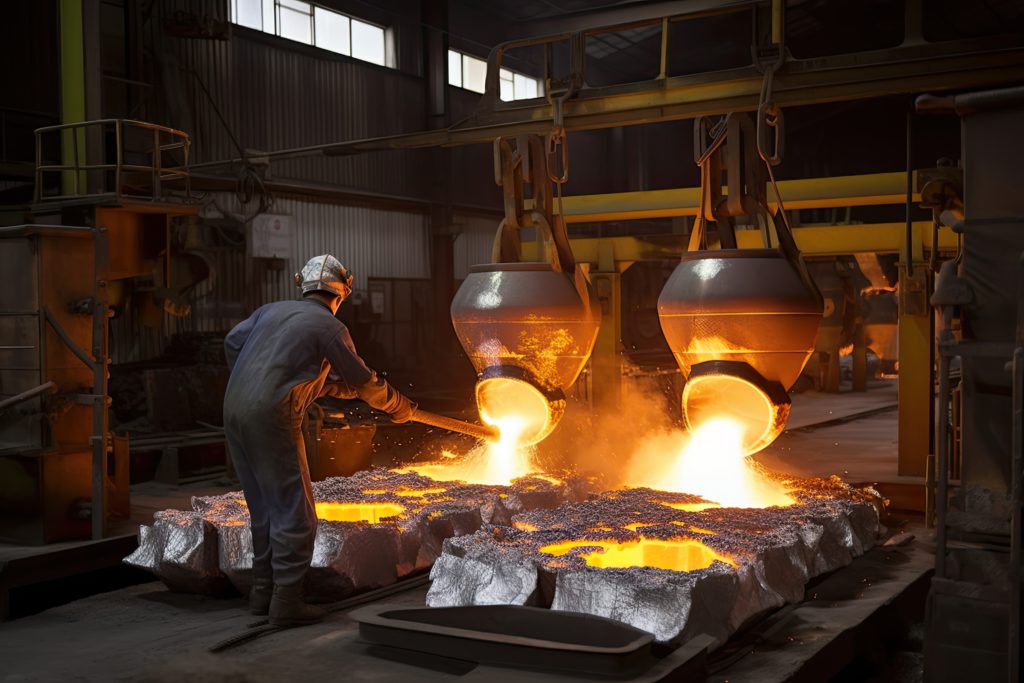
It’s forty-five years since anyone built a primary aluminum smelter in the United States.
When Alumax fired up the Mt Holly plant in South Carolina in 1980, the country’s tally of smelters rose to 33 with combined annual capacity of almost five million metric tons of aluminum.
Today that number has shrunk to six. Two are fully curtailed. Two, including Mt Holly, are running below capacity. Annual production has shrunk to 700,000 tons.
Emirates Global Aluminium hopes to reverse the tide with a new plant in Oklahoma. It joins Century Aluminum, which was awarded federal funding by the Joe Biden administration for a new “green” low-carbon smelter somewhere in the Ohio/Mississippi River Basins.
Both projects face the same dilemma. High power prices killed off most of the country’s smelters and a lack of competitively priced power has deterred anyone from building one since the last century.
It doesn’t help that any smelter project must compete for electricity with tech companies willing to pay almost anything for their power-hungry data centres.
No power, no metal
Aluminum compounds have been around since ancient times, used by the Egyptians as a dye-fixer and the Persians for pottery.
But it wasn’t until the early 19th century that anyone worked out how to refine bauxite into metal and even then it remained something of an expensive curiosity. Global production was just two tons in 1869 and aluminum was more valuable than gold.
The solution, discovered independently by Charles Martin Hall in the United States and Paul Héroult in France, was to use electrolysis on an intermediate product called alumina.
The Hall-Héroult process is still the dominant technology in producing a metal that is now ubiquitous in buildings, vehicles and consumer packaging. And it needs a lot of uninterrupted power.
It takes 14,821 kilowatt-hours of electricity to make a ton of aluminum, according to the US Aluminum Association. A modern-size smelter with annual capacity of 750,000 tons needs more power than a city the size of Boston.
That’s a big challenge for any primary aluminum producer in the United States given the Energy Information Administration estimates that the country will be facing an energy deficit of 31 million megawatt-hours by 2030 and 48 million by 2035.
Aluminum versus AI
The power is available right now to build a new US aluminum smelter, according to Matt Aboud, senior vice president of strategy & business development at Century Aluminum.
The problem, he explained at last week’s CRU Aluminium Conference in London, is that it isn’t available at a fixed long-term price, which is what a smelter needs to lock in its profitability and pay back construction costs that will run into the billions of dollars.
The Aluminum Association estimates that a new US smelter would need a minimum 20-year power contract at a price of not more than $40 per MWh to be viable at current aluminum prices.
Any smelter project is in a race with Big Tech, which is on the same hunt for energy to power its next-generation artificial intelligence data centres.
And tech companies “have no limit on what they are prepared to pay for dependable 24/7 electricity”, according to the Aluminum Association’s just-released report on rebuilding US supply chain resilience.
The Association estimates Microsoft conceded $115 per MWh in its deal with Constellation Energy to restart the Three Mile Island nuclear plant in Pennsylvania.
Even reactivating moth-balled aluminum lines will be challenging given the 2023 price of power averaged $73.42 per MWh in the four US states hosting smelters with idle capacity, it warned.
‘Where the wind comes sweeping down the plain’
EGA hasn’t yet signed a power deal for its proposed 600,000-ton-per-year smelter in Oklahoma. Final go-ahead is contingent on an agreed “power solution framework based on a special rate offer from the Public Service Company of Oklahoma,” according to the memorandum of understanding signed by state governor Kevin Stitt.
Oklahoma has the advantage of producing almost three times more energy than it consumes, according to the EIA.
Around half of the state’s electricity generation was sourced from natural gas in 2023, with wind power accounting for another 42%. Indeed, Oklahoma is the third largest wind power state after Texas and Iowa.
Harnessing intermittent wind power to run an aluminum smelter, however, would take a massive amount of grid storage capacity, meaning there would likely have to be some gas in the energy mix for any new smelter.
That’s better than coal but not ideal in an industry which is collectively trying to lower its carbon footprint to produce “green” aluminum.
Don’t chuck it!
Even assuming EGA can get a viable long-term power deal, the $4 billion project will only pour its first hot metal some time near the end of the decade.
By which time, 14 new re-melt facilities will have started up, lifting US demand for recyclable scrap aluminum to 6.5 million tons, according to the Aluminum Association’s projections.
Recycling requires much less power, typically around 5% of that required to produce virgin metal, and comes at a much lower capital cost.
The main constraint on US secondary production growth is a shortage of “scrap”.
The country has an astonishingly low beverage can recycling rate of just 43% and throws away the equivalent of 800,000 tons of aluminum every year.
It also exports huge amounts of end-of-life aluminum scrap. Exports rose by 17% year-on-year to 2.4 million tons in 2024, much of it destined for China, which is increasingly hungry for recyclable raw material.
Capturing more recyclable material at home and sending less of it abroad would be a complementary strategy for reducing import dependency of a metal classified as critical by every US government agency.
It’s also likely to be faster and cheaper than waiting to see if either EGA or Century can win the battle with Big Tech for enough power to build a new primary smelter.
(The opinions expressed here are those of the author, Andy Home, a columnist for Reuters.)
(Editing by Mark Potter)
{{ commodity.name }}
{{ post.title }}
{{ post.date }}
Comments