Column: US tariff pull on copper drains China’s bonded warehouses
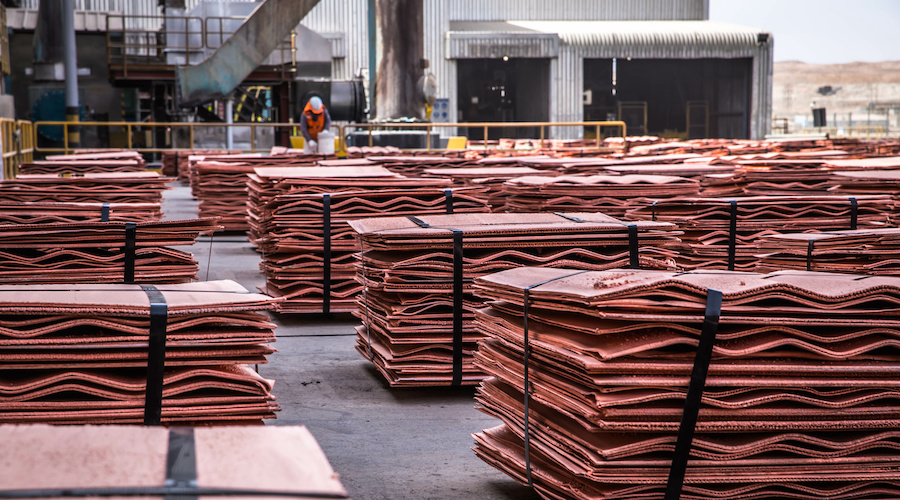
China’s exports of refined copper surged to record levels last year as the world’s top buyer found itself in unusual competition with the US for spare metal.
The CME’s US copper contract continues to command a sizeable premium over the international price traded on the London Metal Exchange (LME) as the market prices in the potential for US tariffs. A decision has been deferred until June this year.
The premium for US delivery is sucking metal out of the global supply chain, with the ripple effect now emptying China’s bonded warehouse zones.
China’s outbound shipments jumped to 143,000 metric tons in November, bringing the year-to-date total to 698,500 tons, already an annual record.
The November tally included 57,700 tons headed to the US, all of it sourced from stocks held in bonded warehouses at Chinese ports such as Shanghai.
Refined copper was also dispatched in bulk to European destinations as the lingering tariff threat continues to fracture global trading patterns.

China’s bonded stocks raided (again)
The blowout of the CME-LME arbitrage last year created an unprecedented opportunity for traders to profit by shipping physical copper to the US.
CME stocks of copper have mushroomed to over 450,000 tons, which is more than the combined inventory held by the LME and the Shanghai Futures Exchange.
LME stocks of desirable brands for US delivery, particularly Chilean metal, have been exhausted. Chinese and Russian copper accounted for 95% of registered inventory at the end of November.
Attention has returned to what has been sitting in China’s bonded warehouse zones, metal that has been physically unloaded but not yet cleared through customs for delivery to a mainland buyer.
It’s the second time this bonded inventory has been raided.
China exported, or rather redirected, 120,000 tons of refined copper to the US between February and July last year, when import tariffs seemed a racing certainty.
US President Donald Trump’s decision in July to go ahead with tariffs, but only on copper products rather than copper in refined form, appeared to kill the tariff trade.
But the CME premium has been widening again ever since as traders bet the tariff threat has only been deferred.
The November jump in shipments from Chinese ports to the United States is testament to the renewed lure of US delivery.

Plugging the gaps
China’s port-side copper inventory is also leaving to plug gaps that have opened up elsewhere as traders strip the supply chain of brands of metal that can be delivered against the CME contract to ensure a frictionless arbitrage trade.
November’s outbound flows included 16,500 tons bound for Italy as well as smaller tonnages destined for Germany, Greece and Sweden.
Such has been the scramble to ship to the US that availability has fallen and physical premiums have risen everywhere else.
Europe’s biggest producer Aurubis has aggressively hiked its premium for term sales this year to $315 from $228 per ton over the LME basis price.
Chilean state producer Codelco is asking its European customers for $325 per ton and its Chinese buyers a whopping $350 per ton, reflecting trader competition for its brands.
China remains the world’s largest copper importer, although the jump in outbound shipments caused the country’s net pull on units from the rest of the world to contract by 11% in the first 11 months of 2025.
But it too has been struggling to compete with the US premium when it comes to CME-deliverable brands.
China’s imports of Chilean copper slumped by 43% year-on-year in January-November, while those of Peruvian metal fell by a steeper 50%.
Chinese buyers have become increasingly dependent on shipments from the Democratic Republic of Congo and Russia, which accounted for 37% and 11% respectively of total imports in the first eleven months of 2025.

Signal confusion
It’s hard to know just how much copper has been sitting in China’s bonded warehouse zones in recent years.
Classified by the country’s customs department as an import, the metal only becomes statistically visible if it’s reshipped somewhere else, in which case it turns up on the export side of the trade ledger under a unique code.
But it’s clear there is a lot less now than there was before Trump first mooted import tariffs back in February.
The stripping of China’s port stocks is a sign of just how much the potential for US tariffs has upended global flows of physical copper.
It’s also a big problem when it comes to assessing what’s going on in a market that is currently punching out all-time price highs on a regular basis.
Global exchange inventory closed 2025 above 800,000 tons for the first time since 2013, which might be expected to put a dampener on the market’s bullish exuberance.
But the driver of higher visible stocks has been the CME, where copper is still arriving daily. Some of that metal may have come from the statistical shadows of China’s bonded warehouse zones, adding complexity to the global inventory picture.
The tectonic relocation of copper stocks to the US is still playing out and continues to distort both the physical supply chain and the inventory price signal.
The drain on availability everywhere else, including China’s port stocks, risks becoming more acute as long as the Trump tariff threat creates a CME premium sufficiently large to cover the costs of physical shipment.
(The opinions expressed here are those of the author, Andy Home, a columnist for Reuters.)
(Editing by Marguerita Choy)
{{ commodity.name }}
{{ post.title }}
{{ post.date }}
Comments