Congo offers tantalum deposit under M23 control to US in minerals pact
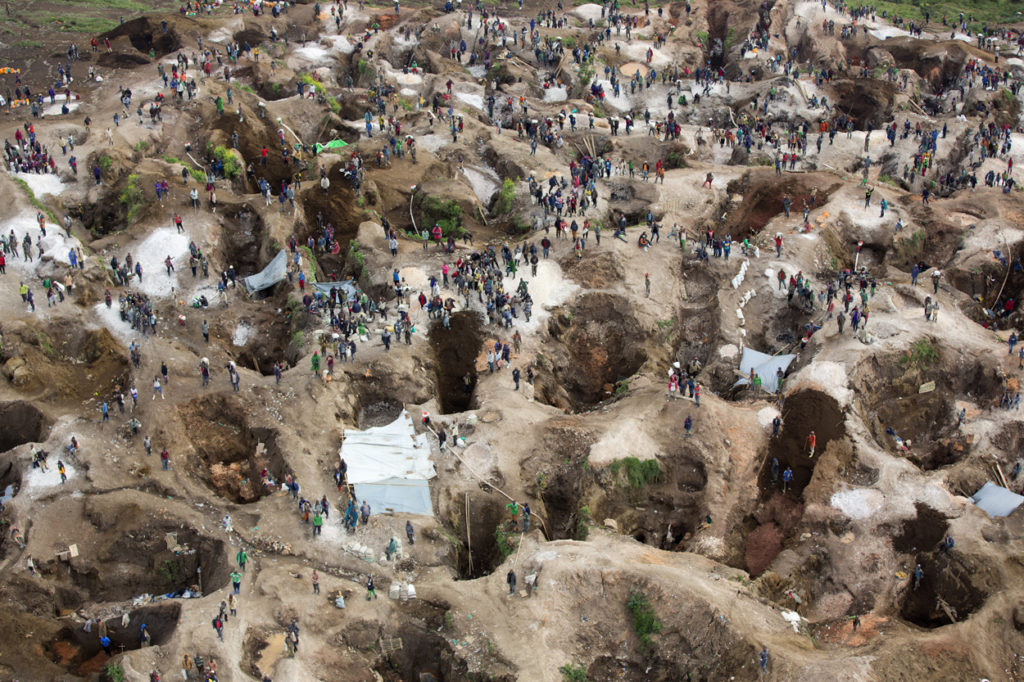
The Democratic Republic of Congo added the rebel-held Rubaya coltan mine, one of the world’s richest tantalum deposits, to a shortlist of strategic assets it is offering to the US under a minerals cooperation framework, a government document seen by Reuters shows.
A senior Congolese official and a US diplomat confirmed the inclusion of Rubaya on the shortlist presented to a DRC-US meeting in Washington on February 5 to advance their strategic minerals partnership agreed in December. They spoke on condition of anonymity due to the sensitivity of the matter.
The move puts Rubaya – despite being held by Rwandan-backed AFC/M23 rebels – into Kinshasa’s bid to draw US investment into mineral-rich but conflict-torn eastern Congo. It could give Washington access to highly sought tantalum, a heat-resistant metal processed from coltan ore used by makers of semiconductors, aerospace components, computers, mobile phones and gas turbines.
Congo estimates that the Rubaya mine needs $50 million to $150 million to restart and ramp up commercial output, with rapid cost recovery expected due to soaring global demand for tantalum, the document says.
The US wants access to a spectrum of natural resources as it scrambles to counter China’s dominance in Africa and build a strategic critical metals stockpile.
Rubaya could deliver a “fully traceable, conflict‑free” tantalum supply compliant with US procurement rules, the DRC government document says.
15% of world’s coltan
Rubaya, in North Kivu, holds several thousand metric tons of coltan with tantalum concentrations of 20–40%. It accounts for around 15% of the world’s coltan output, all dug manually by impoverished locals earning a few dollars a day.
The mine and surrounding hills remain under the control of AFC/M23 rebels, whose occupation has fuelled organized smuggling networks into Rwanda, the United Nations said in a report last year.
The UN estimates the rebels, which Rwanda denies backing, collect at least $800,000 per month from taxes on Rubaya coltan production and trade.
M23 and its political affiliate, the Congo River Alliance (AFC) are under US sanctions and are not part of a faltering peace deal between Congo and Rwanda brokered by US President Donald Trump in December. Clashes continue despite the pact.
They have criticized the minerals framework, describing it as “deeply flawed” and saying Kinshasa should not negotiate new mineral partnerships while fighting continues.
A senior official from the group told Reuters on Wednesday that the AFC/M23’s objective “is not the mines but the liberation of our people”.
By offering Rubaya to Washington despite lacking control of the site, Kinshasa aims to draw the US into recovering the area militarily for the Congolese government, he said.
The official, who asked for anonymity because of the sensitive nature of the discussions, said a private party — not the Congolese state — holds the mining title and any future dispute would show that President Felix Tshisekedi “does not control all the mining sites”. He declined to elaborate on the ownership of the mine.
The Congolese government did not immediately respond to a request for comment.
Preferential access to projects
The US State Department told Reuters on Tuesday that Congo formally presented the initial strategic asset reserve (SAR) list at the meeting on February 5, but the department did not disclose the assets.
Under the framework agreement, US companies will receive preferential access to the assets, which Washington says is designed to foster transparent investment, create jobs and help build long‑term stability in the DRC.
The State Department added that eligible private‑sector firms were now invited to request the SAR list and signal interest in qualifying projects.
Lithium, copper–cobalt, gold assets offered
Other projects on Congo’s priority list for US investors include the giant Manono lithium deposit in Tanganyika, the Chemaf copper‑cobalt complex in Haut‑Katanga and Lualaba, the STL Germanium–Gallium expansion in Lubumbashi, and a trio of proposed cobalt refineries.
The list also features state miner Gecamines‑linked hydro projects, Congo’s part of the Lobito rail corridor – a project to help transport critical minerals from central Africa to the West – and major gold prospects such as Kibali South and Moku Beverendi, the document shows.
Congo and several US or allied companies have already signed initial supply agreements under the minerals security pact, part of Washington’s broader effort to loosen China’s long‑established dominance over Congolese critical minerals.
The government document does not name US companies approached or confirm whether formal negotiations have begun.
(By Ange Adihe Kasongo and Maxwell Akalaare Adombila; Editing by Veronica Brown, Silvia Aloisi and Emelia Sithole-Matarise)
{{ commodity.name }}
{{ post.title }}
{{ post.date }}
3 Comments
James Ngangu
Excellent message
Mike Kaluba
Only recently, we heard that the AU had passed progressive proposals, among them, to stop raw mineral exports to the West. Today, the DRC, and probably other African countries continue the same ex̌ports with little benefits to their citizens.
The usual rhetoric.
Samuel Ngiruwonsanga
Hahahah they offer what no belongs to them