DOJ probes US fertilizer market for possible price fixing
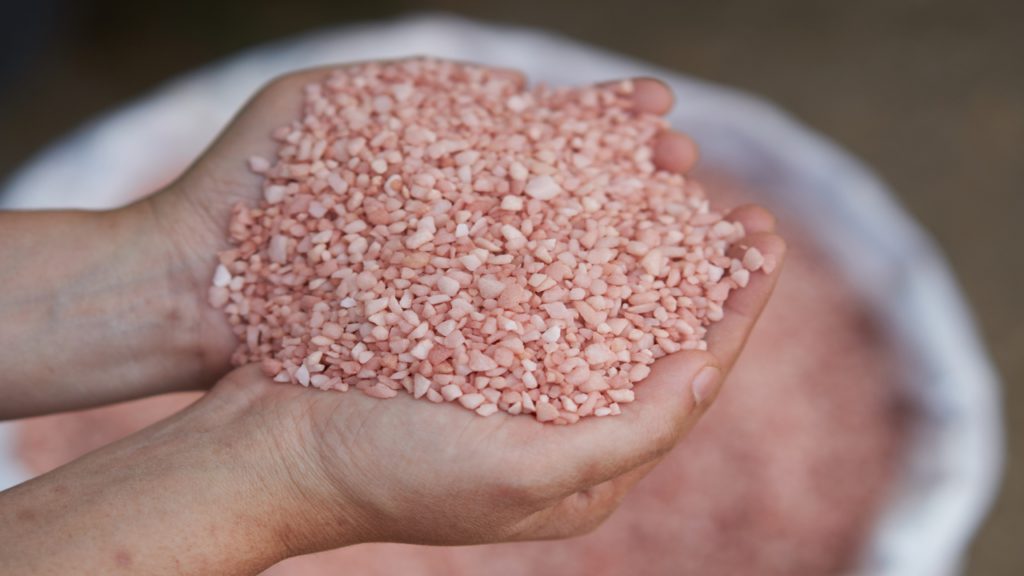
The Justice Department has been investigating whether several leading producers of commercial fertilizers colluded to raise prices, according to people familiar with the matter.
The companies whose conduct is under scrutiny include phosphate and potash suppliers Nutrien Ltd. and Mosaic Co., as well as CF Industries Holdings Inc., Koch Inc. and Norway’s Yara International ASA, said the people, who asked not to be identified discussing a confidential investigation. CF Industries, Koch, Yara and Nutrien control most of the nitrogen-based fertilizer sold in the US.
The probe is examining companies’ pricing practices for possible civil and criminal antitrust violations, the people said. The investigation is in the early stages and is being run out of the DOJ antitrust division’s Chicago office, they said.
Only a handful of companies control the supply of most fertilizer in the US, which has raised concern among farmers and government officials. The Biden administration also expressed concerns about high fertilizer prices due to market concentration and the impact of the war in Ukraine.
The companies haven’t been accused of wrongdoing by antitrust officials, and investigations don’t necessarily lead to charges or lawsuits.
Nutrien didn’t have an immediate comment. The other companies and the Justice Department didn’t respond to requests for comment. A US Department of Agriculture spokesperson referred to DOJ for comment.
Mosaic shares fell as much as 4.3% to the lowest price since mid-January. CF Industries dropped as much as 5.5%, the most since November, while Nutrien shares were down as much as 2.9%.
Key priority
The investigation reflects a key priority of both political parties to police conduct that increases costs for farmers and consumers. Addressing high food costs has been a goal of the Trump administration’s response to Americans’ growing dissatisfaction on the rising cost of living, which propelled Democrats to victories over Republicans in several key elections in November.
Potash and phosphate fertilizer prices have eased since last fall after spiking as a result of President Donald Trump’s trade war. Still, prices remain historically elevated, and the escalating conflict in the Middle East is reigniting worries about reliance on foreign fertilizers. Disruptions in the Gulf are already pushing prices higher for urea, a form of nitrogen fertilizer widely used for corn and other crops. The higher fertilizer costs have put a strain on US farmers struggling with low crop prices and shrinking markets.
Nutrien and Mosaic control about 90% of the production capacity of both potash and phosphate fertilizers, according to agriculture industry watchdog Farm Action. Nutrien, CF Industries, Koch and Yara control about 82% of nitrogen-based fertilizers, Farm Action says.
Meanwhile, USDA Deputy Secretary Stephen Vaden has accused Nutrien and Mosaic of colluding to limit US fertilizer supply and control prices. In January public comments to the National Agricultural Law Center, Vaden called the two companies a “duopoly” and said the administration will “do everything it can” to ensure affordable fertilizer prices for farmers.
Joint venture
Vaden cited a Canadian joint venture between Mosaic and Nutrien, Canpotex Ltd., as an example of how the companies “collude to control prices up there.” While such a venture doesn’t exist in the US, Vaden said the companies have constrained supply, “driving up the price that farmers pay.”
Vaden didn’t mention the antitrust probe and it’s unclear if the dynamics he referenced are part of the Justice Department’s investigation.
While the first Trump and Biden administrations increased antitrust enforcement in the tech sector, the agriculture industry has seen less action, despite a rise in concentration.
That has left just four companies in control of more than half of all beef, poultry and pork processed in the US, while a different quartet of firms controls majorities of soybean and corn seeds, according to Farm Action.
The Trump administration has made a series of moves to boost competition in the sector. In September, the Justice Department and Agriculture Department signed an agreement to police competition in agriculture markets. About a month later, Trump ordered a federal investigation into the meatpacking industry, blaming “majority foreign-owned” companies for soaring beef prices.
In December, Trump issued a directive for the DOJ and the Federal Trade Commission to investigate the US food supply chain for potential price fixing and other anti-competitive behavior that drives up costs of goods such as meat, seeds and fertilizer.
The Justice Department is also investigating pricing practices among the largest US egg suppliers.
Executive order
Trump in February signed an executive order to protect domestic supplies of elemental phosphorus and glyphosate-based herbicides, noting that there is only one domestic producer of both materials.
Mosaic is the top US fertilizer producer and makes almost half of the phosphate-based crop nutrients used by US farmers. The company in 2023 asked the Commerce Department to investigate phosphate fertilizers from Morocco, which led to added duties on those imports that are still currently in place.
Early in February, corn farmer groups in Iowa and Texas both pressed Attorney General Pam Bondi for an update on the DOJ’s work in the fertilizer market.
“The current state of the farm economy is dire,” Hagen Hunt, president of the Texas Corn Producers Association, wrote in a letter to Bondi. “While the prices farmers receive for their crops has softened, the costs of the essential nutrients needed to grow them remain artificially inflated.”
(By Josh Sisco and Ilena Peng)
More News
DOJ probes US fertilizer market for possible price fixing
March 04, 2026 | 03:01 pm
PDAC: Ontario shifts metals strategy to defence as EVs stall, mining minister says
March 04, 2026 | 02:24 pm
{{ commodity.name }}
{{ post.title }}
{{ post.date }}



Comments