Global potash market shrugs off US move to end Belarus sanctions
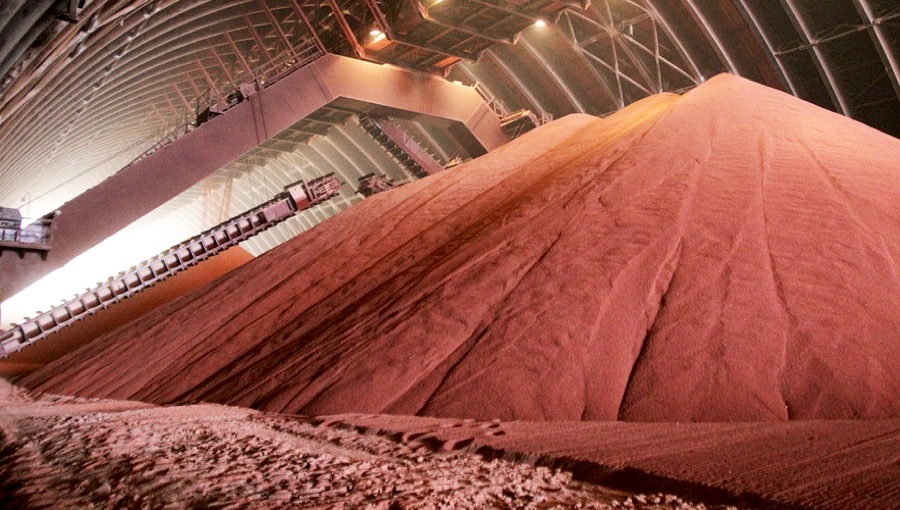
The global potash market — and key producers of the fertilizer — largely shrugged off a US decision to lift sanctions on one of the world’s major suppliers, showing obstacles to flows are likely to persist.
At the weekend, the Trump administration agreed to remove curbs on Belarusian potash fertilizers, a key source of revenue for the nation before Western restrictions stifled their flow. But the reaction in shares of global producers was muted, suggesting the move won’t be enough to unleash a flood of extra supply.
That’s because Belarusian exports still face hurdles. European Union sanctions remain in force, meaning the country — which doesn’t have seaports of its own — must continue to rely on Russia’s Baltic terminals and rail exports to China.
Potash is Belarus’ only abundant mineral resource. State-owned Belaruskali, Russia’s Uralkali PJSC and North American producers Nutrien Ltd. and Mosaic Co. are the four largest global suppliers.
The US decision to lift sanctions followed talks between President Donald Trump’s special envoy for Belarus and Belarusian leader Alexander Lukashenko, who ordered the release of 123 political prisoners as part of the agreement.
The deal opens the way for a potential resumption of US dollar transactions for Belaruskali, reviving trade between two giants of the fertilizer industry. But while Belarus will no doubt seek to re-enter the US market, much depends on the movement of product.
“From a US import perspective, there’s still question marks from a logistical point of view, given Belarus’ reliance on Russian ports,” said Paul Joules, an agriculture analyst at Rabobank Australia.
European fertilizer makers including Yara International ASA and K+S AG were up about 0.6% in afternoon trading on Monday.
High-cost routes
Potash exports from Belarus were at 88% of pre-sanctions levels last year as the producer used higher-cost shipping lanes through Russia, according to Bloomberg Intelligence.
Now, any increase in sales to America may force Belarus to scale back in other markets, damping price impacts, according to Allan Pickett, head of fertilizer analysis at S&P Global Energy.
“Because they have largely regained global market share, it means if they supply more to the US they will probably supply less elsewhere,” Pickett said. “The balance does not change significantly, and therefore the impact on global prices is low.”
(By Pyotr Kozlov and Hallie Gu)
{{ commodity.name }}
{{ post.title }}
{{ post.date }}
Comments