Goldman lifts iron ore forecast for next year, but stays bearish
Goldman Sachs Group Inc. raised its iron ore price forecast for 2026 on macroeconomic support, tighter inventories and resilient Chinese steel production, but is still expecting prices to drop next year.
The bank sees prices of the steelmaking staple averaging $93 a ton in 2026, $5 higher than its previous estimate, analysts including Aurelia Waltham said in a note. However, that’s still well below where iron ore futures are trading at the moment.
“The iron ore market has remained tighter than we expected in recent months,” the analysts said in the note. Resilient Chinese hot-metal production, which kept port stockpiles flat in the past two quarters and yuan appreciation have supported prices, they said.
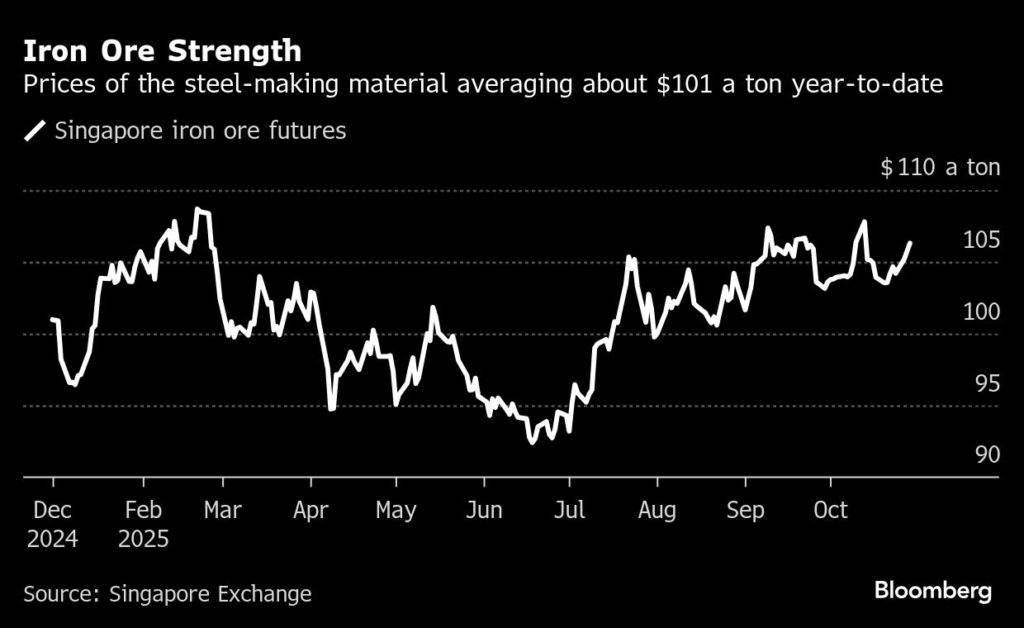
Iron ore futures rose for a third day, climbing 0.7% to $106.45 a ton in Singapore as of 10:41 a.m. local time. They’ve rebounded around 15% from a low in mid-June as China moved to reduce industrial overcapacity.
China has been struggling to shake off a years-long property slump, which has hit domestic demand, although steel exports have been strong. Goldman said the outlook remains negative, and it expects iron ore prices to fall to $88 a ton by the final quarter of 2026, although that’s up from a previous forecast of $80.
“The China steel sector has already returned to oversupply,” the analysts said. “China’s net steel exports have peaked, which, combined with a continued decline in domestic demand, will likely weigh on steel production next year.”
On the supply side, Goldman said global iron ore shipments have increased 15% year-on-year so far this quarter, which will likely exacerbate the seasonal build in port stockpiles and keep inventories rising throughout 2026.
(By Annie Lee)
{{ commodity.name }}
{{ post.title }}
{{ post.date }}
Comments