Iran’s missing uranium stockpile is growing concern at UN nuclear watchdog
United Nations nuclear inspectors said they are seriously concerned about the status of Iran’s inventory of near-bomb-grade uranium, as the Islamic Republic continues to deny them access to sites bombed several months ago by the US and Israel.
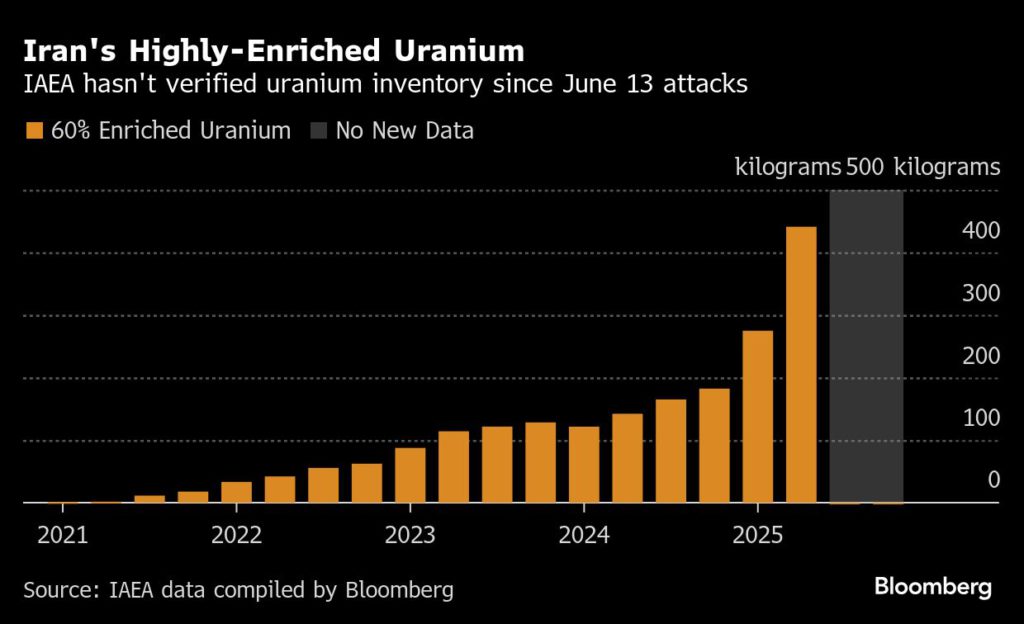
The International Atomic Energy Agency reiterated it hasn’t been able to verify Iran’s fuel stockpile since mid-June, according to documents seen by Bloomberg. It’s the first IAEA report since the UN security council reimposed sanctions that demand Iran suspend enrichment activities.
“The agency’s lack of access to this nuclear material in Iran for five months means that its verification — according to standard safeguards practice — is long overdue,” wrote IAEA Director General Rafael Mariano Grossi, adding Tehran’s failure to inform his agency about the uranium’s whereabouts is a “matter of serious concern.”
While satellite images show Israeli and US attacks destroyed much of Iran’s surface-level nuclear activity, they also rolled back decades of access by UN inspectors to Tehran’s vast atomic complex. Iran’s nuclear work has concerned the West for decades and tensions over the nature of its atomic program — which dates back to the 1950s — have frequently shaken oil markets and spurred fits of both conciliation and conflict with the US.
The Islamic Republic has always denied harboring intentions to develop a nuclear weapon and says it’s accelerated its uranium enrichment in response to US President Donald Trump’s first-term decision to quit the landmark 2015 nuclear deal and heavily sanction its economy.
Recent satellite imagery shows Iranian activity around the bombed sites in Fordow, Natanz and Isfahan, according to two senior diplomats who asked not to be identified in exchange for discussing restricted information. Agency inspectors aren’t certain whether the activities are restricted to clean-up efforts or potentially include relocating uranium inventories.
Grossi reiterated his agency “will not be in a position to provide assurance that Iran’s nuclear program is exclusively peaceful” until Iran improves its cooperation. The country has yet to submit a damage assessment or estimate the state and location of its uranium reserves.
Prior to June’s attack, Iran possessed sufficient highly-enriched uranium reserves to quickly craft about a dozen warheads.
The IAEA assessed that seven of Iran’s declared nuclear facilities were impacted by the June strikes. Another 13 facilities were unaffected, with some, including the Bushehr power plant and Tehran research reactor, having already received inspectors.
Iran’s foreign ministry said on Monday that IAEA inspectors had visited Bushehr and the Tehran reactor last week.
Trump’s move to heavily bomb some of Iran’s key nuclear sites in June immediately derailed active negotiations between Tehran and Washington to try to resolve their differences. Iran has since said that it’s not prepared to re-enter talks unless it has a guarantee that it won’t be bombed again.
Even if the Islamic Republic immediately submitted to inspections and fully cooperated with the IAEA, it could take years to re-establish certainty over the fate of Iran’s nuclear stockpile. Containment vessels where the material is stored may have been destroyed, releasing kilograms-worth of uranium into the environment, according to the diplomats.
“The agency has lost continuity of knowledge in relation to the previously declared inventories of nuclear material,” read the IAEA report. “It is critical that the agency is able to verify the inventories of previously declared nuclear material in Iran as soon as possible in order to allay its concerns.”
(By Jonathan Tirone)

{{ commodity.name }}
{{ post.title }}
{{ post.date }}



Comments