Korea Zinc in talks with US tech firms to extract rare earths from data centre waste
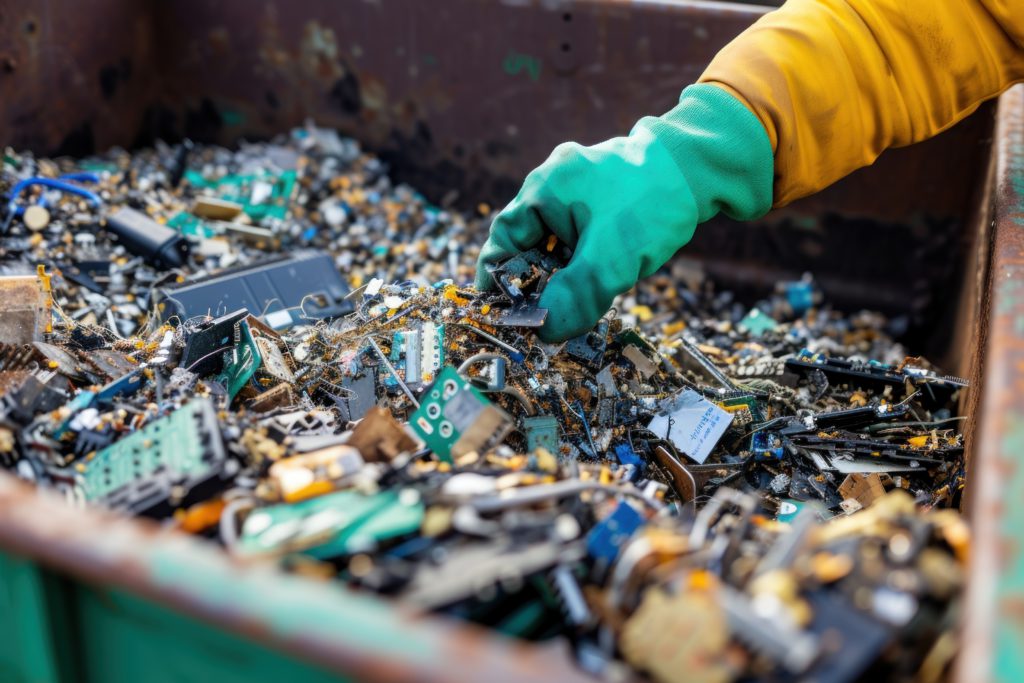
Korea Zinc is in talks with major US technology firms to recycle data centre waste and extract rare earths, its chairman said, amid a US push to reduce reliance on Chinese minerals.
The firm, one of the world’s largest smelters, also aims to secure battery and solar panel waste containing metals and rare earths needed in fields such as electronics, electric vehicles, energy and defence, chairman Yun B. Choi said in an interview.
The initiative will give the US another source of rare earths beyond its single mine and main supplier China, which produces about 90% of the world’s rare earths and which has moved to restrict exports in a tariff war ignited by the US.
“The US government has been continuously advocating for recycling critical minerals, because they are aware that a significant amount of such minerals from waste was exported to China via several countries,” Choi said.
“We have been quietly researching technologies to extract rare earths over the past two years,” he said.
Choi declined to disclose any outlay or the technology firms involved but said Korea Zinc has invested in recycling, including buying an electronic waste recycler and scrap metal trader, and partnered a firm with mineral separation technology.
“If we can provide a solution or a process to extract, refine, and provide new rare earths in the United States, I think the business value would be significant,” he said.
New US smelter
In December, the South Korean firm announced the construction of a $7.4 billion critical minerals smelter in Tennessee, the first US-based smelter since the 1970s to be funded largely by the US government.
The smelter will produce 540,000 metric tons of non-ferrous metals including 11 critical minerals such as antimony, gallium and germanium, Korea Zinc has said.
“After China’s export control on rare earths in April 2025, the atmosphere in the US regarding critical minerals has changed significantly,” Choi said, citing national security as the foremost factor.
Korea Zinc reported record operating profit of 1.2 trillion won ($813 million) last year, driven by sales of antimony, which the US has listed as critical for military applications and nuclear weapons production.
“Last year was a year of antimony,” said Choi. The average price of antimony in 2025 was $25 per pound, more than double from 2024, showed data from the US Geological Survey.
Korea Zinc targets profit margins of 17% to 19% from the new smelter, Choi said. That would be higher than at its 51-year-old Korean refinery, showed data from Seoul-based DB Securities.
As joint investor, the US is providing support, Choi said, citing fast-tracked permits and expectations of guaranteed minimum prices for US critical minerals projects.
The firm plans to start construction in early 2027 and the smelter should break even within a year of starting operations in 2030, said Choi.
($1 = 1,474.5700 won)
(By Heejin Kim, Hyunjoo Jin, Heekyong Yang, Earnest Scheyder and Tom Daly; Editing by Ed Davies and Christopher Cushing)
{{ commodity.name }}
{{ post.title }}
{{ post.date }}

Comments