Liberia backs Ivanhoe Atlantic rail deal to unlock iron ore mine
A US company backed by billionaire Robert Friedland took a key step toward building an iron ore mine in Guinea after lawmakers in neighboring Liberia greenlit an agreement allowing the firm to access an export railway.
The Senate in Liberia on Thursday ratified a deal that Ivanhoe Atlantic Inc. concluded with the West African nation’s government earlier this year, after negotiations that lasted half a decade. The House of Representatives already approved the agreement in a vote last week.
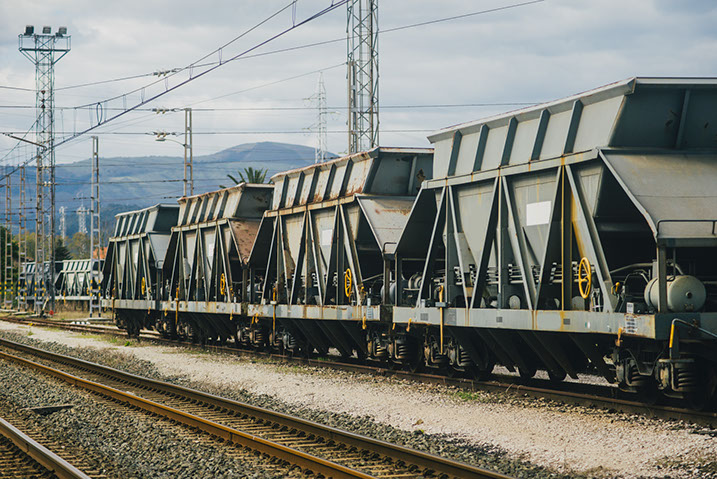
The access arrangement – now endorsed by both chambers of the legislature – permits Ivanhoe Atlantic to transport iron ore from the Kon Kweni deposit located over the border in Guinea via a 243-kilometer railroad to the port of Buchanan in Liberia. It offers the shortest export route for a project that the company says will boost supply to the US and help lessen American dependence on China.
ArcelorMittal SA, which has its own iron ore mines in Liberia, holds the rights to operate the railway until 2030. President Joseph Boakai signed an executive order in October reiterating the government’s plan to appoint an independent operator and introduce “equitable multi-user access to national rail corridors.”
Ivanhoe Atlantic intends to start constructing Kon Kweni in early 2026 and begin shipments the following year, initially aiming for annual output of up to 5 million tons of high-grade iron ore. A second phase targeting production of 30 million tons a year will require the company to invest around $850 million to upgrade existing export infrastructure.
The company has said that over the 25-year concession it expects to pay Liberia about $1.4 billion in rail user fees and $600 million in other taxes and charges.
“Having in place a confirmed logistics route with a clear technical and financial operating framework brings Kon Kweni a step closer to construction,” Ivanhoe Atlantic said in a statement after the Senate’s decision. “This opens up a valuable logistics chain to other users in Liberia and neighboring countries, including US aligned companies looking to expand into the region,” it said.
ArcelorMittal is increasing production from its Liberian iron ore mines to 20 million tons a year. The steelmaking giant has invested about $800 million to rehabilitate and improve the railway, according to a company spokesperson. ArcelorMittal doesn’t mind others using the tracks “provided they invest in adding capacity,” the firm said.
Ivanhoe Atlantic’s majority shareholder is I-Pulse Inc., a firm founded and chaired by Friedland. The mining tycoon is also co-chairman of Ivanhoe Mines Ltd., a Canadian firm that’s partnered with China’s Zijin Mining Group Co. Ltd. to build and run one of the world’s largest copper mines in the Democratic Republic of Congo.
Ivanhoe Atlantic is preparing an initial public offering in Australia to raise money for the development of the Kon Kweni mine, a UK-registered subsidiary said in a filing in July. The firm is yet to outline a time-line for the listing.
The Liberian agreement will provide “unimpeded legal and physical access” to the necessary rail infrastructure, which is “likely to be a critical part of the company’s narrative for future fundraising,” according to the same company filing.
Guinea is becoming an important player in the global iron ore market following the commissioning of the vast Simandou project, which began exports this month and is ramping up production to 120 million tons a year.
That venture – which is mainly owned by Chinese and Singaporean firms including China Baowu Steel Group Corp. as well as Rio Tinto Plc – ships iron ore by another railway that stretches more than 600 kilometers and terminates at a port near Guinea’s capital, Conakry.
(By Festus Poquie and William Clowes)
{{ commodity.name }}
{{ post.title }}
{{ post.date }}

2 Comments
Leeroy Sampson Sr
Dear Ivanhoe Atlantic Management,
We’re extremely grateful for your efforts in completing the signing process with the Liberian government. We’re thrilled about the upcoming job opportunities in Liberia. As a safety officer with experience on the ArcelorMittal Liberia Rail project, I’m glad to join the team soon.
Thank you for this opportunity.
Best regards,
Leeroy Sampson Sr
HSE Officer, ArcelorMittal Liberia/ WBHO
Oscar Pule
This article does not mention any local residents participating in such strategic projects.
All the profits and strategic skills will be imported leaving the locals sharing less than 10 percent for the next 29 years.
That is the same thing that is happening in my country South Africa.
Benefitting politicians and their friends.
This is a delay and reversal for Africa starting to be self sufficient.