Lynas CEO says government policies are improving rare earths market
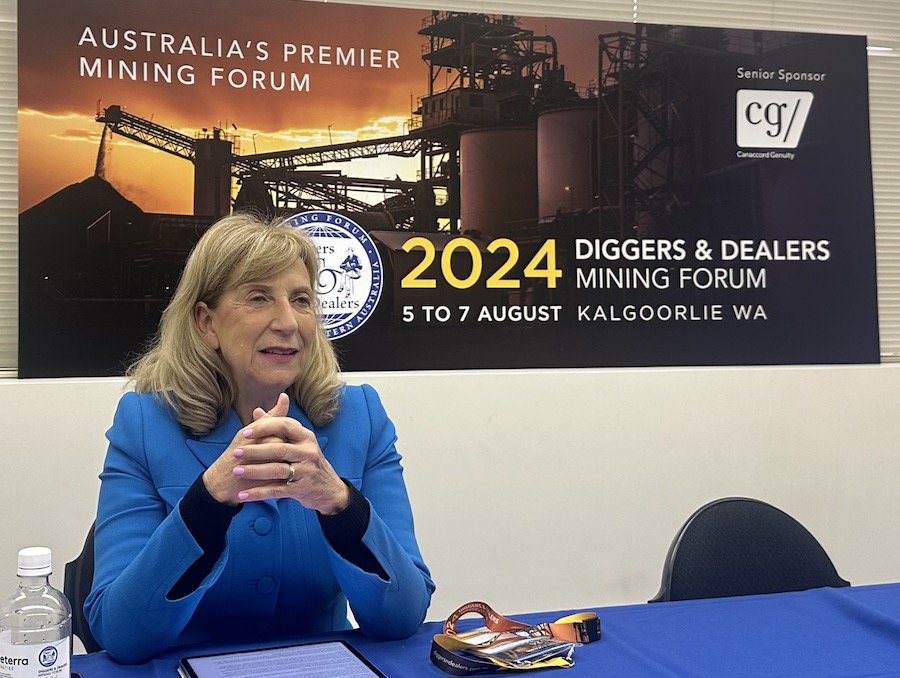
Government policies around floor prices for rare earths have improved the function of the market and helped lift prices to sustainable levels, Amanda Lacaze, the CEO of Lynas Rare Earths said on Wednesday.
Lacaze made the comments as the world’s top rare earths producer outside China reported lower production but higher revenue from sales of the materials critical for green-energy infrastructure, electric vehicles, smartphones and defence.
Government policy is seen as a key driver of critical minerals markets this year, as nations seek to secure long-term supply separate from top producer China, and Lacaze’s comments highlight that policy action is having its intended effect.
Additionally, the easing of China’s export controls has reduced a glut there, boosting the domestic Chinese benchmark against which Lynas sells much of its supply, she said in a call with analysts after Lynas released its second-quarter results.
“I think everyone understands that the market settings remain positive, and in fact, in some ways, they’ve even become more positive during January,” Lacaze said.
“(The) price continues to strengthen, and frankly, geopolitics continue to be our friend, although we are yet to finalize various agreements with governments, the policies which have been particularly implemented by the US government have already fostered more functional market dynamics.”
Lacaze pointed specifically to the US government’s support of minimum prices for producer MP Materials and related discussions about support for floor prices between governments including Australia and the world’s top seven most advanced economies.
Prices should reflect costs
The floor price policy discussions are the most important talks Lynas is having with governments, she said. They are crucial for the company to sell rare earths at a level competitive with its lower-cost Chinese rivals.
“We don’t need governments to be buying our product. We need customers to be buying our product, and we need those customers to buy our product at prices that properly reflect the cost of doing business,” she said.
Lynas reported a 43% rise in second-quarter revenue on Wednesday as the higher selling prices eclipsed a production shortfall caused by power disruptions at its ore processing plant in Western Australia. Shares rallied 6%.
The average selling price for Lynas’ product range was A$85.60 ($57.69) per kg during the quarter, higher than A$49.20 per kg a year ago.
The upbeat price sentiment has also spilled over to January, Lynas said in a statement announcing the earnings.
The company’s total rare earth oxide output was 2,382 metric tons, lower than the 3,993 tons produced in the previous quarter, as power outages at its Kalgoorlie facility hampered production.
Last year, Lynas said there had been an increase in power supply disruptions at Kalgoorlie, with outages in November causing significant losses in mixed rare earth carbonate (MREC) production. The MREC from Kalgoorlie is later processed into high-purity rare earth oxides.
The Perth-headquartered firm said it had been working to secure off-grid solutions to ensure power stability at the facility, including considering using diesel fuel. While some power issues have been rectified, they are ongoing, said Lacaze, who is retiring after 10 years as CEO.
“As recently as yesterday, we had two significant power outages,” she said.
Lynas posted sales revenue of A$201.9 million ($136.08 million) for the quarter ended December 31, compared with A$141.2 million a year ago.
($1 = 1.4837 Australian dollars)
(By Rajasik Mukherjee and Jasmeen Ara Shaikh; Editing by Sahal Muhammed and Christian Schmollinger)
{{ commodity.name }}
{{ post.title }}
{{ post.date }}
Comments