Metals volatility may slow pace of mining M&A, BMO bankers say
The recent extreme volatility in metals markets may slow the pace of dealmaking in mining this year as wild price swings complicate transactions, according to the industry’s most active investment bank.
While interest in takeovers is being buoyed by high metals prices, strong balance sheets and growing shareholder support, getting companies to agree on the value of deals is now getting harder, said Ilan Bahar and Jamie Rogers, co-heads of global metals and mining at BMO Capital Markets.
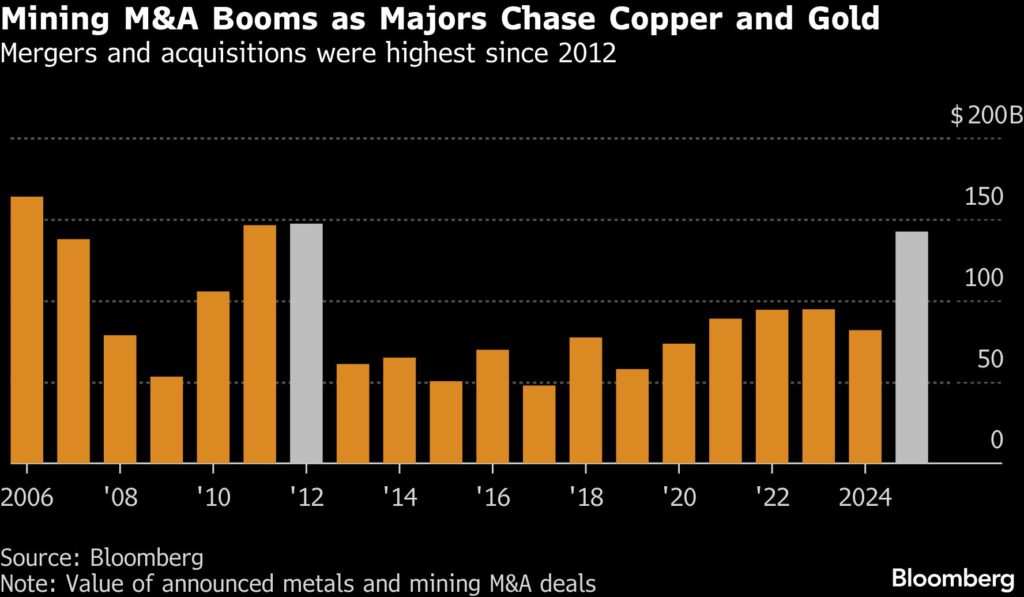
Driving the push for deals is a race to bulk up copper portfolios amid surging demand from global electrification and the cost of developing deposits. The mining industry has seen a string of high-profile takeover attempts in the past couple years including talks between Rio Tinto Group and Glencore Plc, which fell apart earlier this month over valuation.
“In middle of last year we would’ve felt as a group like our levels of activity in M&A were probably the highest we’d ever seen — and today it doesn’t feel much different than that,” Bahar said in an interview. But lately “either the seller’s expectations are very high because their share prices continues to go up, or there’s just so much volatility day to day and week to week and people just can’t get to agreement.”
Copper surged to a record in January in one of the sharpest rallies in history, while gold and silver have seen violent swings and repeated record highs in recent months. That’s making it harder to underwrite transactions, Rogers added. Still, copper and precious metals remain key corners where dealmaking looks positive, according to the bankers at Bank of Montreal’s investment banking division.
BMO Capital Markets, which hosts a major mining conference next week in Florida, was the industry’s top adviser last year based on number of deals, overseeing 16 announced takeovers valued at $38.6 billion, according to data compiled by Bloomberg. The firm has ranked among the top three investment banks over the past four years based on total deal value and market share, the data show.
“There’s fewer players with producing assets, and in some cases those assets are probably too small for the largest companies. In some cases they may not be,” Bahar said, citing China’s Jiangxi Copper Co.’s December offer to buy SolGold Plc — which has a development in Ecuador — as one example. Copper “projects are becoming increasingly economic in this environment, increasingly interesting, and there’s a dearth of them. So that should drive activity.”
Critical minerals are also getting renewed interest after a year of depressed activity, due to recent moves from governments worldwide to bolster supply chains, reduce dependence and build stockpiles, they said. Lithium, graphite and rare earths are starting to find a baseline, bolstering confidence among shorter-term investors, such as generalists and hedge funds, that returns can be realized, they said.
The bankers also point to strong investor appetite for share sales as mining companies draw a broader pool of capital into the sector, with equity markets looking the strongest the bank has seen in about 15 years.
“If you were a portfolio manager last year — it doesn’t matter if you were a generalist or a specialty portfolio manager — you probably made money in two sectors: AI and mining,” Rogers said. “There’s a realization within many of these capital providers that they need to be exposed to the mining sector because they see their fellow PM last year who had his best year of his career.”
(By Sybilla Gross)
More News
Miners escape from attacked coal mine in Russian-controlled Ukraine, official says
April 06, 2026 | 12:31 pm

Panama moves to unlock copper from First Quantum mine
April 06, 2026 | 11:03 am
{{ commodity.name }}
{{ post.title }}
{{ post.date }}
Comments