Poilievre says Canada can use oil, minerals to sway Trump on tariffs
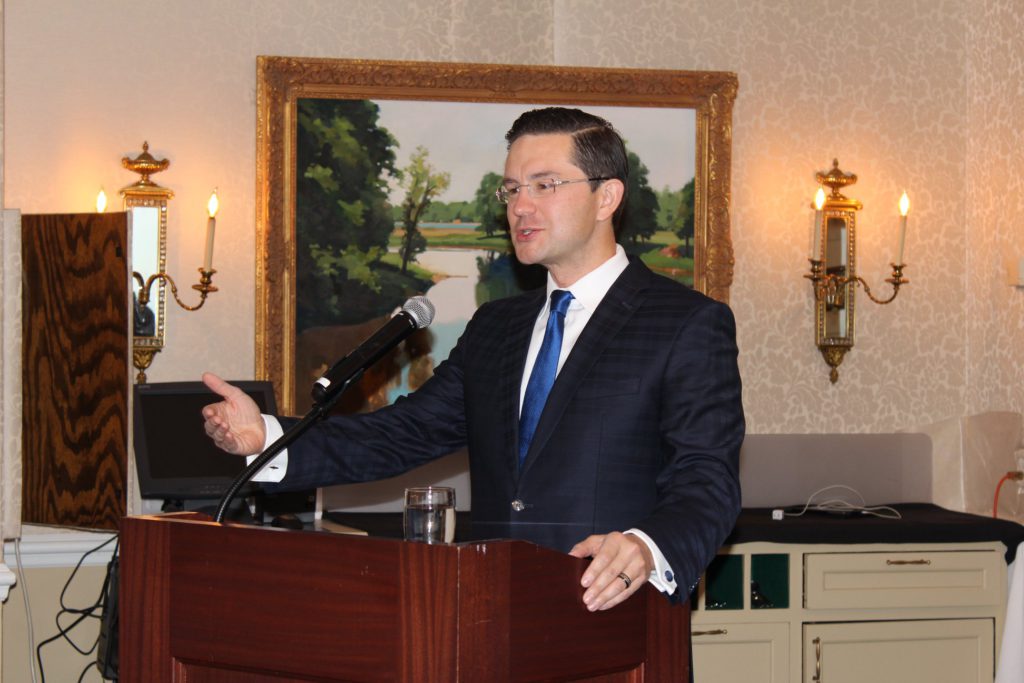
Canada has real trade leverage with US President Donald Trump and should use it to remove tariffs and deepen ties between the two nations, Conservative Leader Pierre Poilievre said.
“You can’t hire a realtor and move your country away, and nor would we want to,” Poilievre said in an interview with Bloomberg This Weekend anchor David Gura.
“I wouldn’t want any other neighbor, and frankly, I don’t think the Americans would rather have another neighbor than Canada. So let’s get past the politics, fix the relationship and let our countries go forward successfully.”
He said Canada has more leverage with the US than is sometimes acknowledged, especially when it comes to oil.
“We sell 10 times more oil than your next biggest supplier, Mexico,” he said. “If you’re that American guy who’s at the pump today and you are overpaying, Canada could be part of the solution to that.”
Poilievre also pointed to Canada’s reserves of the critical minerals needed for modern defense equipment, and said they should be made available on a preferred basis to countries that carry out free trade with Canada.
The Conservative leader’s approach relies on buy-in from the American president, who has repeatedly said the US doesn’t “need anything” from Canada and is pushing to relocate factory jobs to his country.
But Poilievre said he believes Trump would be open to his strategy, as it would support production in the US and national security. Canada provides the raw materials necessary to sustain American manufacturing, he said.
He added that he’d like to see Canada build a strategic petroleum reserve, which it currently does not have as a net oil exporter. “If we had a hundred million barrels of oil in reserve, on top of all the minerals that it takes to make weapon systems, then everyone would be looking to us as an important player to win the war” in Iran, he said.
He did not, however, call for the use of counter-tariffs. Last September, Prime Minister Mark Carney removed a wide swath of retaliatory duties on American-made goods that had been imposed by his predecessor Justin Trudeau. That left a more narrowly focused set of Canadian tariffs in response to much steeper US tariffs on Canadian autos, steel, aluminum and lumber.
Poilievre instead emphasized other strategies that he would rely on. “One of the greatest leverage points we have as Canadians is the goodwill of Americans,” he said. “Poll after poll shows Americans like Canadians. They also understand that doing business with us is good for them.”
He said that’s one reason why he’s in the midst of a US trip to meet with businesses, politicians and media. Earlier in the week he went on the world’s most popular podcast, The Joe Rogan Experience, to make a pitch for free trade.
He is not visiting Washington or meeting Trump — whom he said he has never met. “We have a prime minister, and I respect that we don’t want to cross wires.”
Shifting strategy
Poilievre was once the heavy favorite to win the 2025 Canadian election, but after Trudeau was replaced by Carney — and especially after Trump entered office and began musing about making Canada the 51st state — Poilievre saw his polling lead evaporate.
During that campaign, Poilievre stayed largely focused on domestic issues, particularly on the cost of living and on cutting red tape around housing and resource development projects. He was frequently criticized during that race for not putting more focus on fighting the trade war launched by Trump.
Poilievre said his more recent foreign travel, including a tour through Europe, should be seen as an addition to his political strategy, not a replacement.
“It’s not that I’m going to abandon the fight against inflation and the fight for affordable homes and safe streets,” he said. “I think we can continue to do that while adding to the menu: strong leadership on fighting for Canada to get tariff-free access to the biggest, most lucrative market in the world.”
Poilievre is up against a rival in Carney who has captured the world’s attention, particularly with his speech in Davos on how middle powers can resist coercion by bigger neighbors.
But the Conservative leader — who has often been known as a partisan attack dog — said he has to stand by his own principles, even as he expands his focus.
“Sometimes in the job you have to be prosecutorial and aggressive, and other times you have to be reflective and strategic,” he said. “So it’s about more broadening the range rather than changing who I am, which I’ll never do.”
(By Brian Platt and David Gura)
{{ commodity.name }}
{{ post.title }}
{{ post.date }}



Comments