Trump sets process to secure critical minerals after trade probe
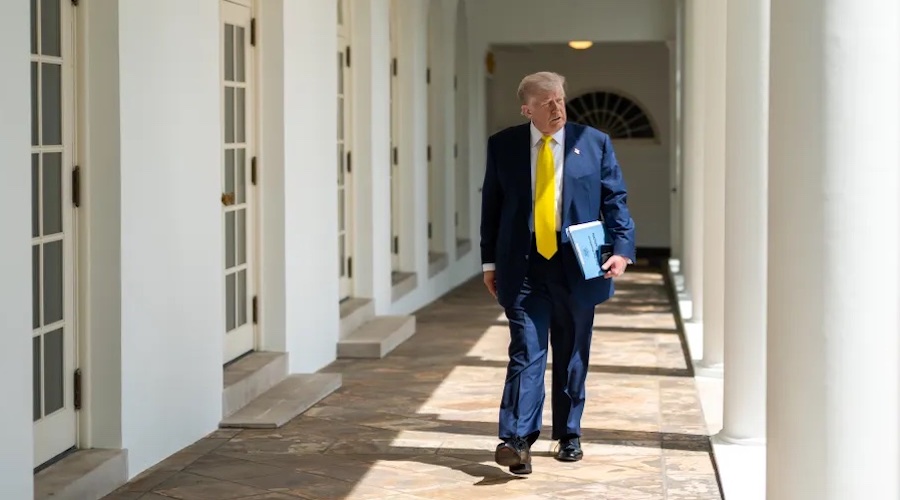
President Donald Trump moved to set up a new process to secure access to imports of critical minerals, capping a months-long review to determine whether foreign shipments threaten US national security.
“What it does is it sets up a mechanism, a process by which the United States will seek to secure its international supply chain of critical minerals and critical mineral derived products,” White House Staff Secretary Will Scharf said at a signing ceremony Wednesday at the White House.
Neither Trump nor Scharf clarified if the mechanism would increase tariffs on rare earth elements, and the pair did not immediately provide additional details on how the effort would work. The White House is expected to provide additional detail later Wednesday.
Trump has been under pressure to respond after China, the world’s largest processor of many critical minerals, constrained access to rare earths crucial to advanced technologies during a trade spat last year.
Industry watchers for months have awaited the decision on the critical minerals investigation, which the Commerce Department launched last April under Section 232 of the Trade Expansion Act. That authority is seen as a way the administration could rebuild its tariff regime if the Supreme Court strikes down Trump’s global levies.
But additional duties could destabilize the trade truce Trump and Chinese President Xi Jinping agreed to last fall, under which the sides agreed to lower import-tax rates and ease export controls.
It may also have implications for uranium, which has growing appeal as the US looks to build out nuclear power as quickly as possible to keep up with the massive power needs for artificial intelligence.
A major hurdle the administration will need to address, if tariffs are imposed, is the lack of domestic production the US has for most of these raw materials.
Traditionally, trade lawyers have argued that tariffs are needed to protect an existing domestic industry that can prosper with appropriate controls that prevent foreign nations from oversupplying the US market to take down American companies.
Given China processes more than 80% of the world’s rare earths, and Kazakhstan accounts for the majority of the world’s uranium, it isn’t clear how US companies will benefit as paltry domestic production forces them to rely on foreign supplies.
(By Joe Deaux)
{{ commodity.name }}
{{ post.title }}
{{ post.date }}
Comments