US to seek rare earth price mechanism during meetings with allies, official says
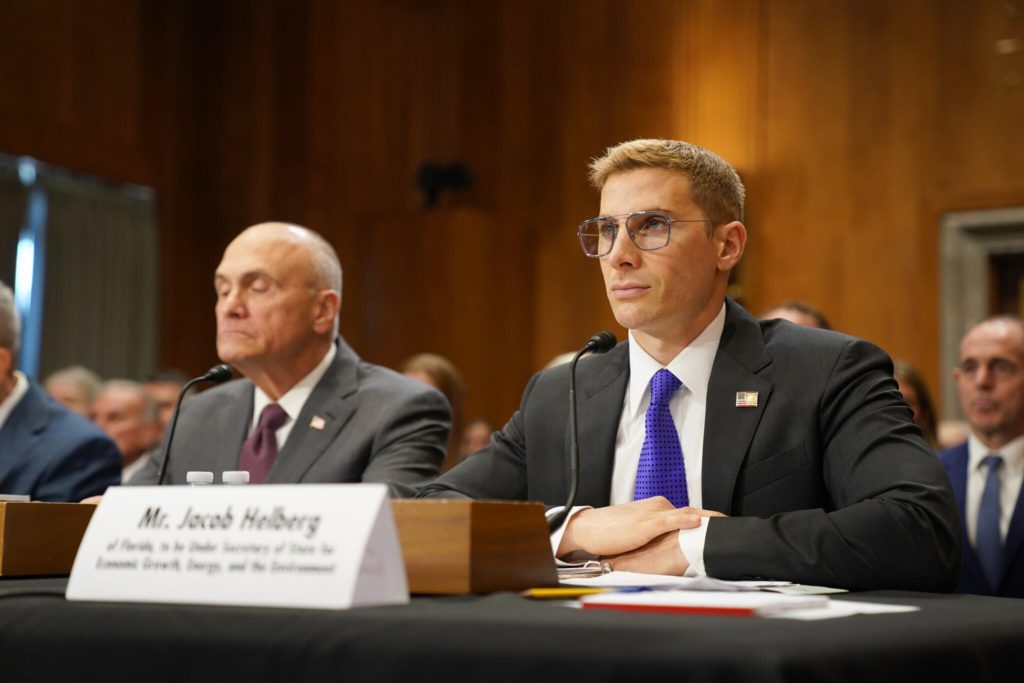
The US will seek to reach consensus with allies on a pricing mechanism to help insulate rare earth mineral refiners and extractors during meetings with dozens of foreign ministers in Washington next week, a senior Trump administration official said.
In an interview with Bloomberg News on Thursday, US Under Secretary of State for Economic Affairs Jacob Helberg said he expects a lot of “momentum and excitement” toward “agreeing on a pricing mechanism that we can all coordinate together on in order to ensure price stability for people in the mineral refining and extraction business.”
Helberg said those talks would be a “central pillar” of next week’s summit and called a pricing mechanism “the key unlock” to securing rare earths supply in the face of historic price undercutting by Chinese producers. Access to rare earths has been an area of growing concern since China imposed an export licensing regime last year that threatened to cut off access to the materials.
Asked for details on the pricing mechanism, Helberg deferred to the White House and US Trade Representative Jamieson Greer, who he said could offer a fuller explanation of how it would work.
“The key is getting other countries to sign on,” Helberg said. “We’ll definitely make a full-court press.”
Though tariffs have long been a preferred US trade policy tool, China’s chokehold over rare earths creates challenges as low-priced minerals can be sold to foreign countries even when the US imposes levies. To erode China’s dominance, other nations would essentially need to create a market that excludes China and gives producers enough of a guarantee that they won’t be undercut and find themselves without customers willing to pay market prices.
In an effort to bolster a rare earths supply chain outside of China, the US since last year has announced a series of government investments in mining and refining companies, including MP Materials Corp., Vulcan Metals and Lithium Americas Corp. This week, the Commerce Department signed a non-binding agreement with USA Rare Earth Inc. for $1.6 billion in US funding.
A proclamation from President Donald Trump on rare earths earlier this month makes clear that the US would consider price floors for trade in critical minerals, including possible “minimum import prices” for specific materials and potential tariffs in the future to mitigate supply chain vulnerabilities.
Trump is holding the tool in reserve for now, but he could impose tariffs on critical minerals from countries whose supplies are priced artificially low, effectively raising the cost of those imports to a level that would sustain production entering the US from other nations, a person familiar with the approach said.
The tactic is similar to the duties imposed in connection with conventional anti-dumping and anti-subsidization trade cases — where final levies generally are calibrated to counteract subsidies and artificially low prices from foreign suppliers and instead buttress domestic producers. Potential tariffs on some countries could bolster — and create an effective price floor for — other foreign critical mineral suppliers instead.
Nick Iacovella, executive vice president of the Coalition for a Prosperous America, a group that supports domestic manufacturing, applauded Trump’s proclamation. “This approach gives American manufacturers the confidence they need to invest, expand and rebuild critical supply chains here at home,” he said by email.
(By Maggie Eastland)
{{ commodity.name }}
{{ post.title }}
{{ post.date }}
Comments
Baimba CONTEH
Please help me with funding in the mining sector. I have an engineering company which is contego services limited.This company will be doing mining, construction and agriculture in African continent.