Op-Ed: US rethinks rare earth strategy
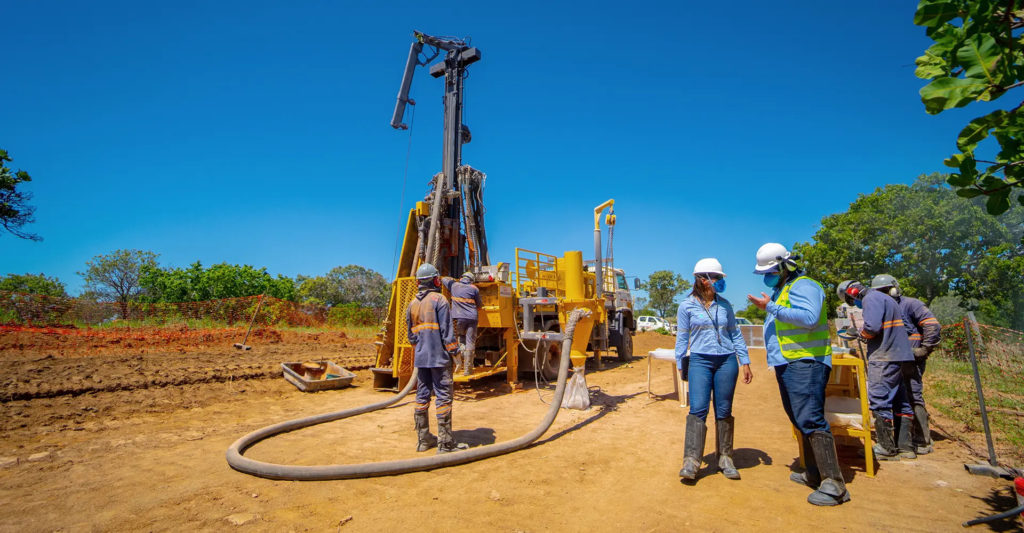
The United States is no longer trying to win the rare earth race by digging more rock—it is trying to control the system that turns it into power.
Aclara Resources’ (TSX: ARA) push into US-based rare earth separation is less about one company’s expansion and more about what it reveals: Washington has finally identified the real choke point in critical minerals, and it is not mining.
For years, policymakers framed rare earth dependence as a geological problem, despite clear evidence that the US already produces meaningful volumes of concentrate. The deeper vulnerability has always been downstream, where processing, refining and magnet production remain overwhelmingly concentrated outside its control.
That reality is now forcing a strategic reset. Aclara’s pilot at Virginia Tech and planned Louisiana separation plant fit squarely into a new policy direction that treats processing capacity as the centre of gravity in mineral security.
Heavy rare earths such as dysprosium and terbium —indispensable for electric vehicles, wind turbines and defence systems— are not just scarce; they are difficult to substitute and even harder to process at scale. Whoever controls that step controls the market.
Hands-on approach
What is striking is not just the shift in industrial focus, but the willingness of the US government to intervene directly. Price floors, equity investments and long-term offtake agreements—once associated more with China’s playbook—are now central features of American policy. This is not a marginal adjustment. It is a clear admission that markets alone have failed to deliver resilient supply chains in strategically critical sectors.
Aclara’s model also exposes the limits of the old “domestic supply” narrative. The US is not pursuing full self-sufficiency; it is building a hybrid system that relies on allied feedstock while anchoring high-value processing at home. That may prove more practical, but it is not risk-free. Dependence has not disappeared; it has been redistributed across jurisdictions with their own regulatory, political and social constraints.
The broader implication is that rare earths are no longer simply a commodity story. They have become a test case for how far governments are willing to go in reshaping markets. The emerging US approach blends state support with private capital, attempting to de-risk projects that would otherwise struggle against volatile prices and entrenched global competition.
Processing power
Whether this strategy succeeds will depend less on geology than on execution. Building processing plants is capital-intensive, technically complex and vulnerable to delays. At the same time, geopolitical pressure—from export controls to pricing tactics—remains a constant threat. The race is not just to build capacity, but to build it fast enough and at sufficient scale to matter.
Aclara’s significance, then, is not that it will solve US rare earth dependence on its own. It is that it signals a more fundamental shift: the recognition that control over processing—not ownership of deposits—defines power in modern mineral markets. If that lesson holds, the current moment may mark the beginning of a more assertive and coordinated era in Western resource policy—one that looks less like free markets and more like strategy.
________________________________________________________
Patricio Faúndez is economics leader at GEM Mining Consulting.
More News
BHP seeks to restart Cerro Colorado mine with $1.5B investment
The copper mine has been closed since late 2023 after it was denied its water permit.
July 02, 2026 | 10:43 am
{{ commodity.name }}
{{ post.title }}
{{ post.date }}
Comments