Op-Ed: How gold became national security infrastructure
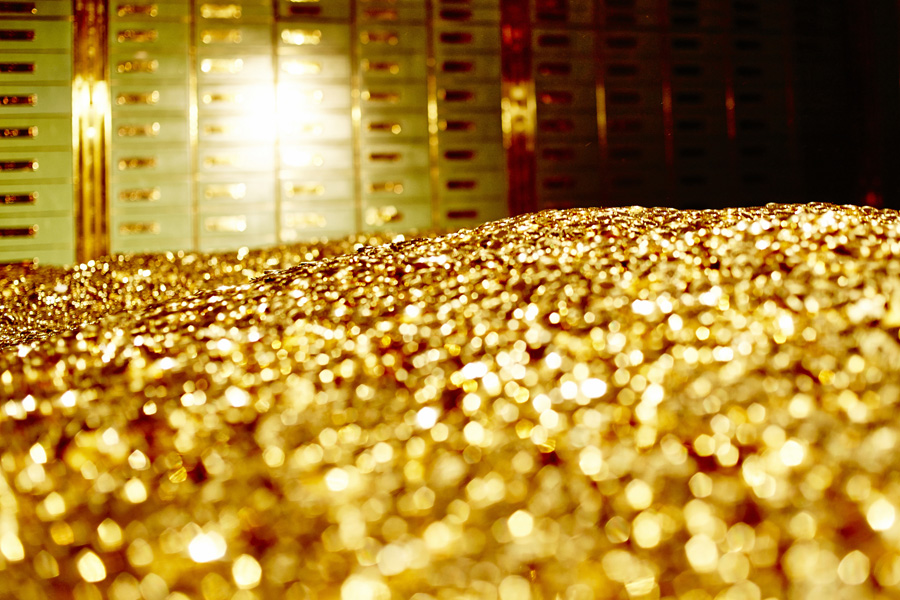
In April 2026, the Banque de France confirmed that every ounce of French sovereign gold is now stored on French soil. Through 26 transactions between July 2025 and January 2026, the central bank sold 129 tonnes of non-standard legacy bars held at the Federal Reserve Bank of New York and purchased equivalent compliant bullion on the European market. Total reserves of 2,437 tonnes remained unchanged. The capital gain was €12.8 billion.
The Banque de France described the exercise as operational. But the outcome is political regardless of the motive. A founding NATO ally has removed 100% of its gold from American custody.
France is the latest in an accelerating sequence. Germany repatriated 674 tonnes between 2013 and 2017, though 1,236 tonnes, roughly 37% of its total, remains at the Federal Reserve. German economists are now calling for those reserves to come home, with the head of the Association of German Taxpayers arguing that Germany’s gold is “no longer safe in the Fed’s vaults.” India has brought home 274 tonnes since March 2023, bringing over 65% of its reserves under domestic custody.
Nobody repatriates 129 tonnes of sovereign metal across an ocean because the storage fees are inconvenient. The Western freeze of $300 billion in Russian reserves in 2022 was a legitimate and necessary response to military aggression. But it also demonstrated to every central bank on earth that reserve assets held in foreign jurisdictions carry sovereign risk. Non-aligned states took note.
The structural bid
Central banks purchased 863 tonnes in 2025, the fourth consecutive year above 850 tonnes. Twenty-two institutions reported increases of a tonne or more. Over forty central banks accumulated simultaneously, making the demand base structurally resilient rather than dependent on any single buyer.
Poland’s National Bank led for the second consecutive year, adding 102 tonnes and bringing holdings to 550 tonnes. Governor Glapiński has indicated a target of 700 tonnes, framed explicitly as national security. Brazil re-entered the market for the first time since 2021, adding 43 tonnes. Kazakhstan recorded its highest annual purchases since records began in 1993. JPMorgan forecasts 755 tonnes of central bank purchases in 2026, still roughly 50% above pre-2022 averages.
Goldman Sachs maintained its year-end target of $5,400 per ounce even after gold’s sharpest monthly correction since 2013 in March, describing the pullback as a near-term dislocation within a structurally intact bull market. Total global gold demand exceeded 5,000 tonnes for the first time on record, worth $555 billion. Gold ETFs recorded their second-strongest annual inflow at 801 tonnes. Bar and coin demand hit a twelve-year high. This is not a speculative rally. It is a structural reallocation by sovereign and institutional buyers responding to a world in which the rules governing reserve asset safety have changed.
China’s parallel architecture
China’s gold strategy is architectural, not speculative. The People’s Bank of China has purchased gold for sixteen consecutive months, bringing official reserves to 2,309 tonnes, roughly 10% of total foreign exchange reserves. Market analysts believe actual holdings significantly exceed official figures.
The buying occurs alongside a systematic reduction of US Treasury holdings. From Beijing’s perspective, every tonne of gold purchased and every Treasury sold shifts China’s reserve portfolio from an asset class that could theoretically be restricted under sanctions to one that cannot. The Shanghai Gold Exchange has overtaken COMEX in physical trading volume, processing roughly 2,500 tonnes annually. Chinese customs regulations ensure domestically mined gold stays within China’s borders. The country produces approximately 380 tonnes per year, making it the world’s largest gold miner.
Beijing is simultaneously building vertical integration in gold mining abroad, particularly in West Africa. This is the same playbook China executed in rare earths, lithium, cobalt, and graphite, which now gives it control over refining capacity for 19 of 20 strategic minerals. Washington spent years recognising the security implications of Chinese dominance in critical mineral processing. The same logic applies to gold: the only globally liquid reserve asset that functions outside the Western-controlled financial architecture.
The Gulf stress test
The US-Israeli strikes on Iran beginning 28 February 2026 demonstrated how rapidly gold’s physical infrastructure can be disrupted. Gold surged past $5,600 per ounce to an all-time high in late January. The March correction brought prices back toward $4,600 to $4,700. The structural dynamics revealed during the crisis matter more than the price action.
Dubai, which handles roughly 20% of global bullion flows, saw its pipeline disrupted as flights were grounded and cargo stranded. Physical premiums in India swung from a $50 discount to London parity within 48 hours. Logistics costs for new routing contracts surged by 60%-70%. Gulf states liquidated gold reserves to cover revenue shortfalls from the oil supply disruption.
The chokepoints are not the mines. They are the refineries, the compliance architectures, the logistics corridors, and the clearing systems through which raw metal becomes institutionally legitimate bullion. London, where more than 70% of over-the-counter gold trades clear, remained operational. But the concentration of global bullion flows through a handful of physical hubs, each vulnerable to distinct geopolitical risks, is a strategic question the industry can no longer defer.
The sellers’ signal
The identity of the sellers is as instructive as the identity of the buyers. Russia sold approximately 15 tonnes in the first two months of 2026, its largest drawdown since 2002, liquidating reserves to cover wartime budget deficits. Turkey sold approximately 27 tonnes in March 2026, though much of this was swap-based activity rather than permanent liquidation. Several Gulf states reduced holdings under fiscal pressure from the oil supply disruption.
States under budgetary stress are selling. States with strategic flexibility are accumulating. These sales are episodic and forced. The buying is structural and deliberate. The asymmetry tells the market everything about gold’s direction of travel as a sovereign instrument.
Implications for the mining industry
If gold is national security infrastructure, the mining industry occupies a position it has not held since the Cold War. Mine supply of approximately 3,672 tonnes in 2025 grew only marginally despite prices nearly doubling in 18 months. Total supply rose just 1% year-on-year to 5,002 tonnes. Recycling increased only 3%. The supply response has been muted at precisely the moment sovereign demand is most intense.
Central banks with explicit allocation targets do not reduce purchases when prices rise; they need fewer tonnes to reach the same percentage. When prices correct, they accelerate. This creates a structural floor beneath gold that speculative selling cannot easily overwhelm.
Three implications follow. First, the provenance and compliance credentials of mined gold will matter increasingly as central banks demand supply chains that meet Western governance standards. Second, the geography of refining capacity becomes a strategic variable: refineries in allied jurisdictions that convert raw production into sovereign-grade bars are strategic infrastructure. Third, the relationship between miners and sovereign buyers is no longer a standard commodity transaction. It is part of the architecture of financial sovereignty.
National security infrastructure
When a founding NATO ally removes all sovereign gold from the custody of its principal security guarantor, the act has moved beyond portfolio management. When a NATO member’s central bank governor frames gold accumulation as national security, the framing has moved beyond monetary policy. When the world’s second-largest economy systematically converts dollar-denominated reserves into an asset beyond the reach of sanctions, the conversion has moved beyond diversification.
Gold is now part of the national security infrastructure of sovereign states. The 2022 sanctions on Russian reserves were the right call. But the second-order consequence is that non-aligned states accelerated a pre-existing shift toward gold, and three years of record accumulation, repatriation and de-dollarization have followed. The mining industry sits at the origin of this supply chain. It has historically understood itself as producing a commodity. The market is telling it that it produces a strategic capability. The companies, jurisdictions, and refining networks that internalize this distinction earliest will shape the next phase of the gold market. Those that do not will find themselves supplying metal into a system whose rules they no longer influence.
* David Zaikin is the founder and CEO of Key Elements Group, a London-based strategic advisory firm specializing in defence, international affairs, and crisis diplomacy.
More News
{{ commodity.name }}
{{ post.title }}
{{ post.date }}
Comments