Defence-driven demand powers surge in US listings by mining firms

There has been a surge in mining companies seeking US listings this year, but even more striking is the change in language as firms explicitly target defence-related demand for critical minerals.
At least 18 companies, mostly Canadian and Australian but also some US startups, have completed or are pursuing dual US listings this year, versus just three in 2025, according to exchange filings and company disclosures reviewed by Reuters.
They span in value from about $25 million to $7.5 billion and mark a shift in how critical mineral producers seek access to capital markets as listings explicitly pitch for defence end-use applications.
Defence focus
This year’s transactions have brought producers of antimony, rare earths, tungsten and uranium to the NYSE and Nasdaq – all minerals designated strategic by the Pentagon and used in fighter jets, missiles and radar systems.
The firms are positioning themselves as suppliers of munitions, armour-piercing materials and of inputs for US weapons systems, their public filings show, departing from traditional mining IPO language focused on supply-demand fundamentals and long-term price cycles.
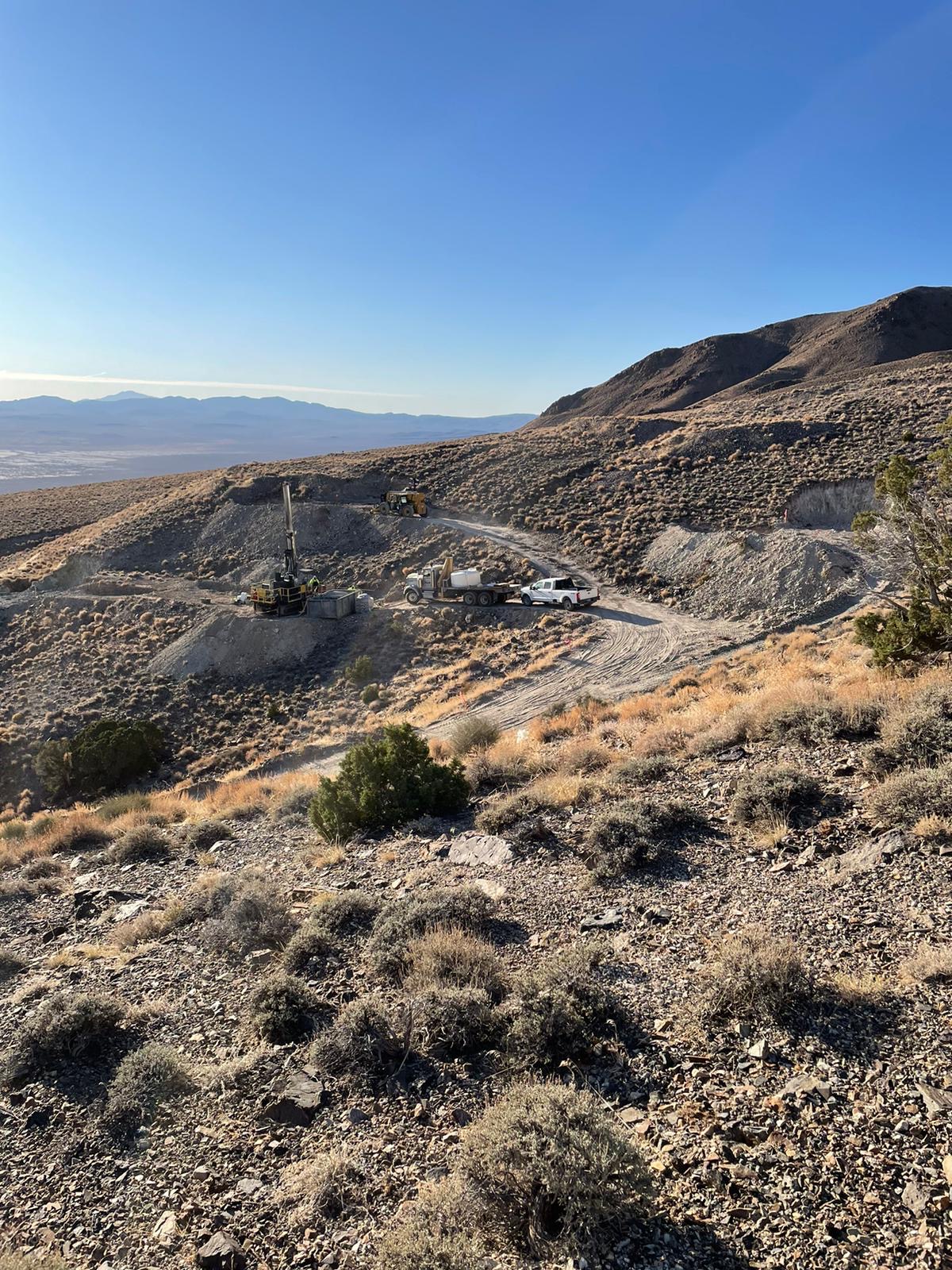
“Our goal is to cover direct defence demand for tungsten,” Guardian Metal Resources , CEO Oliver Friesen told Reuters, estimating US military annual demand at 2,000 to 3,000 metric tons.
Guardian aims to help the US rebuild its domestic tungsten supply chain, citing uses in armour-piercing ammunition. It has received $6.2 million from the Pentagon and has applied for additional funding from the US military that would be worth at least $100 million, Reuters reported in March.
United States Antimony secured a $245 million Defense Logistics Agency contract to supply antimony for the defence stockpile, where the metal is used in munitions and other military applications.
Rare earth developers are also emphasising defence uses. REalloy Inc said its project contains dysprosium and terbium used in magnets for advanced weapons systems, while Rare Earth Americas, backed by Australia’s Gina Rinehart, partly focused its IPO on “defence applications”.
Most companies have raised modest sums so far. Guardian secured $68.3 million, Rare Earth Americas $63.3 million, and Atlas Critical Minerals about $11 million, according to filings.
But several have secured government funding through Pentagon-linked programs, suggesting the listings are as much about unlocking strategic financing and investor access as upfront capital raising, analysts and lawyers said.
| Company | US Listing | Previous / Concurrent | Date |
| Atlas Critical Minerals | Nasdaq: ATCX | OTCQB (Jupiter Gold) | Jan. 13 |
| Blue Moon Metals | Nasdaq: BMM | TSXV, Frankfurt, OTCQX | Jan. 26 |
| Santacruz Silver | Nasdaq | TSX-V | Jan. 21 |
| Mayfair Gold | NYSE American/ NYSE | TSX-V → TSX | Jan. 27 |
| Aris Mining | NYSE: ARMN | TSX | Feb. 19 |
| Versamet Royalties | Nasdaq | TSXV / private precursor | Mar. 6 |
| Highlander Silver | NYSE American: HSLV | CSE / TSXV | Mar. 11 |
| U.S. Antimony Corp | NYSE (uplist) | NYSE American | Mar. 11 |
| Guardian Metal Resources | NYSE American | LSE | Mar. 20 |
| OceanaGold | NYSE: OGC | TSX, ASX | Apr. 7 |
| The Metals Royalty | Nasdaq: TMCR | TSX-V | Apr. 8 |
| Nicola Mining | Nasdaq ADSs: NICM | TSX-V | Apr. 13 |
Equity stakes, project funding
Some Canadian-listed miners, including Lithium Americas and Trilogy Metals, are tapping US defence-linked financing through equity stakes and project funding as part of Washington’s push to secure key minerals.
That push follows a series of crises that left the United States and other Western nations racing to rebuild domestic mineral supply chains and reduce their dependence on China’s dominant production and processing.
China imposed export controls on antimony in August 2024, tightening global supply of a mineral used in military equipment and raising concerns about US defence supply chains.
By December 2025, the US military had begun testing small-scale refineries for critical minerals, shifting from funding projects to building processing capacity itself.
A 2025 Chinese export ban on tungsten has limited feedstock for US refineries built in the 1950s for filament light bulbs, which have production capacity of about 18,000 tons but are operating significantly below that, Guardian’s Friesen said.
In November 2025, China issued a one-year suspension of its export ban on antimony, gallium, germanium, and super-hard materials to the US, but kept restrictions on military users, easing commercial supply but leaving the Pentagon reliant on domestic sources.
In addition to China’s export curbs, Washington has faced restrictions on cobalt exports from the Democratic Republic of Congo and other risks.
| Company | US Plan |
| Resolution Minerals | Nasdaq |
| Am. Rare Earths | Nasdaq H2’26 |
| Sunshine Silver | NYSE (SSMR) |
| McEwen Copper | IPO Q4’26 |
| Jindalee / USE | Nasdaq SPAC H2’26 |
| Barrick / NA Barrick | NYSE/TSX vehicle |
Capital follows policy
Private capital has also responded. JPMorgan, for example, said in October it could invest up to $10 billion in sectors tied to national economic security, including critical minerals.
In February, US President Donald Trump launched “Project Vault”, a $12 billion strategic minerals stockpile initiative backed largely by the US Export-Import Bank.
The administration has also taken equity stakes in mining firms including MP Materials, USA Rare Earth and Korea Zinc.
Investors say US government equity offers more than capital, giving companies access to defence-linked contracts, subsidies and policy backing, and helping protect them from price cyclicality.
Still, caution remains.
“There’s absolutely a lot of money going into defence-driven exploration, but a lot of it is also very speculative right now,” said Rick Werner, co-chair of the capital markets and securities practice at law firm Haynes Boone.
“As long as you can gain access to the mines and the resources, I don’t see why they can’t break China’s chokehold over it,” Werner said, “but it’ll take time and money.”
($1 = 1.3754 Canadian dollars)
(By Clara Denina and Ernest Scheyder; Editing by Veronica Brown and Jason Neely)
More News
{{ commodity.name }}
{{ post.title }}
{{ post.date }}
Comments