Rare Earths Americas surges after debut, bets on US discovery
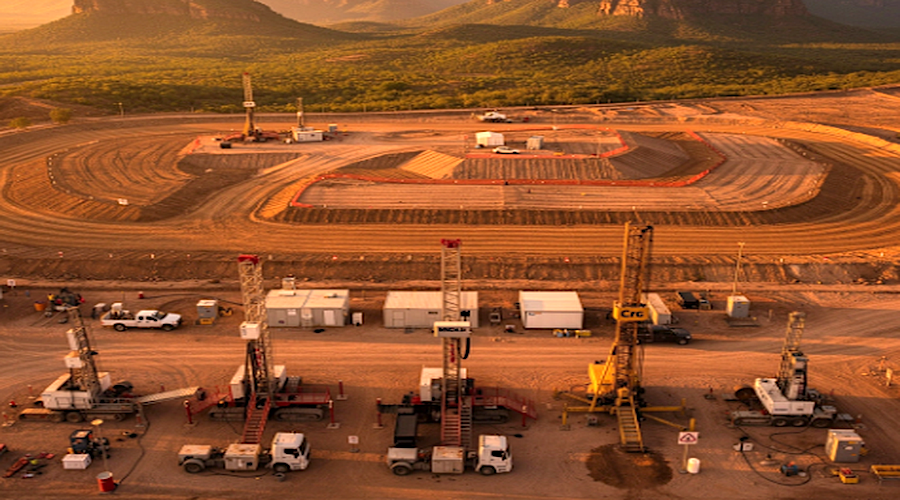
Rare Earths Americas (NYSE: REA) made its debut on the NYSE American Wednesday, raising $63.3 million and hitting its target $368 million valuation in an oversubscribed IPO aimed at advancing its four exploration-stage projects in Brazil and the US.
REA stock was trading at just over $24 a share in Friday afternoon dealings, up sharply on the day and now more than 26% above its IPO price of $19 for a market capitalization of $463 million on the exchange that caters to emerging growth companies.
The company, which is focused on heavy rare earth elements used in permanent magnets and defense applications, says its Shiloh exploration district in Georgia could fundamentally alter the US’ rare earth supply.
“This is the first regular-way IPO for something like what we’re doing,” CEO Don Swartz told MINING.COM in an interview on Wednesday, referring to the scarcity of traditional US public listings among rare earth development companies.
Most rare earth juniors have historically listed on the ASX or TSX, while higher-profile North American names such as MP Materials and USA Rare Earth entered public markets through SPAC transactions.
Swartz said the NYSE American listing was designed to attract a broader pool of institutional investors focused on securing Western supply chains for critical minerals.
“Securing Western supply of magnet materials is something everyone is hyper-focused on,” he said.
Rare Earths Americas controls four exploration projects, including ionic clay deposits in Brazil and a monazite-rich sands project in Georgia that management believes could represent the source rock for rare earth-bearing mineral sands already mined along the US coastal plain.
“There hasn’t been a novel rare earth discovery in the US in probably 40 years,” Swartz said.
The company’s most advanced asset is the Alpha project in Bahia, Brazil, where engineering work is underway toward a SK-1300 initial assessment, broadly comparable to a preliminary economic assessment.
Swartz said Alpha shares similarities with Brazilian ionic clay developers such as Aclara Resources and Serra Verde in terms of grades and scale.
Despite the advanced Brazilian work, the company plans to direct a significant portion of exploration spending toward Georgia.
“The funding is slanted towards Georgia because of the asymmetry,” Swartz said, adding that success there could dramatically reshape the company’s valuation.
Unlike many hard-rock rare earth deposits, the Georgia project is shallow, free-digging and potentially amenable to gravity separation methods commonly used in mineral sands operations.
The strategy, he said, is to produce a concentrate that can already be handled by existing Western processors, including Energy Fuels (TSX: EFR, NYSE-A: UUUU) at its White Mesa mill in Utah, rather than pursuing technically complex separated oxide production.
“The further you go down toward separated oxide, the more technical risk you introduce,” said Swartz, a mining engineer by training.
Swartz also said funding would be directed at all four of the company’s projects.
Rare Earths Americas has assembled a board and management team with ties to several well-known mining and critical minerals ventures, including Piedmont Lithium, Hyperion Metals and Brazilian Rare Earths.
The company, which started last year, said it quietly began assembling exploration rights in Georgia in early 2025 before raising private capital ahead of the IPO.
“We’ve been intentionally quiet,” Swartz said. “This isn’t a PowerPoint company. It’s people that have built things over the years.”
More News
{{ commodity.name }}
{{ post.title }}
{{ post.date }}
Comments