EnergyX targets Utah lithium with Compass Minerals partnership
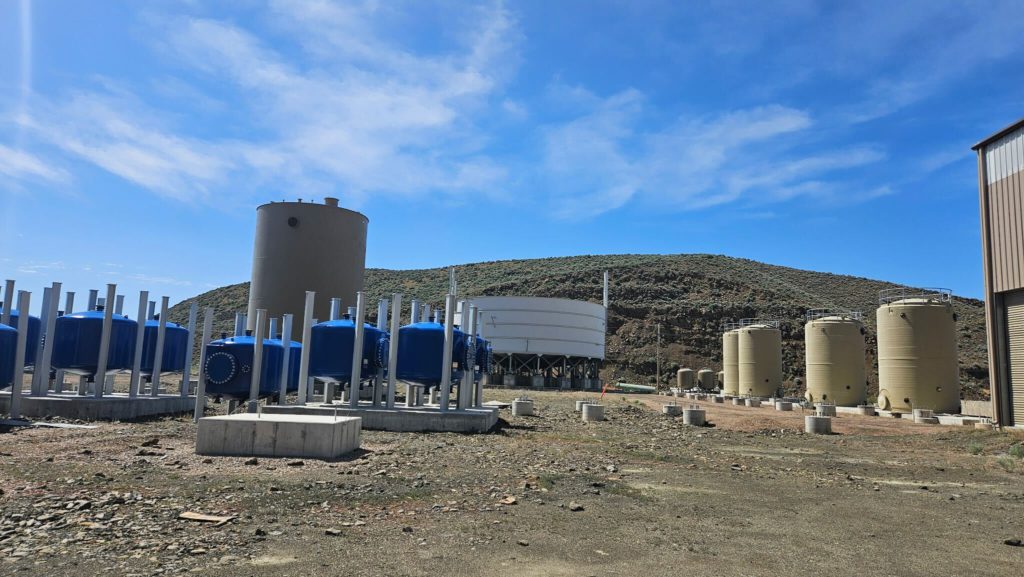
EnergyX is betting its newly announced Utah venture could become one of the first major commercial lithium production projects in the United States, leveraging an existing brine operation owned by Compass Minerals (NYSE: CMP) to fast-track development.
The company announced Monday it has entered into a Memorandum of Understanding with Compass Minerals to advance the development of EnergyX’s 30,000 tons-per-annum (tpa) commercial-scale direct lithium extraction (DLE) near Great Salt Lake.
Under the terms of the agreement, EnergyX plans to design, fund, construct and operate a commercial DLE and refining facility on land owned by Compass Minerals.
The company’s latest initiative — internally dubbed “Project Powderhound” — marks EnergyX’s third lithium project and its second in the US.
In March, EnergyX launched a first-of-its-kind direct lithium extraction facility in Texas, designed to prove its technology at scale and reduce reliance on imported battery materials.
The company also has Project Black Giant, a 100,000-acre lithium resource in Chile’s Antofagasta region, where it plans to develop DLE facilities, along with a refinery near the port.
But according to chief executive Teague Egan, Project Powderhound may ultimately become the company’s most commercially advanced near-term opportunity.
“This one’s special because it could potentially be the most ready near-term project,” Egan said in an interview with MINING.COM. “The lithium is ready to go. All we have to do is build the plant.”
The project is centered at Compass Minerals’ Ogden operation near the Great Salt Lake, where the publicly traded minerals producer already operates large-scale sulfate of potash and magnesium chloride facilities.
Compass had previously attempted to enter the lithium business during the 2021-2022 lithium boom, investing tens of millions of dollars into equipment and development before shelving the effort amid collapsing lithium prices, rising capital costs and legislative hurdles in Utah.
“They spent somewhere in the order of $70 million or $80 million just on equipment,” Egan said. “Then the lithium price tanked, CapEx was escalating and there were some legislative headwinds.”
Following a leadership change at Compass, the company shifted strategy, opting to seek a partner with lithium expertise willing to finance development in exchange for access to the resource.
EnergyX first approached Compass in late 2024, with the two companies finalizing an agreement earlier this year.
Existing infrastructure cuts development risk
Unlike many emerging lithium projects that still require extensive drilling and resource delineation, project Powderhound benefits from an already-operating brine system.
“The brine is already on the surface,” Egan said. “There’s no upstream exploration or upstream capex cost, which drastically reduces our overall unit economics.”
Under the proposed setup, EnergyX would extract lithium from an existing Compass brine stream using its DLE technology before returning the processed brine back into Compass’s existing production system.
The arrangement could also simplify permitting.
“There’s already a big operating plant there,” Egan said. “We’re basically just taking a stream from Compass, extracting the lithium and then returning the stream to continue their processing.”
EnergyX is targeting a 2028 construction start.
Sustainability focus around Great Salt Lake
Egan emphasized that the project would avoid additional water withdrawals from the Great Salt Lake, an issue that has become politically and environmentally sensitive in Utah.
“We don’t touch any additional water or brine from the Great Salt Lake,” he said. “It’s literally the most sustainable procedure that could possibly be used to extract lithium.”
The company plans to produce lithium carbonate at the site using a process more closely aligned with its Chile operations, though still based within its existing technology portfolio.
Bigger ambitions beyond lithium
While lithium remains EnergyX’s immediate focus, Egan outlined a much broader long-term vision for the company.
“Our short-term goal is to be the biggest lithium producer in the world,” he said, adding that the company ultimately aims to become “one of the leading critical material and technology producers for the energy transition.”
That strategy extends beyond lithium into nuclear-related materials such as uranium and thorium, alongside other battery metals including nickel, cobalt and manganese.
Egan also suggested EnergyX is evaluating opportunities in deep-sea polymetallic nodule mining, an increasingly debated sector gaining momentum among critical minerals developers.
“It’s something that we’re looking at,” he said.
According to Egan, the company sees polymetallic nodules as a potentially lower-impact source of battery metals compared with conventional terrestrial mining.
“I think picking up a polymetallic nodule from the ocean floor that has multiple battery metals has to be dramatically less harmful than digging huge pits on land,” he said.
Potential implications for US supply chains
Egan said Powderhound could eventually leapfrog some of EnergyX’s other projects because of its ready-made infrastructure and existing brine access.
“This could be the first major commercial lithium production in the US before everybody else,” he said. “It’s a ready-to-go resource.”
The project comes as the US continues to push for greater domestic battery supply chain capacity amid rising geopolitical concerns surrounding critical mineral dependence.
More News
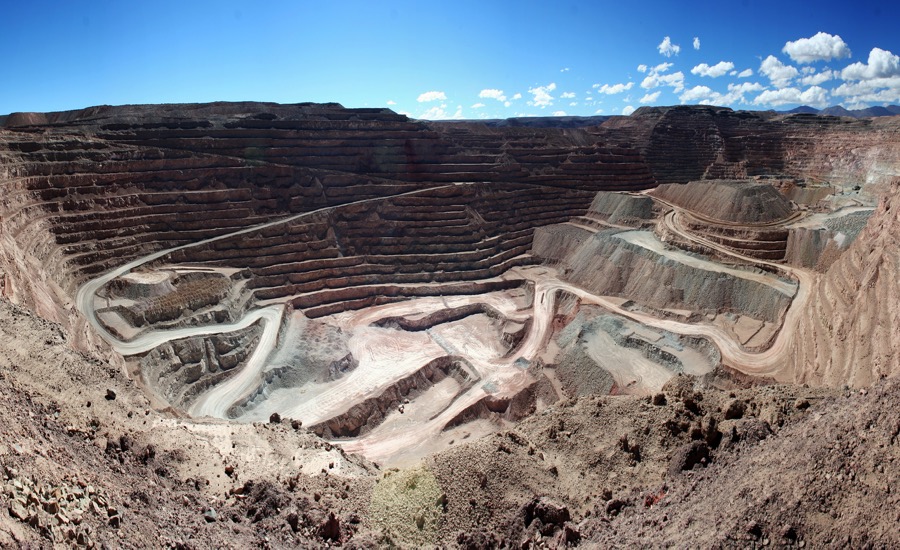
BHP seeks to restart Cerro Colorado mine with $1.5B investment
The copper mine has been closed since late 2023 after it was denied its water permit.
July 02, 2026 | 10:43 am
{{ commodity.name }}
{{ post.title }}
{{ post.date }}
Comments