USA Rare Earth finalizes $1.6B funding with Commerce Department
USA Rare Earth (Nasdaq: USAR) announced on Wednesday that it has executed definitive agreements with the US Department of Commerce to unlock nearly $1.6 billion in funding under the CHIPS Act.
The funding package was first announced in January this year as part of the Trump administration’s efforts to bolster the domestic supply chain of rare earths.
Under the proposed investment, USAR would receive $277 million in federal funding and up to $1.3 billion in senior secured loans, with disbursements tied to the achievement of project milestones.
Together with a $1.5 billion private capital raise that was also announced in January, as well as previous financings, the company now has $3.5 billion in capital to fund its growth plans, USAR said.
“This partnership with the US government is the largest of its kind in our industry and provides the necessary capital to build the only global platform across light and heavy rare earth mining and processing, metal and alloy making, as well as magnet manufacturing,” Michael Blitzer, chairman of USAR, stated in a press release on Wednesday.
Shares in USAR, however, fell 8% by midday amid weakness across the critical minerals mining sector. The Oklahoma-based company trades at a market capitalization of $1.37 billion, still up over 50% year to date.
Building US rare earth value chain
“With the definitive agreements, USAR is positioned to accelerate the building of a global mine-to-magnet value chain that will supply the materials, metals, and magnets that industrial customers depend upon,” USAR’s chief executive Barbara Humpton said.
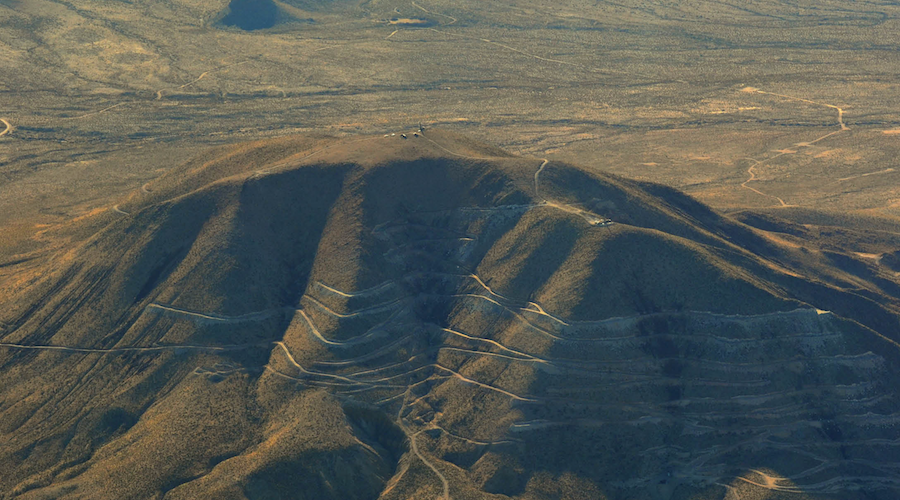
In the US, the company is looking to build a fully integrated rare earth supply chain, to be anchored by a large deposit in Texas that it plans to bring into production in 2028. The mine would be supplemented by processing, metal-making and magnet manufacturing facilities across the country.
In April, the company commissioned its first production line at its magnet production facility in Stillwater, Oklahoma, which is expected to ramp up to 600 tonnes by year-end. The production capacity is expected to double next year once another production line is added, USAR has said.
Further investments
On top of its existing separation and processing site in Wheat Ridge, Colorado, the company is also looking to build a third facility in South Carolina. Earlier this week, it selected Blacksburg as the location of the proposed magnet manufacturing and rare earth refining facility, with a planned investment of $1.2 billion.
Combined with the Stillwater facility, USAR is expecting its total domestic annual production capacity to reach 10,000 tonnes of rare earth magnets and 10,000 tonnes of heavy rare earth strip-cast, metal and alloy once fully ramped up.
According to USAR, its definitive agreements with the Commerce Department would support the execution of the company’s integrated value chain across each layer of the production system. With a targeted 2030 operating profile, it is expected to represent the largest domestic heavy rare earth and critical mineral mining, processing and separation, metal making, and magnet production platform in the country, USAR said.
Last month, the Department of Energy said it would commit $19.3 million in federal funding towards USAR’s pilot-scale rare earth separations project.
Beyond the US, the company is looking to build metal, alloy and magnet production capacity in France, with plans to invest more than €175 million as outlined earlier this week. It also set sights on Brazil, having announced a $2.8 billion acquisition of its only producing rare earth mine.
In the United Kingdom, USAR, through its Less Common Metals subsidiary, recently produced its first commercial-grade yttrium, a “heavy” rare earth element used in thermal barrier coatings on turbine blades and other high-temperature aerospace components.
Chokepoint in semiconductors
The $1.6 billion federal funding “will be instrumental for the construction of a domestic integrated supply chain for critical minerals and NdFeB magnets, which are essential for semiconductor chip manufacturing,” said Bill Frauenhofer, executive director of Semiconductor Investment and Innovation.
The CHIPS Act, enacted in 2022, is designed to revitalize domestic semiconductor manufacturing, reduce reliance on foreign supply chains (particularly in Asia), and boost technological competitiveness in sectors like AI and clean energy.
“Yttrium, gallium, dysprosium and the other 9 critical and strategic minerals that will be mined in Texas, along with the domestic metal and magnet production, provide United States semiconductor companies a reliable domestic source and remove choke points in their manufacturing supply chain,” Frauenhofer added.

{{ commodity.name }}
{{ post.title }}
{{ post.date }}
Comments