Canada eyes special status for Far North resource roads
The federal government is considering granting national interest status to the C$2-billion Mackenzie Valley Highway and Grays Bay Road and Port initiative (GBRP), two northern transportation projects crucial to access mineral-rich regions of Nunavut and the Northwest Territories.
The Mackenzie Valley Highway is to run about 800 km north from Wrigley, Northwest Territories, to Inuvik, near the Arctic Ocean; and the GBRP would build a deepwater port at Grays Bay, Nunavut, an airstrip and a 230-km all-season road from that port into the Northwest Territories.
Companies such as Inuit-owned West Kitikmeot Resources, Glencore (LSE: GLEN) and China-controlled MMG stand to benefit for their developments.
‘Project for generations’
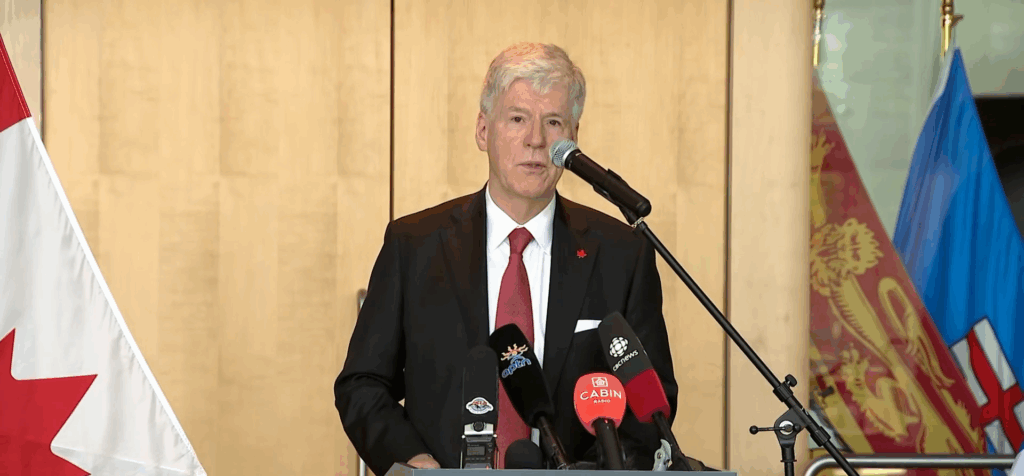
“There are clear and obvious Canadian Armed Forces requirements of that [Grays Bay] project and clear and obvious uses by resource companies in that region, and civilian uses for that project as well,” Transport Minister Steven MacKinnon said during an announcement in Yellowknife.
“We’re building a port complex and a road for generations that will follow for their opportunity for their livelihood and the need for the country’s sovereignty.”
A declaration of national interest is a special federal designation that can propel both projects through permits and approvals via the Major Projects Office that Ottawa set up last year. They’re expected to help develop major zinc, copper, silver and base metal sites in the Far North, a vast region whose limited road network presents cost and logistical challenges to exploration and mining.
Act’s first projects
National interest designation under the Building Canada Act – introduced one year ago – would line up clearer regulatory processes, though it’s not clear it automatically opens up funding. The listing represents the first time projects have been considered under the Act, said Natural Resources Minister Tim Hodgson, who spoke after MacKinnon.
“We are in a pivotal moment,” Hodgson said. “We are facing a global energy crisis, we are facing attacks on our sovereignty, a changing global economic reality, a difficult security environment and major climate change.”
Referring to energy and critical minerals development, trade diversification, national security and net zero goals, Hodgson said it’s time to “build big things again, both quickly and responsibly, in partnership with Indigenous peoples.”
A third project considered for national interest is the Nuclear Waste Management Organization’s Deep Geological Repository in northern Ontario.
Multi-billion dollar projects
The Mackenzie Valley Highway is projected to cost about C$1.67 billion, including road construction, bridges and engineering, according to a Northwest Territories government report from 2015. Ottawa in 2018 committed up to C$102.5 million towards planning and environmental work for the project.
Since 2019, Ottawa has pledged about C$29 million to planning and development work for GBRP and in May earmarked another C$50 million through the First and Last Mile Fund. Nunavut-based West Kitikmeot Resources is the sole proponent for GBRP.
From the private sector, utilities and infrastructure company Atco (TSX: ACO.X) invested C$10 million ($7.2 million) for a 40% stake in West Kitikmeot Resources last March.
Linking South to North
The project is also envisioned as ultimately connecting the Arctic Ocean to the southern all-season road network through the Arctic Economic and Security Corridor, a 400-km road from the Northwest Territories that would run northeast and connect with the Grays Bay road. Both projects are estimated to cost about C$2 billion and were referred to the Major Projects Office in March.
The geological repository would bury nuclear waste about 500 metres deep at a site near Ignace, Ont., about 250 km northwest of Thunder Bay. Construction of the repository, which could store an estimated 5.9 million used nuclear fuel bundles, is slated to begin in 2033 and finish in 2043.
{{ commodity.name }}
{{ post.title }}
{{ post.date }}
Comments