Australian gold output down slightly as prices vary widely
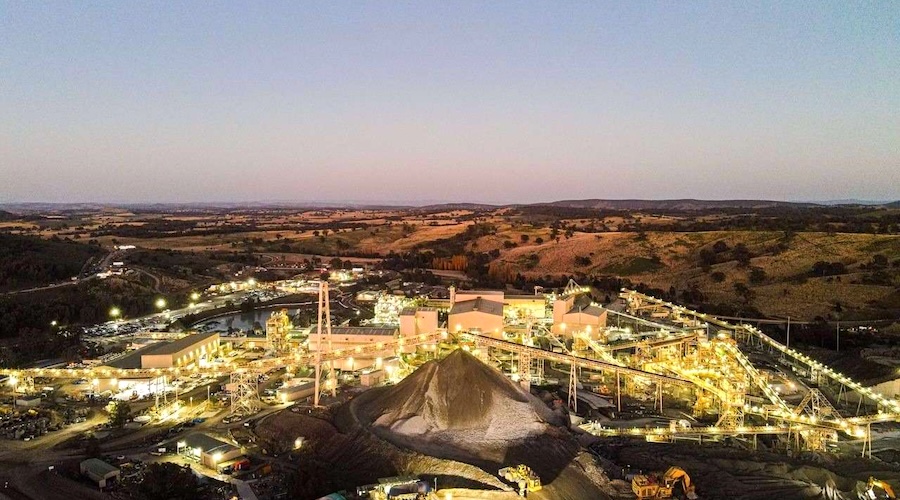
Australian gold production fell almost 3% to 75 tonnes in this year’s first quarter compared to the previous period due to rain and bushfires, while gold price highs kept the output valuable, Melbourne-based mining consultants Surbiton Associates says.
That production total, worth about A$17 billion ($12 billion) was down just two tonnes from last year’s fourth quarter output. Gold fluctuated widely during the latest quarter, with the yellow metal reaching an historic high of $5,595 per oz. on Jan. 29, before prices dropped to $4,392 per oz. just four days later.
“The March quarter is often the most affected by wet weather,” Surbiton director Sandra Close said in a release on Sunday. “This time, there was the added disruption caused by bushfires. Fortunately though, the overall result was better than might have been expected for the first quarter of the calendar year.”
Wild price ride
Despite the modest production drop, the dramatically higher gold prices lifted the value of Australia’s output. The price gained 70% or $2,013 per oz. over last year’s first quarter and 18% or $738 per oz. over last year’s fourth quarter.
Geopolitical turmoil indirectly contributed to gold’s fluctuations. The United States and Israel’s late February attacks on Iran, which sparked the closure of the Strait of Hormuz, led to higher oil prices and a brief stock market selloff.
“To offset the lower value of portfolios, financial institutions sold gold and other assets,” Close said. “That depressed gold prices which triggered margin calls and stop-loss orders, thereby reducing gold prices even further.”
In response, some countries such as Turkey and Russia sold off 66 tonnes of gold reserves “in order to raise foreign exchange to defend their currencies,” she said.
Gold prices fell as low as $4,098 per oz. on March 23. They have since recovered and sat at $4,336.60 per oz. on Monday morning.
“Despite the gloom, the fundamentals underpinning the long-term rise of gold and silver prices appear to be intact,” she said. “There is still a great deal of uncertainty in world markets in general.”
Rain disruptions
Australian operations most affected by rain this quarter included Newmont’s (TSX: NGT; NYSE: NEM) Tanami site in the Northern Territory, which saw production fall by 41,000 ounces; and Gold Fields’ (NYSE, JSE: GFI) Gruyere mine in Western Australia, where output was down 20,200 ounces.
Newmont’s Boddington mine experienced bushfire damage in late December to its water and power supplies and communications systems, Surbiton said. As a result, Boddington had to scale back operations and output was 35,000 oz. lower than in last year’s fourth quarter.
Other sites saw higher production in the quarter, with Gold Fields’ Granny Smith in Western Australia producing 19,600 oz. more, Newmont’s Cadia in New South Wales putting out 13,000 more oz. and Northern Star Resources’ (ASX: NST) KCGM Super Pit in Western Australia producing up to 12,500 more ounces.
{{ commodity.name }}
{{ post.title }}
{{ post.date }}
Comments