Costa Rica tests mining ban with Crucitas revival
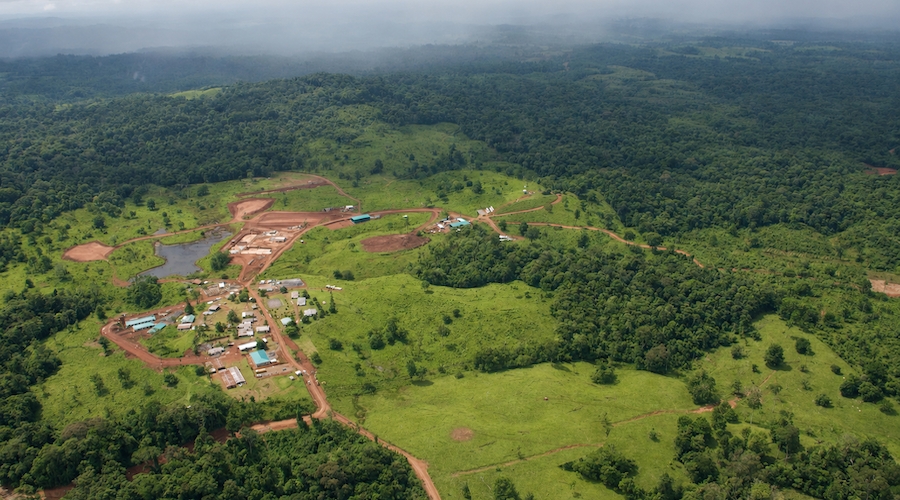
Costa Rican President Laura Fernández has placed the proposed reopening of the Crucitas gold deposit at the centre of her new administration’s agenda, testing one of Latin America’s strongest anti-mining policies and reviving a national debate over whether resource development can coexist with the country’s environmental identity.
Fernández, who took office on May 8 after winning February’s presidential election in the first round, moved quickly to elevate Bill 24.717 by including it in the Legislative Assembly’s extraordinary-session agenda just four days after her inauguration. The measure would permit gold exploration and mining only in the 84,800-hectare district of Cutris de San Carlos, home to the Crucitas deposit, while preserving Costa Rica’s broader ban on open-pit metal mining elsewhere in the country.
The move marks a sharp reversal for a country that has built much of its international reputation on conservation, ecotourism and sustainable development. Government officials argue the current prohibition has failed to stop mining activity at Crucitas, instead allowing illegal operators to expand, often using mercury and cyanide without environmental controls.
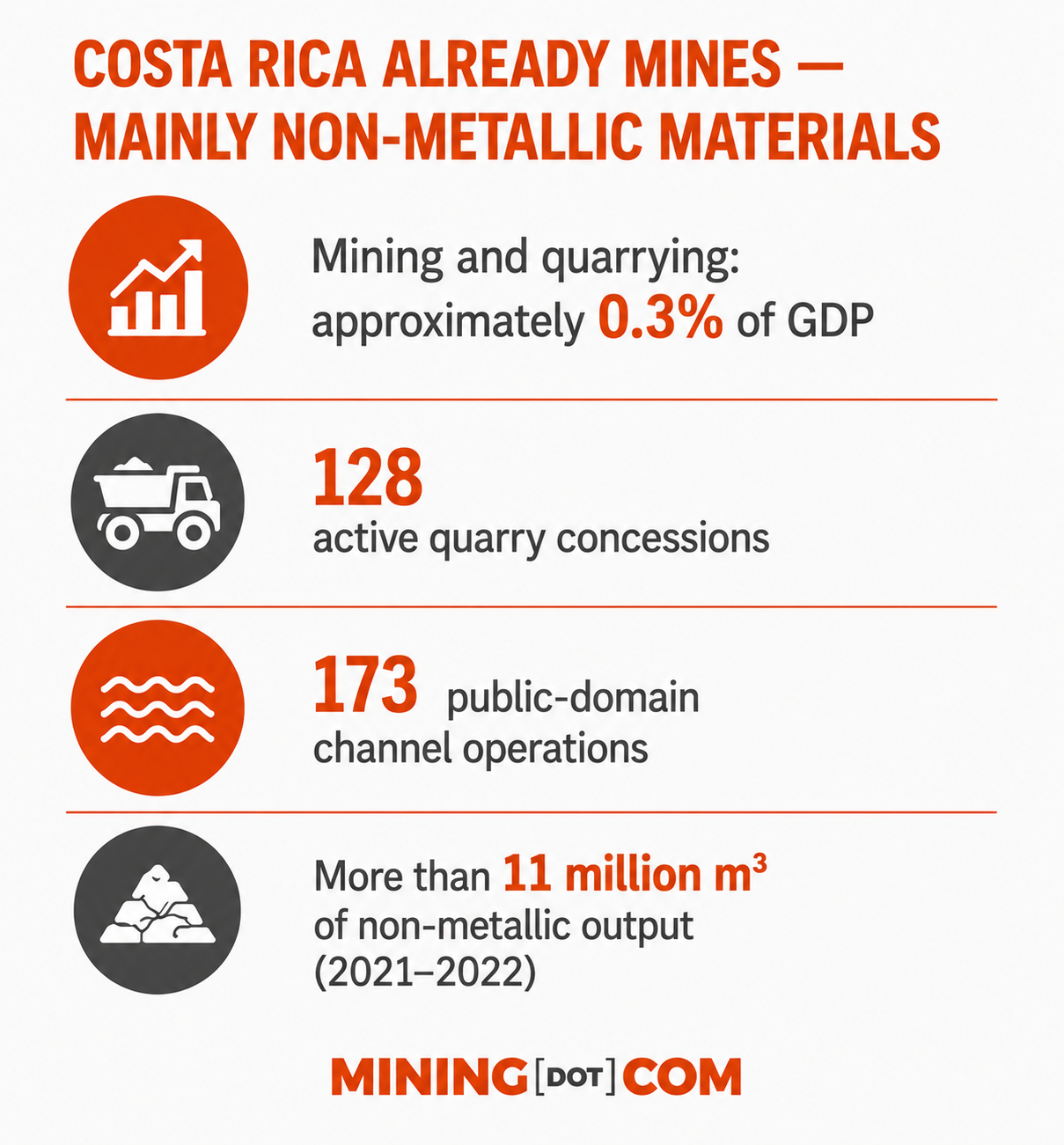
Juan Ignacio Guzmán, CEO of GEM Mining Consulting, said the debate is increasingly centred on governance rather than mining itself, noting that Costa Rica already maintains an active non-metallic mining industry supplying aggregates, limestone, silica and other industrial materials used in construction and infrastructure.
Eduardo Zamanillo and Marta Rivera, analysts at Geopolitical Mining, argue that Crucitas reflects a broader challenge they describe as “anomic mining”: situations where formal mining rules remain in place but no longer govern what is happening on the ground. In their view, the debate is less about mining versus conservation and more about whether the state can manage mineral extraction better than illegal networks already operating in the area.
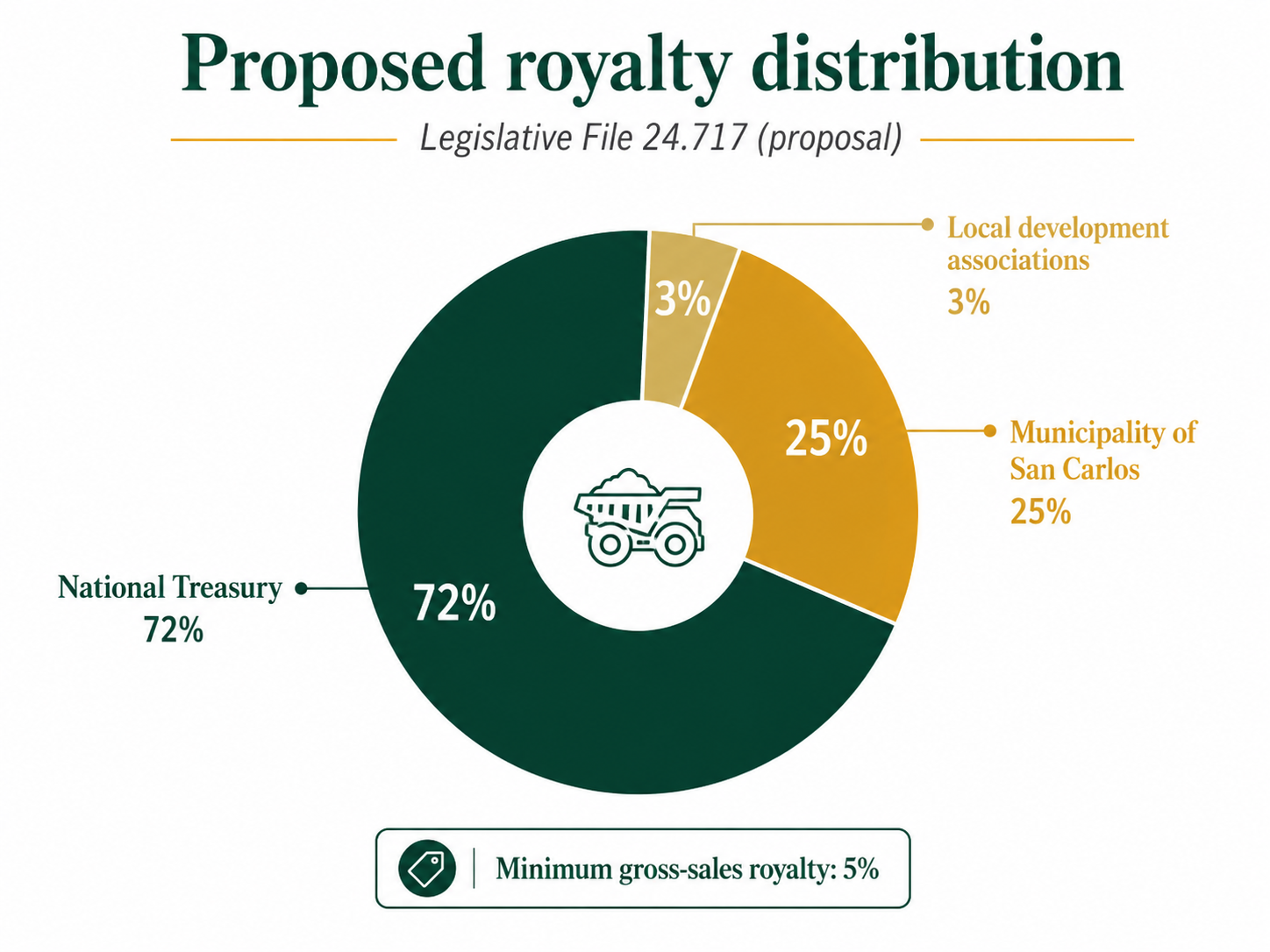
The proposed legislation would award mining concessions through public auctions administered by the Directorate of Geology and Mines under the Ministry of Environment and Energy. Companies would have to demonstrate technical expertise, financial capacity and a satisfactory environmental record before qualifying to bid. The bill also proposes a minimum 5% royalty on gross mineral sales, with most revenues flowing to the central government (over 70%) while municipalities and local development associations receive smaller allocations.
Juan Carlos Guajardo, executive director of mining consultancy Plusmining, said the government’s argument that regulated mining could reduce environmental damage is plausible but far from guaranteed. Formal mining operations can operate under significantly higher environmental standards than illegal miners through engineered tailings facilities, water-management systems, chemical controls and legally enforceable closure plans.
He warned that successful displacement of illegal mining requires broader measures including territorial control, enforcement against criminal networks, gold traceability systems and alternative economic opportunities for people currently dependent on informal mining.
“The challenge is not simply replacing illegal mining with legal mining,” Guajardo said. “The deeper question is whether Costa Rica can transform an environmental liability that contradicts its development model into an opportunity to generate economic value, restore damaged ecosystems and reinforce its sustainability credentials.”
Political battle
Despite the government’s push, the legislation remains far from becoming law.
The bill has already cleared committee review and won an endorsement from the Special Committee of Alajuela in September 2025. It is now before the legislative plenary, where opposition lawmakers have filed hundreds of delaying motions.
Opposition remains fierce. Members of the left-wing Frente Amplio party and factions within the Partido Liberación Nacional argue that reopening open-pit mining would threaten sensitive ecosystems and undermine decades of environmental policy. Environmental organizations have likewise mobilized against the proposal.
The debate is also influenced by the legacy of Canadian miner Infinito Gold. The company’s concession was annulled by Costa Rica’s courts in 2010, the same year lawmakers voted to ban new open-pit metal mining. Infinito subsequently pursued international arbitration against the state.
That dispute ended in Costa Rica’s favour with an international tribunal declining to award Infinito damages in 2021. The company abandoned its bid to annul the ruling in 2024, removing a major legal uncertainty surrounding the project. Officials now view the ruling as an opportunity to reconsider development of the deposit under a new framework.
Zamanillo and Rivera said the Infinito dispute illustrates how mining risk extends beyond permits and contracts. A project can satisfy legal requirements yet still become politically and socially unsustainable if public opinion, courts or governments shift course.
Fernández has suggested she may seek a national referendum if lawmakers reject the bill.
The prospect of a public vote serves both as a possible route around legislative gridlock and as leverage on undecided lawmakers. The administration believes its arguments on employment, local economic development, public security and illegal mining could resonate with voters.
Investor signal
For mining investors, the significance of the proposal extends beyond the Crucitas deposit itself.
Costa Rica has long ranked among the least accessible jurisdictions for metallic mining in Latin America. The government’s willingness to reconsider its longstanding prohibition sends a signal that the country may be open to resource investment under carefully controlled conditions.
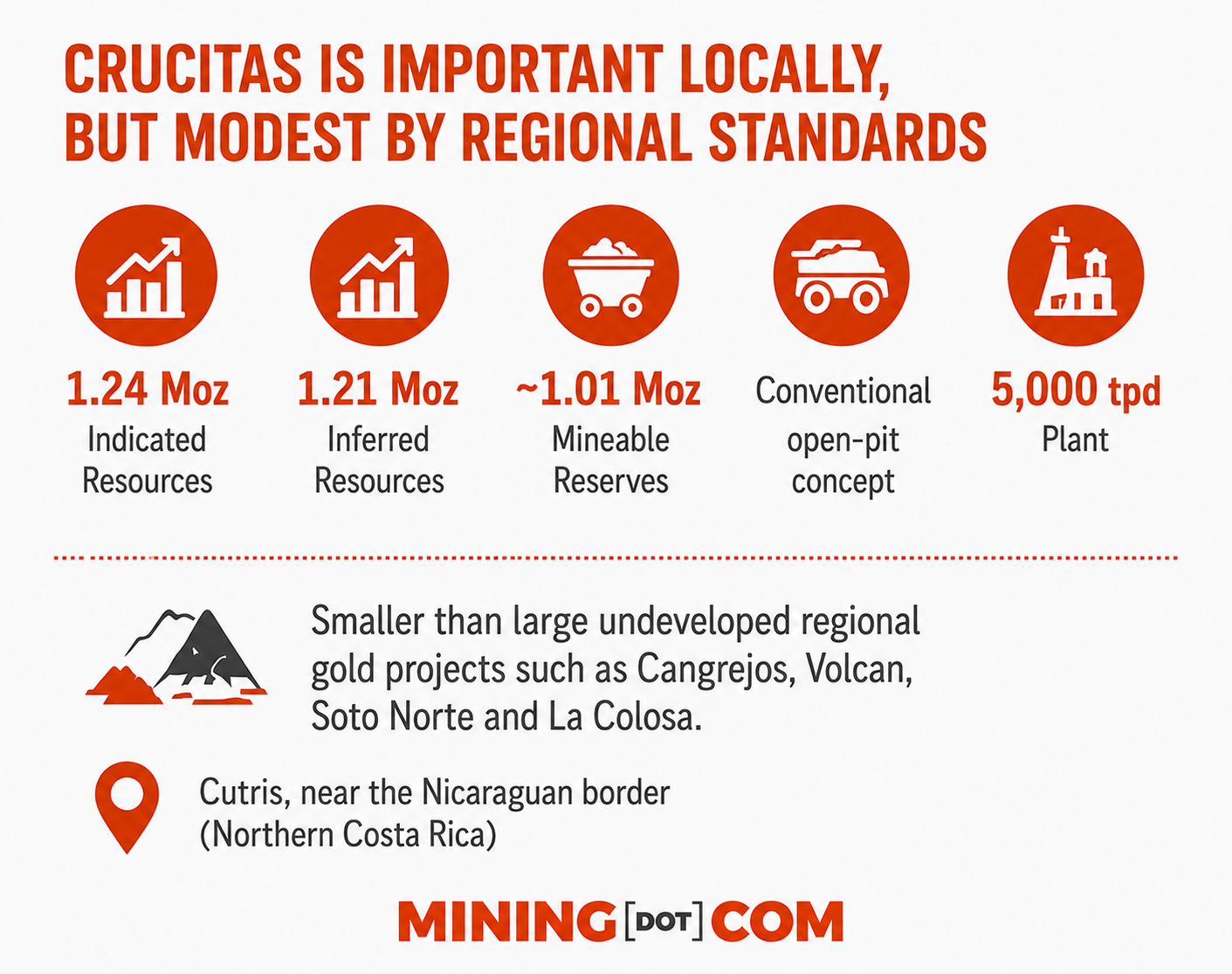
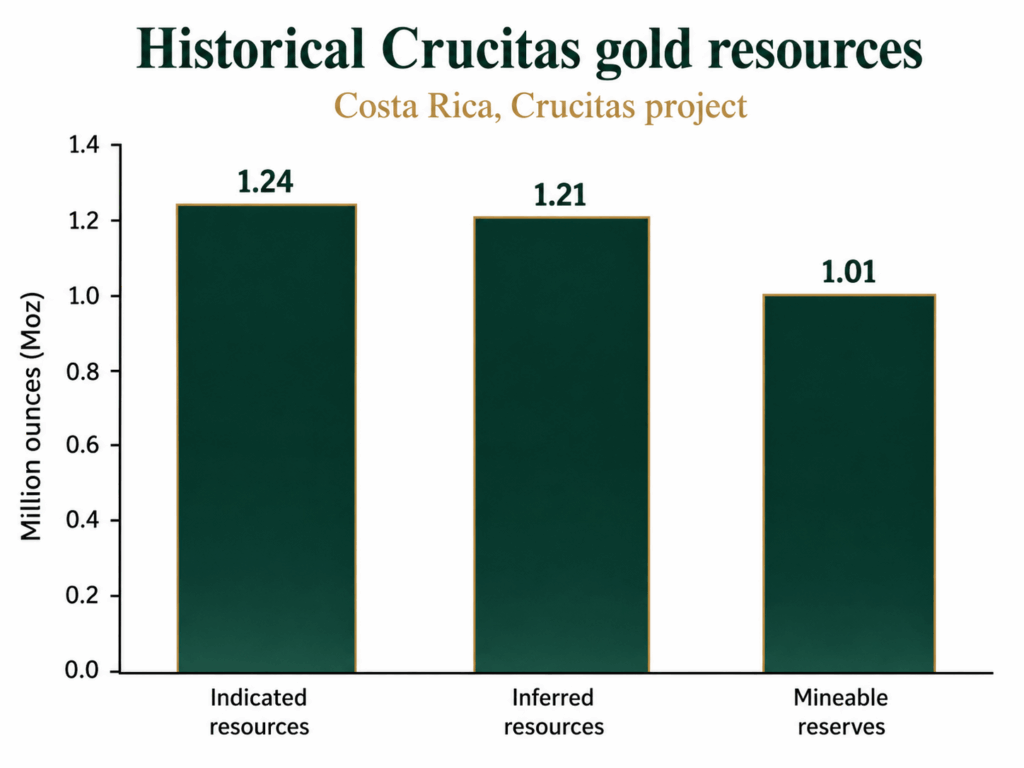
Guzmán said Crucitas is significant by Costa Rican standards but remains modest compared with many of Latin America’s largest undeveloped gold projects. Guajardo agreed, describing Crucitas as a mid-sized gold project rather than a world-class discovery on the scale of major Andean deposits. Even so, he said the project could attract serious industry attention if legal barriers are removed. Earlier studies found the deposit economically viable when gold prices were trading in the $1,000–$1,300 range versus today $4,000 an ounce levels, suggesting the asset could become attractive again under the right regulatory conditions.
Guajardo said major mining companies would likely apply a substantial political and ESG discount to any evaluation of Crucitas because of its history of litigation, environmental controversy, reputational damage and illegal mining activity. While juniors and mid-tier producers could show interest, many larger operators would likely require greater legal and security assurances.
Zamanillo and Rivera said passage of Bill 24.717 would likely be viewed as an important signal that Costa Rica is willing to reopen the mining discussion. However, they cautioned that legislative approval alone would not materially change perceptions of regulatory risk.
Guzmán likewise believes the project’s greatest test lies in governance rather than geology.
“The key question is whether the government can secure the area, reduce illegal mining, enforce environmental standards and identify an operator capable of financing long-term compliance and remediation,” he said.
Costa Rica’s environmental sensitivity means any future project would face intense scrutiny.
“Companies would not evaluate Crucitas like a conventional project in Peru, Ecuador or Chile,” Guzmán said. “They would price in constitutional risk, litigation risk, security concerns, environmental liabilities and the possibility of future policy reversals.”
Guajardo also questioned whether the proposed concession auction, which emphasizes royalty bids, would attract the most qualified operators. He warned that, while politically attractive, systems focused primarily on maximizing royalties can favour aggressive bidders with optimistic assumptions rather than technically capable companies with strong environmental and social performance records.
“In a project as sensitive as Crucitas, technical competence, environmental performance, financial strength, mine-closure capacity and understanding of Costa Rica’s institutional realities should carry at least as much weight as the economic offer,” he said.
Environmental test
The broader debate reflects a growing challenge facing governments across the Americas as they attempt to balance resource development, environmental protection and economic growth.
Guzmán argued that legal mining alone is unlikely to eliminate illegal activity. Drawing on examples from Peru and Colombia, he said illegal operators often relocate unless governments simultaneously strengthen enforcement and improve gold traceability systems.
Guajardo of Plusmining believes the environmental threshold for public acceptance will be exceptionally high and argued that a future concessionaire may need to help finance restoration of areas already damaged by illegal mining in order to build credibility with the public.
“The company that eventually develops Crucitas may need to act not only as a mining operator, but also as an agent of environmental restoration, institutional rebuilding and public trust,” Guajardo said.
Zamanillo and Rivera caution that Costa Rica’s greatest reputational risk may not come from formal mining itself, but from failing to control an illegal mining economy that continues to damage forests, waterways and local communities outside regulatory oversight. They argue the government must clearly distinguish between accountable, regulated mining and what they describe as anomic extraction if it hopes to preserve the country’s conservation credentials.
Whether Bill 24.717 succeeds or fails, Fernández has already changed the conversation.
The debate now extends far beyond a single gold project. It has become a test of whether Costa Rica can restore environmental and institutional control over a territory already affected by illegal mining while preserving the conservation-focused identity that underpins much of its international reputation.
If successful, Crucitas could become a model for how governments address environmentally damaging illegal extraction through formal regulation, enforcement and remediation. If it fails, critics say it could reinforce concerns that mining and conservation-led development remain fundamentally incompatible.
The outcome could shape not only the future of Crucitas, but also how investors assess Costa Rica’s long-term regulatory credibility and political risk.
Latin America is heading into 2026 with resources at the centre of a growing global power struggle, as governments and investors focus on who controls critical minerals and the supply chains behind them. If the region matters to you, don’t miss MINING.COM’s series tracking the geopolitical forces reshaping it and why markets are increasingly driven by global alliances as much as local politics.
Other countries in the series:
More News
{{ commodity.name }}
{{ post.title }}
{{ post.date }}
Comments