First Phosphate update expands EV battery ingredient fourfold in Quebec
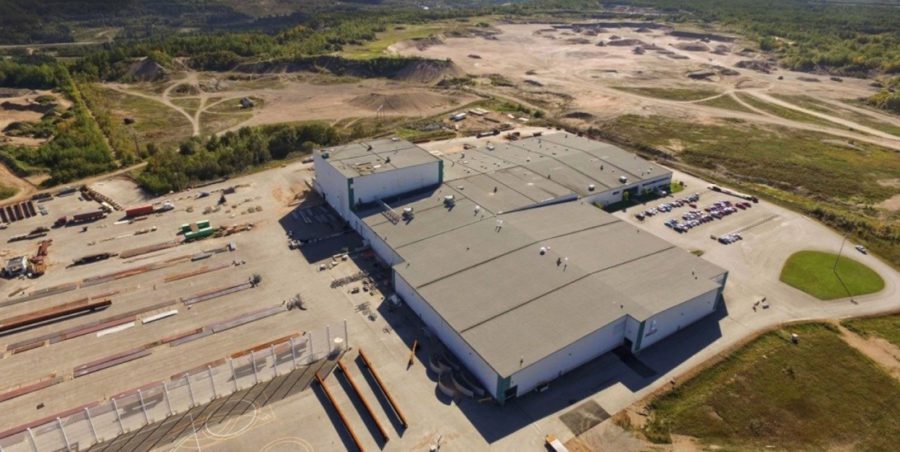
A resource update for First Phosphate’s (CSE: PHOS) main Bégin-Lamarche project in northeastern Quebec has boosted the indicated tonnage more than fourfold while creating a new measured category and upgrading a large portion of inferred resources.
The update outlines 6.2 million measured pit-constrained tonnes grading 7.7% phosphate (P2O5) and 198.5 million indicated tonnes at 6% P2O5, about 340% larger than in the initial resource from 2024, First Phosphate reported Tuesday. Due to the conversion, inferred resources decreased by about 60% to 89.5 million tonnes grading 6.16% P2O5. Bégin-Lamarche is about 450 km northeast of Montreal.
“We are pleased with the results of our 2025-2026 drilling exploration program and the quantity and quality upgrade provided to our mineral resources,” First Phosphate CEO John Passalacqua said in a release. “We are now able to continue to move the project forward with great confidence in our mineral resources.”
Vertical supply chain
The updated resource bolsters the company’s plans to build a vertically integrated supply chain in Quebec for the production of lithium iron phosphate (LFP) battery materials. First Phosphate is among a small number of companies in Canada looking to produce LFP battery materials using phosphate, more commonly used in agricultural fertilizers.
Company shares gained 1% to C$2 apiece on Tuesday morning in Toronto, valuing First Phosphate at C$342.4 million ($248 million).
Metallurgical test work at Bégin-Lamarche has indicated a concentrate grade of 40.4% apatite, an important element in the production of battery-grade phosphoric acid for LFP batteries, the company said. Apatite is also listed as a critical mineral by the Canadian and United States governments and the European Union.
The resource updated is based on 68,345 metres of drilling across 276 holes.
The project sits near road and power connections and is about 70 km north of the deep sea port of Saguenay.
Phosphate plant plans
First Phosphate had planned to open a 10,000-tonne-per-year iron phosphate plant near Saguenay early this year, but the facility has yet to be constructed. Last July, it signed an agreement with the Port of Saguenay for a proposed phosphoric acid plant, which would function as an upstream input for iron phosphate production.
LFP battery production has grown to represent more than half of global EV battery output due to LFP’s lower costs and less reliance on nickel and cobalt, according to data from the International Energy Agency. However, they also have lower energy density than lithium-ion batteries. Tesla, Ford and China’s CATL use LFP batteries in EV production.
North American demand for LFP batteries is growing fast, with the market now worth about $4.3 billion and expected to reach $10.8 billion by 2034, according to Intel Market Research.
China dominates global production of LFP batteries. While several companies plan to start building LFP battery cells in North America, no large-scale facilities have yet gone into production.
{{ commodity.name }}
{{ post.title }}
{{ post.date }}
Comments