Fortune advances Nico cobalt-gold project as cash hurdle looms
Fortune Minerals (TSX: FT) plans to publish an updated feasibility study next month at its long-delayed Nico cobalt-gold-bismuth project as it looks towards construction in 2027 of what could be the Northwest Territories’ next significant mine.
The London, Ontario-based company expects full land and water authorizations in the Northwest Territories within two to three months, while permitting for the planned hydrometallurgical plant in Alberta approaches next year, CEO Robin Goad says. The proposed Nico mine sits in Tłı̨chǫ territory about 160 km northwest of Yellowknife and 50 km north of Whatì, where the road currently ends.
“Fortune is entering a key phase, supported by strong critical metals momentum, advancing project fundamentals and growing government focus on securing non-China critical mineral supply chains,” Fundamental Research analysts wrote in a May 21 report paid for by Fortune. “Recent operational, financing and permitting progress has strengthened Fortune’s outlook ahead of key catalysts, including an updated feasibility study [and] permitting milestones.”
As the Northwest Territories searches for new mines to offset the decline of its diamond industry, Nico has emerged as one of the territory’s most advanced development projects. Its strategic importance was highlighted for being among the first Canadian projects to receive support under the US Defense Production Act Title III, in 2024. The award came amid a broader wave of US government support for the sector, with about $26.2 billion to 33 publicly listed critical mineral companies globally between 2023 and 2026, according to the Critical Minerals Institute.
“The big thing for us is capital,” Goad told The Northern Miner. “We’re more or less at the finish line, right? So once this government supported work is done, the front-end engineering and design and the permits are in place, then you want to move to construction. So are we going to be able to raise the project financing to move forward? That’s the big hurdle.”
Fortune’s Toronto-listed shares have tripled in the past 12 months to about C$0.19 apiece on Thursday. The company has a market capitalization of C$124.7 million ($89.6 million).
Critical deposit
At Nico, Fortune is working with proven and probable reserves of 33.1 million tonnes grading 1.03 grams gold per tonne, 0.11% cobalt, 0.14% bismuth and 0.04% copper, according to a 2014 feasibility study. The reserves host 1.11 million contained oz. gold, 82.3 million lb. cobalt, 102.1 million lb. bismuth and 27.2 million lb. copper.
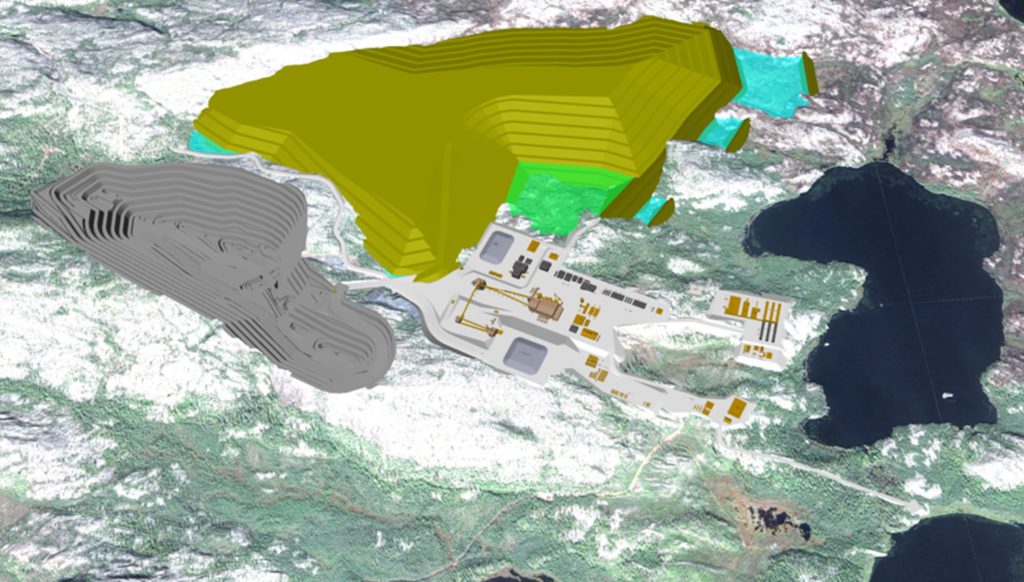
The study gave Nico a post-tax net present value (discounted at 7%) of C$224 million, an internal rate of return of 15.1% and at initial capital costs of C$589 million.
That cost estimate inflates to “roughly a billion Canadian dollars” in today’s terms, Goad said.
The company aims to produce about 8,780 tonnes of cobalt sulphate, 47,000 oz. gold, 1,700 tonnes of bismuth products and 500 tonnes of copper in cement precipitate over a 20-year life
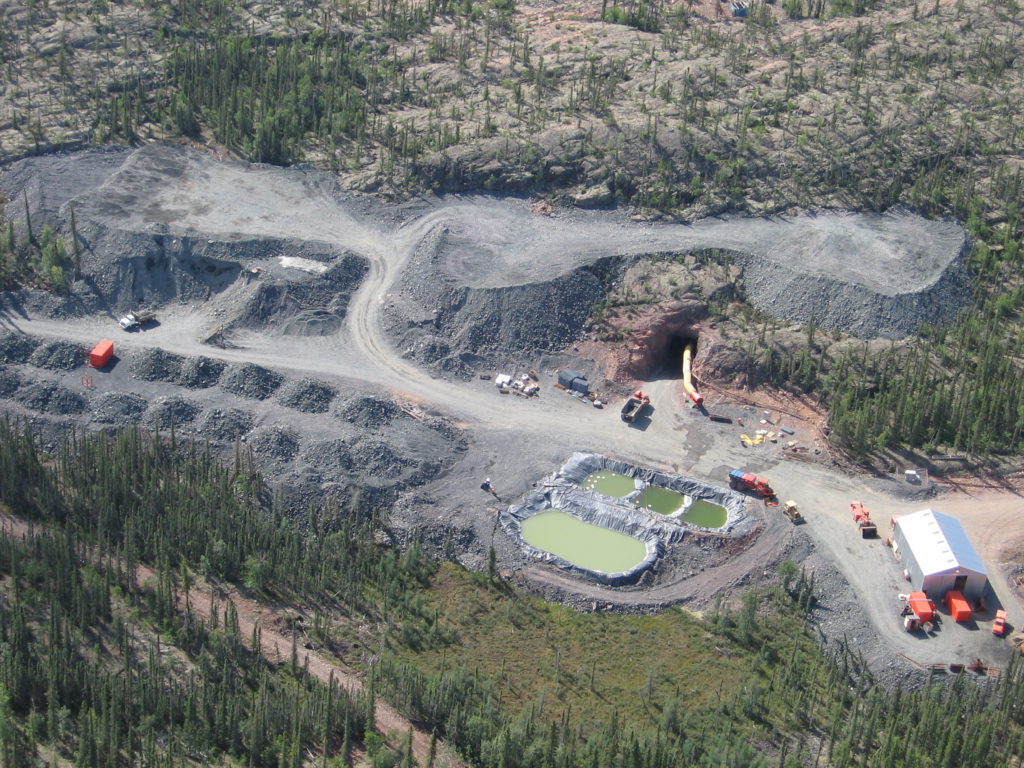
Fortune says it has already built 2 km of underground workings during test mining, which it plans to use to supplement the open pit with higher-grade feed early in the mine life.
The goal is cash flow, Goad says, because vertical integration – building a mine and a downstream processing plant – “doubles capital costs” and forces the project to carry more debt.
Saskatchewan whiplash
Project costs aren’t the only source of cash headaches for Goad.
The 2019 denial of a local zoning change by the central Saskatchewan municipality of Corman Park derailed Fortune’s first refinery plan and helps explain why the company slipped out of sight for years.
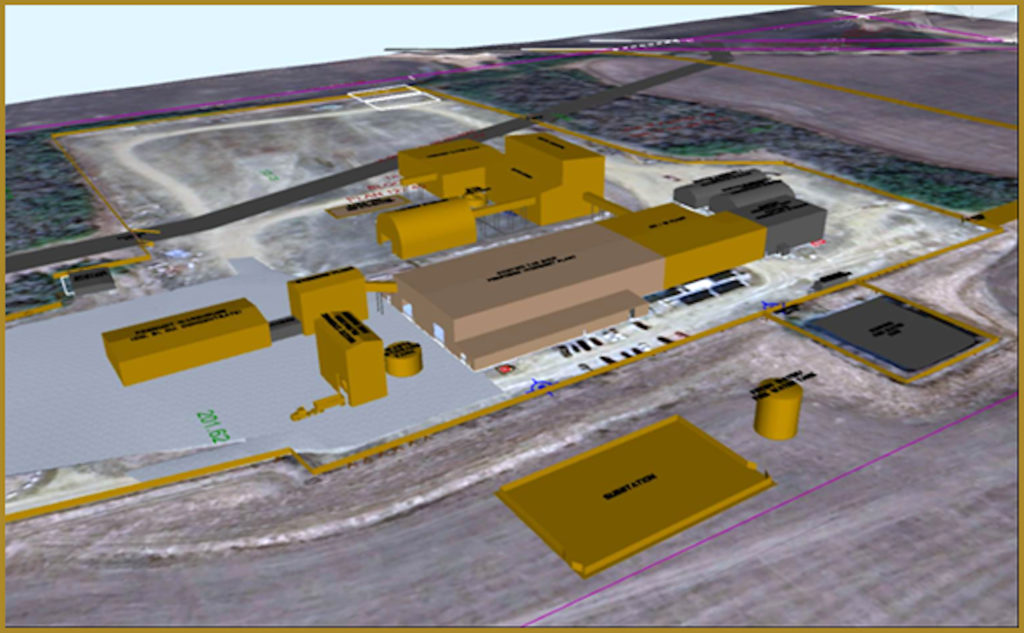
Fortune reset the downstream plan in Alberta’s so-called Industrial Heartland near Edmonton, an area where heavy-industry zoning is already in place, Goad said. There the executive cites existing plants, access to nearby supplies of process reagents and an attractive “industrial culture” as reasons the new site lowers risk after the disappointment in Saskatchewan.
“Alberta is a far superior jurisdiction for the refinery after the Saskatchewan zoning denial caused the company incredible damage,” Goad said, estimating the Saskatchewan misadventure to have cost Fortune about five years of progress and “probably C$5-$10 million directly.”
Long-awaited cash
But a shift in political moods is starting to give Fortune some relief.
Ottawa and Washington’s focus on critical minerals have helped Fortune book more than C$17.5 million ($12.5 million) in non-dilutive awards and loans from Canadian and US programs. That includes $6.38 million from the US Department of Defense, plus C$8.21 million from Ottawa and a C$3.8 million loan from Prosper NWT – a public agency that provides financing and other support to help northern businesses grow.
“For the first time in my 40-year history, governments are actually giving us checks,” Goad said.
Fortune is working to turn that policy momentum into two near-term funding decisions. The company has applied with the Tłı̨chǫ Government to Ottawa’s Critical Minerals Infrastructure Fund for up to $50 million to help build the final 50-km spur road to the Nico site, for which it received permits last month.
Rare opportunity
Fortune discovered Nico in 1996 and has spent about C$150 million advancing it, Goad said.
The updated plan calls for trucking concentrate about 400 km south to Enterprise, NWT, for rail loading, then travel about 1,000 km into Alberta, Goad says.
Those logistics hinge on a low “mass pull” at the concentrator. It means Nico’s flowsheet captures saleable metals in about 180 tonnes of concentrate from processing 4,650 tonnes of ore per day, or roughly 4% of the original mined mass, Goad said.
“There’s no way you could justify building a hydrometallurgical facility in the far north where you don’t have the reagents,” he said, arguing the small concentrate stream makes southern processing profitable.
Fortune casts Nico as a rare near-term development option in a territory facing the wind-down of its diamond era. The mining industry has in the past been responsible for up to 45% of Northwest Territories gross domestic product, Goad said. The closure of the Diavik diamond mine in March left few replacement projects with comparable scale.
Bismuth business
Fortune also in recent weeks responded to a US Defense Industrial Base Consortium request for bismuth projects under a US Department of War program.
Success on either application could reduce the capital needed for its vertically integrated build, Goad said.
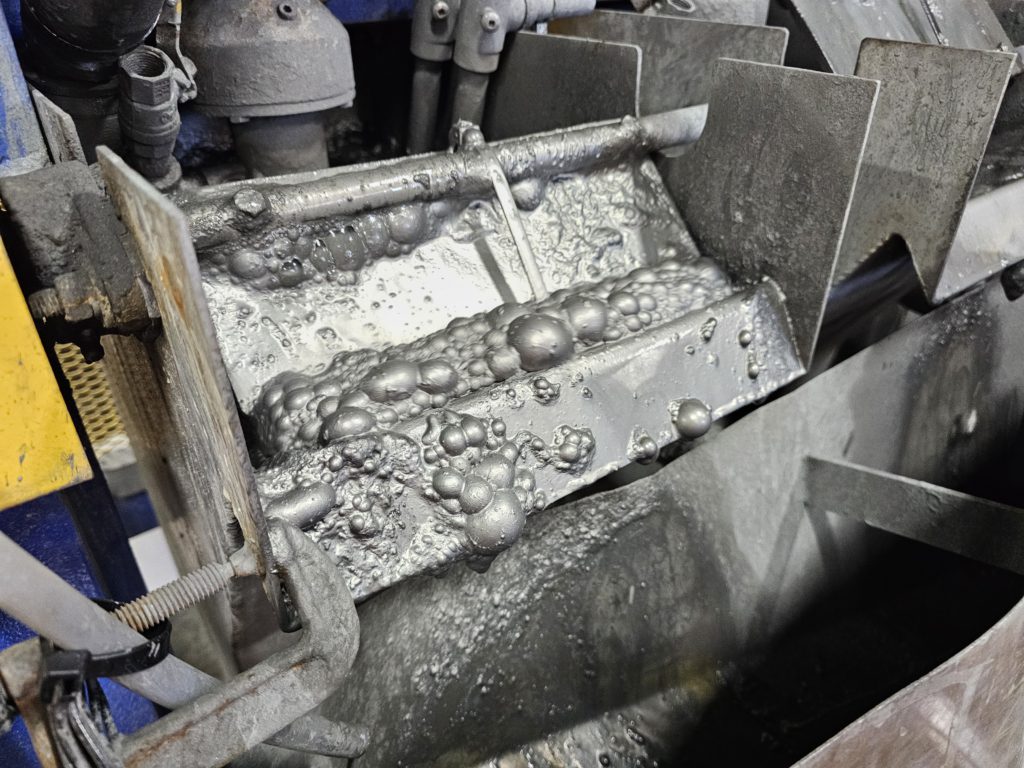
Bismuth now sits at the centre of Fortune’s government pitch. Goad says export restrictions by market dominator China has turned a once-quiet market into a price shock.
China cuts exports and “the price shot up to over $40 per lb.,” Goad said, from historical norms of about $7 per lb., before settling in recent weeks above $20.
The metal is tied to defence uses and to electronics supply chains.
“Without bismuth soldering paste, you cannot for example, build artificial intelligence data centres,” Goad said.
{{ commodity.name }}
{{ post.title }}
{{ post.date }}
Comments