Gangs hijack Ecuador’s gold mining supply chain
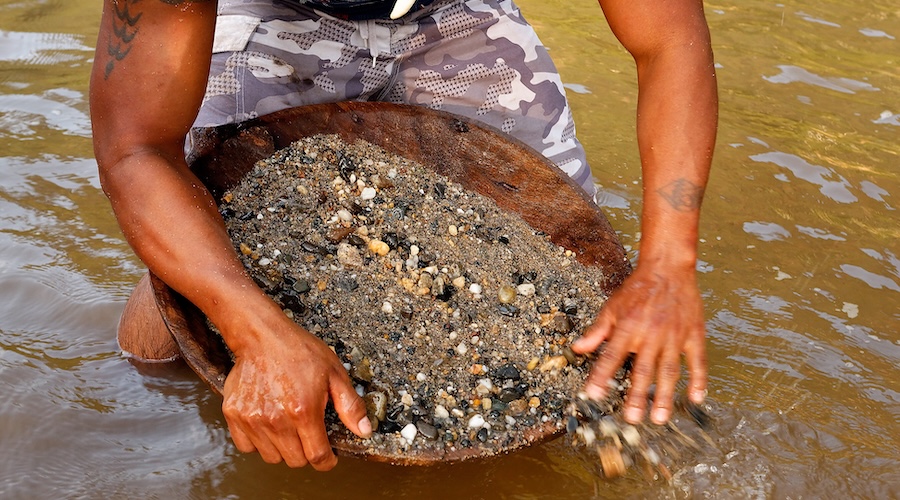
Ecuador has elevated illegal mining to a national security threat after concluding that criminal gangs have infiltrated the country’s gold supply chain, from extraction to export, turning the sector into a major source of financing for organized crime.
The 2026-2029 National Security Plan identifies illegal mining as a strategic security challenge rather than simply an environmental or regulatory issue.
The government says criminal organizations use illicit gold production to launder drug trafficking proceeds, while financing mining operations with machinery, chemical supplies and armed protection.
Ecuador’s new strategy reflects growing concern that illegal mining has become one of organized crime’s most lucrative businesses in the country, fuelling violence, money laundering and environmental destruction while exposing weaknesses across the local mineral supply chain.
Entering supply chains
The plan identifies Los Lobos as Ecuador’s dominant criminal organization in illegal mining and says the gang has expanded across the gold value chain. A report by the Global Initiative Against Transnational Organized Crime (GI-TOC) similarly concludes that Los Lobos is involved from extraction through exports via the ports of Guayaquil and Puerto Bolívar.
Authorities say illegally mined gold is blended with legally produced metal before entering formal markets, allowing criminal groups to launder proceeds from drug trafficking. The plan also links illegal mining to fuel theft, saying stolen diesel powers mining equipment used at illicit sites.
Official figures illustrate the industry’s rapid growth. Complaints of illegal mining rose to 393 in 2025 from 249 in 2021, an increase of about 58%, according to the Office of the Attorney General.
GI-TOC estimates the number of illegal mining sites expanded from fewer than 60 before 2018 to more than 600 by 2024.
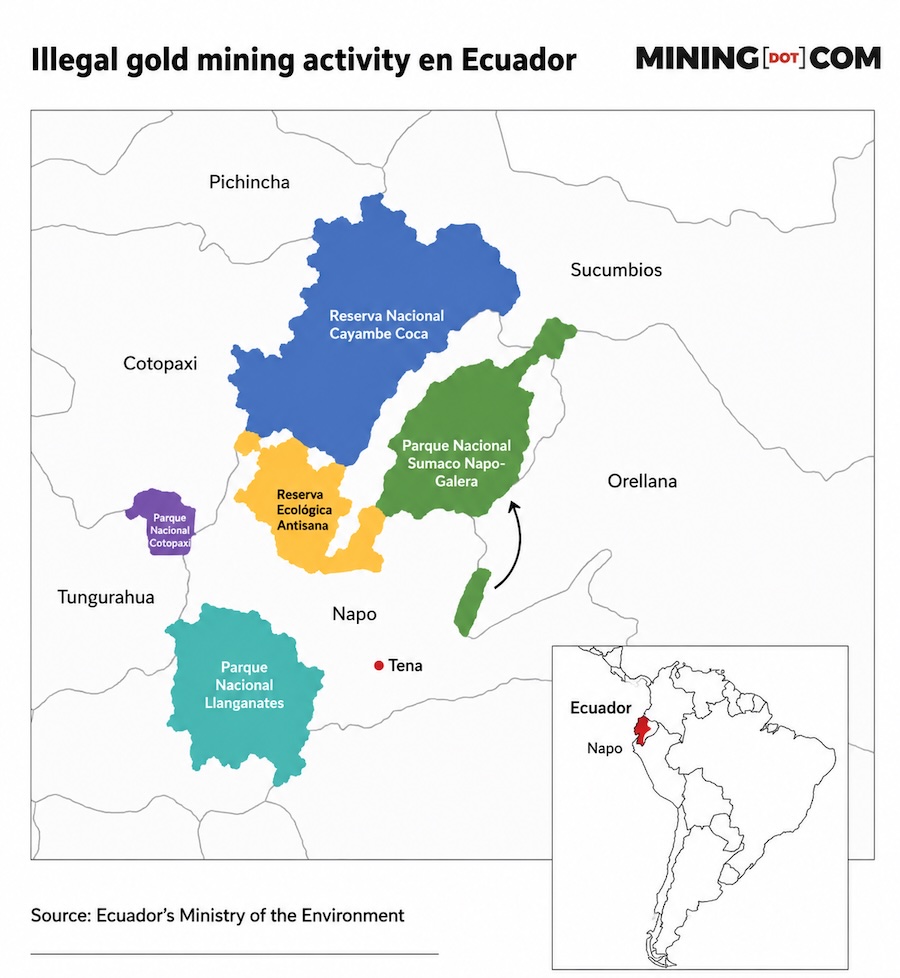
Trade data also point to booming exports. UN Comtrade shows Ecuador exported 19.2 tonnes of gold worth more than $900 million in 2022, while the country’s central bank recorded exports of more than 27 tonnes of doré gold in 2023.
Ongoing crackdown
Ecuador has already intensified its campaign against illegal mining over the past year, particularly after 11 soldiers were killed in an ambush in the Amazon last year during an operation targeting illegal mining groups.
The government blamed the attack on the Border Commandos, a dissident faction of Colombia’s former Revolutionary Armed Forces of Colombia (FARC) guerrillas, which authorities say operates alongside local criminal organizations.
To combat the surge, the government plans to tighten controls across the mining logistics chain, formalize artisanal mining, dismantle illegal fuel networks and expand military operations against illicit mines.
It also aims to establish a nationwide monitoring system by 2027 and introduce a mineral traceability system between 2028 and 2029 covering all mining resources transported to ports and processing plants. The broader goal is to disrupt 88% of organized crime structures by 2029.
{{ commodity.name }}
{{ post.title }}
{{ post.date }}
Comments