Japan finds heavy rare earths dominate seabed deposit
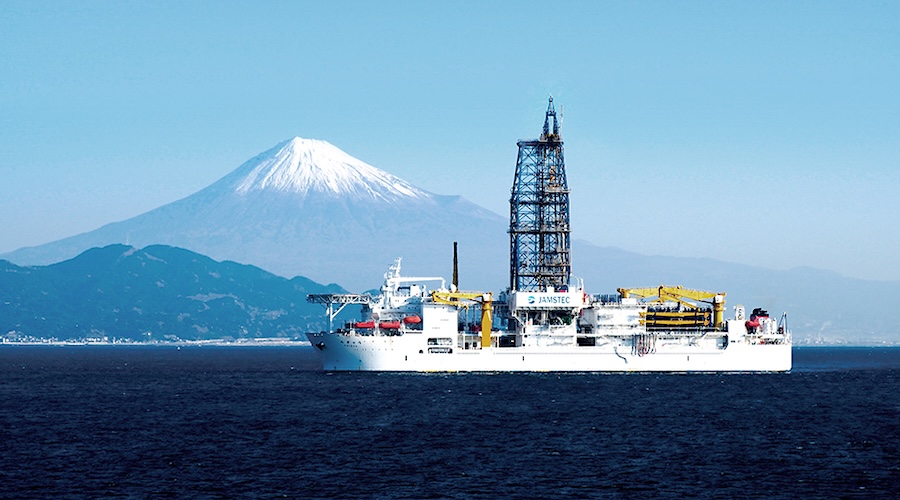
Japan said on Friday that medium and heavy rare earth elements accounted for about 54% of the rare earth content in deep-sea mud recovered off a remote Pacific island, bolstering its push to secure domestic supplies of critical minerals as China tightens export controls.
The government-backed mining vessel Chikyu recovered about 50 tonnes of mud during a month-long mission completed in February near Minamitori Island, about 1,900 km southeast of Tokyo.
The expedition marked the world’s first successful continuous recovery of rare earth-bearing seabed mud from a depth of about 6 km.
“The trial is expected to verify the feasibility of domestic rare earth production,” Kazushige Kikuchi, project manager at the Japan Agency for Marine-Earth Science and Technology, told Reuters. A comprehensive assessment of the project’s commercial potential is due by March 2028.
Cut China reliance
The project could help Japan reduce its dependence on China for strategic minerals used in defence equipment, electric vehicles and advanced technologies. Beijing imposed export controls on some heavy rare earths and related magnets in April 2025 before tightening restrictions on shipments to Japan in January and twice more the following month.
Japan’s government did not disclose the size of the rare earth deposit or the concentration of material in the recovered mud. Officials said the limited duration and geographic scope of the sampling program provided insufficient data for a broader resource estimate.
Analysis identified yttrium, used in aerospace, energy and semiconductor applications; gadolinium, used in magnetic resonance imaging and other high-tech products; and dysprosium, an essential component in high-performance magnets for electric vehicles.
In 2024, researchers from the University of Tokyo and the Nippon Foundation had already identified over 200 million tonnes of manganese nodules rich in battery metals in the Pacific Ocean, highlighting vast resource potential at depths around 5,500 meters.
A separate survey by the University of Tokyo and the Nippon Foundation estimated the seabed nodules contain approximately 610,000 tonnes of cobalt—enough for 75 years of Japan’s consumption—and 740,000 tonnes of nickel, covering 11 years of domestic demand.
Commercial test
Japan plans a new month-long mining trial in the same waters beginning in February 2027, targeting production of 350 tonnes of mud a day.
The material will be dewatered on Minamitori Island, about 1,900 km southeast of Tokyo, before being shipped to the mainland for separation, refining and smelting tests.
The pilot program is designed to determine whether the offshore resource can support commercial rare earth production and reduce Japan’s dependence on imported supplies.
More News
{{ commodity.name }}
{{ post.title }}
{{ post.date }}
Comments