Op-Ed: Europe’s rare earth test begins after Finland’s drill hit
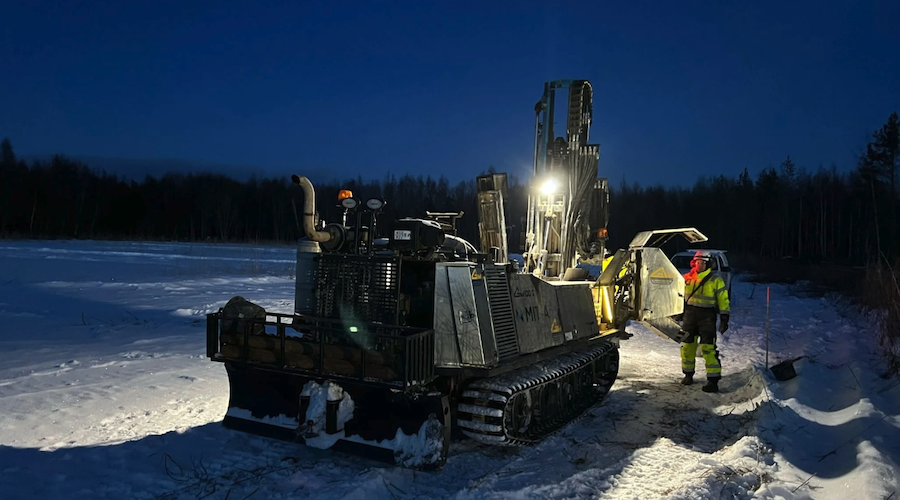
Finland’s latest rare earth drill results highlight Europe’s geological potential, but more than that they underscore that the real strategic challenge lies in processing, not discovery.
European Resources (ASX: ERE) recently reported its strongest rare earth intercept to date at the Korsnäs project in Finland, including an interval averaging 31.5 metres grading 4,902 ppm TREO (total rare earth oxides), with shorter higher-grade sections and a notably high share of neodymium and praseodymium (NdPr) at roughly 28–30% of the rare earth mix.
For a project still defining its resource, the result is encouraging. Yet a single intercept does not establish a deposit. The next stage must demonstrate geological continuity across multiple drill holes and a broader area through systematic drilling and resource modelling.
The finding matters because NdPr forms the backbone of permanent magnets used in electric vehicles, wind turbines and many defence and advanced technology systems. When Europe speaks about strategic autonomy in critical minerals, magnet rare earths sit near the top of the list. But geological discovery alone does not deliver supply security. Europe’s real test begins after the drill core, in the industrial chain that transforms ore into magnet materials.
Korsnäs is strategically interesting partly because of its location. Finland has well-established mining institutions, reliable infrastructure and comparatively stable regulatory systems. From a European policy perspective, that lowers certain development risks compared with projects in more uncertain jurisdictions.
The mineralogy also attracts attention. Early indications point to mineralization containing monazite and apatite, minerals that can support certain processing routes and potentially favourable recoveries. At the same time, monazite deposits often contain trace amounts of thorium or uranium, which can trigger stricter regulatory requirements for residue management and transport in Western jurisdictions. In Europe, where environmental oversight is rigorous, this can become one of the most sensitive aspects of project development.
This highlights a broader pattern in rare earth development. Mining itself is rarely the most difficult step. The real challenge typically emerges in chemical processing, separation technology and residue handling. Communities and regulators may accept the extraction of ore, but they scrutinize processing plants and waste management systems much more closely.
Grades alone only part of the story
Coverage of rare earth drill results often focuses on grade and headlines such as “best intercept to date.” In reality, grade alone tells only part of the story. Across the global rare earth sector, the largest performance gaps rarely occur in mining. They appear in the processing flowsheet, the efficiency of rare earth separation and the ability to manage residues safely at scale. Internal analysis at GEM Mining Consulting shows that processing plants typically represent the majority of capital expenditure in rare earth projects, far exceeding the cost of mining infrastructure itself.
Higher grades certainly help project economics. But in practice, the design and performance of the processing plant often determine whether a project becomes financeable. Complex flowsheets increase both costs and timelines, particularly in jurisdictions with strict environmental and permitting standards.
European Resources appears aware of this dynamic. The company has already initiated metallurgical test work and downstream processing studies with Australia’s ANSTO to guide decisions on separation pathways and processing design. Those studies may ultimately prove more important than any single drill result.
Another detail in the Korsnäs update deserves particular attention: the proportion of NdPr in the deposit. TREO is a broad measure that aggregates all rare earth oxides, but it does not indicate where economic value is concentrated. Many deposits contain large volumes of cerium and lanthanum, which have industrial uses but generally weaker pricing and more persistent oversupply. The majority of economic value in rare earth projects typically lies in NdPr, and to a lesser extent in dysprosium and terbium used in high-temperature magnet applications.
For that reason, a deposit with moderate TREO but a strong NdPr share can be more strategically important than a higher-grade deposit dominated by lower-value rare earths. In Korsnäs’ case, the relatively high NdPr proportion strengthens the project’s potential relevance to magnet supply chains.
Europe’s deadline
Still, Europe’s strategic objectives extend well beyond mining. The EU Critical Raw Materials Act establishes 2030 benchmarks for domestic capability across the value chain. The headline targets include extracting 10% of annual EU demand within the EU, processing 40% domestically and sourcing 25% from recycling.
These goals reshape how new discoveries should be evaluated. A Finnish mine may help meet extraction targets, but Europe’s largest strategic gap remains in processing and separation capacity. If rare earth ore mined in Europe must still be separated and refined elsewhere, the continent remains exposed to the same supply bottlenecks that prompted its critical minerals strategy.
Geopolitics further complicates the equation. Rare earth supply chains are deeply influenced by export controls, industrial policy and geopolitical tensions. China’s advantage in the sector is rooted less in geology than in its dominant separation and refining capacity. When export conditions tighten, manufacturers feel the impact quickly.
Recent policy discussions suggest Western governments are beginning to focus on this downstream challenge.
Last month, US Vice President JD Vance outlined a proposal for a preferential trade zone for critical minerals built around enforceable price floors, using reference prices and tariffs to reduce supply shocks and price undercutting. Analysts note that the idea is being discussed alongside coordinated trade rules and longer-term contracting models designed to make downstream processing projects financially viable.
For rare earths, such mechanisms could prove decisive. Mines only become strategically meaningful if they feed competitive separation and refining capacity. Without stable pricing structures or credible offtake frameworks, new processing plants outside China remain difficult to finance.
Beyond Finland
That is why the Korsnäs story ultimately extends beyond Finland. The project may demonstrate that Europe possesses promising rare earth geology, including deposits relevant to magnet supply chains. But Europe’s long-term success will depend less on what it finds underground than on what it builds above ground: processing plants, separation capacity, residue management systems and durable relationships with industrial buyers.
Korsnäs may be an important geological signal. Whether it becomes a strategic supply asset will depend on Europe’s ability to convert discovery into industrial capability.
* Alina Karpunina is project manager at GEM Mining Consulting, a Chile-based industrial engineering firm providing strategy, analytics, evaluation, and optimization services to the mining industry.
{{ commodity.name }}
{{ post.title }}
{{ post.date }}

Comments