Op-ed: How geopolitics are rewiring metals markets
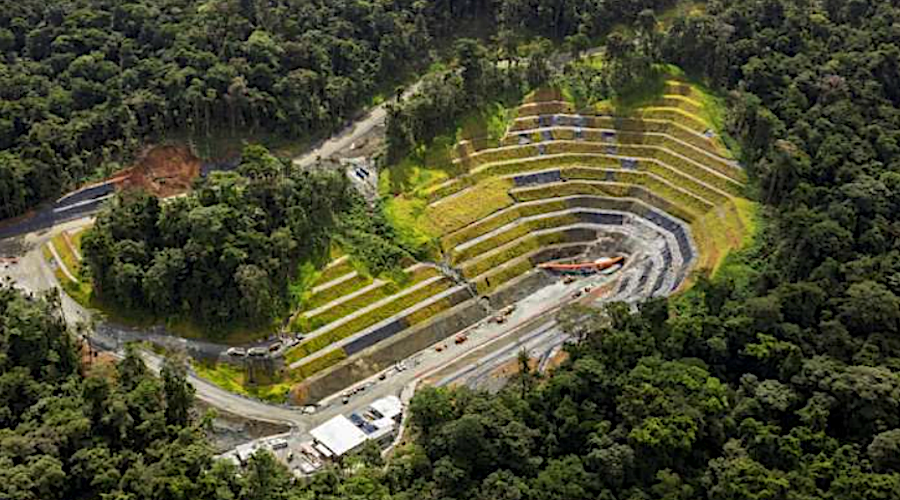
Global mining is entering a new period of geopolitical tension, and the effects are already reshaping capital flows, production strategies and sourcing decisions. Resource nationalism is tightening supply in key jurisdictions. China’s dominance in refining is prompting national security concerns across the West. Governments are stockpiling critical minerals.
In this environment, stability has become a premium asset. Canada stands out as one of the few jurisdictions able to offer it at scale. But that advantage will not hold without modernization and policy follow-through.
Resource nationalism is no longer a talking point. It is policy.
Indonesia, which accounts for the majority of global nickel supply, has set its 2025 nickel ore mining quota at roughly 200 million tonnes and signalled cuts if producers fail to meet environmental benchmarks. The move reinforces Jakarta’s increasingly interventionist stance and keeps supply discipline firmly in government hands.
In the Democratic Republic of Congo, home to the world’s largest cobalt production, output is projected at 100,000 to 120,000 tonnes for 2025. That concentration risk remains significant in a single, highly volatile jurisdiction.
Meanwhile, the US has launched Project Vault, a $12 billion national security stockpiling program for critical minerals. Canada is moving in parallel. For the first time since the 1950s, Ottawa is using a Defence Production Act-style framework to stockpile $2.5 billion in critical minerals.
Buyers and investors are responding. Geopolitical exposure is now priced directly into sourcing and financing decisions. Low cost alone is no longer enough.
At the same time, supply-chain risk is shifting from an efficiency problem to a national security issue.
China currently controls about 90% of the global market for critical minerals, particularly in refining and processing. It dominates production of at least 15 critical minerals, including gallium, tungsten and rare earths. China accounts for roughly 69.2% of rare earth production and 82.7% of tungsten output. It also processes around 60% of global lithium and cobalt supply.
That concentration has forced governments and industrial buyers to rethink procurement. Alignment with NATO partners, predictable regulatory environments, energy reliability, strong environmental oversight and transparent governance now carry measurable value. Strategic supply is overtaking lowest-cost supply.
This is where Canada emerges as a standout. It combines political stability, large-scale mineral potential and deep capital markets. It also benefits from alignment with US industrial policy and broader Western security objectives.
Canada’s position has strengthened further with the extension of the Mineral Exploration Tax Credit through March 2027. The country also retains its historic role as a global mining finance hub. In 2010, Canada financed roughly 80% of global mining activity. By 2025, that share has fallen to about 40% and continues to decline as capital shifts to competing markets.
That decline underscores the urgency. Canada’s window of opportunity is real, but it is narrowing.
To convert favourable sentiment into durable investment, operators must modernize. Electrification, automation, digital operations and energy resilience are no longer optional upgrades. They are strategic requirements. Buyers want reliable output from jurisdictions that can withstand geopolitical shocks, energy disruptions and regulatory uncertainty.
Canada can meet that standard. It has strong governance, established ESG frameworks and transparent institutions. It has geological endowment across nickel, copper, lithium, cobalt and rare earths. What it needs now is speed and execution.
The global metals sector is undergoing a quiet geopolitical reset. Risk premiums are rising in concentrated and interventionist jurisdictions. Capital is searching for supply that is secure, scalable and politically aligned.
Canada has a rare advantage at precisely the right moment. If operators accelerate modernization and policymakers continue to support exploration and development, the country can capture a larger share of the next mining cycle. If not, that capital will move to faster jurisdictions willing to meet the market’s new definition of low risk.
* David Willick, is VP & Regional Leader for Mining, Metals & Minerals in North America at Schneider Electric Canada.
{{ commodity.name }}
{{ post.title }}
{{ post.date }}

Comments