Ottawa approves Canada Nickel’s Crawford mine
Canada Nickel (TSXV: CNC)(US-OTC: CNIKF) has secured federal approval to proceed with its proposed Crawford polymetallic mine in Ontario, paving the way for a construction decision next year amid a countrywide push to accelerate critical minerals development.
Environment, Climate Change and Nature Minister Julie Dabrusin issued a positive decision regarding the project, Canada Nickel said Friday in a statement. With the federal decision statement now complete, crews will continue advancing detailed engineering, project financing and the remaining provincial and federal permits required ahead of planned construction, the company added.
It’s the first time that a mining project has been approved under Canada’s Impact Assessment Act since it was amended in 2019.
Ottawa referred the project to its Major Projects Office in late 2025 to accelerate permitting, while Ontario earlier this year designated Crawford under its “One Project, One Process” (1P1P) fast-track permit framework.
“Today’s decision recognizes the strategic importance of responsibly developing Canada’s critical mineral resources in partnership with all levels of government and Indigenous Nations while maintaining rigorous environmental standards,” Canada Nickel CEO Mark Selby said Friday in a statement.
“I am very proud of our team, which completed this key federal permit in just four years and advanced Crawford from its fifth drill hole through feasibility study to today’s milestone in under seven years — substantially faster than typically required for large-scale projects.”
Largest operation
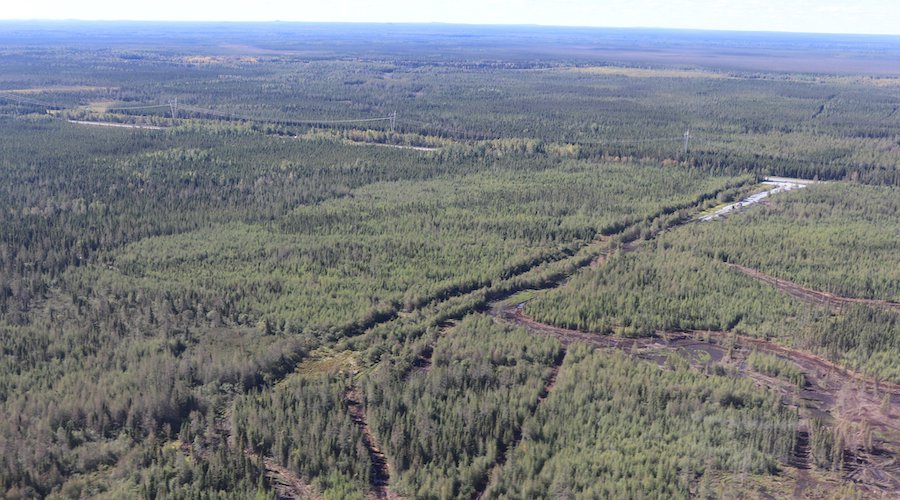
Located about 40 km north of Timmins, Ont., Crawford is believed to hold the world’s second-largest nickel reserves and resources. It would cost $3.5 billion to build over two stages, according to a feasibility study from October 2023.
Over an operating life of at least 41 years, the mine would produce 1.6 million tonnes of nickel, 58 million tonnes of iron and 2.8 million tonnes of chrome, in addition to cobalt, palladium and platinum.
Crawford has an estimated post-tax net present value of $2.8 billion and an after-tax internal rate of return of 17.6%, Canada Nickel says.
Financing package
While a significant regulatory milestone, the approval would still leave Canada Nickel with the task of assembling a multibillion-dollar financing package and making a formal construction decision.
Canada Nickel has already lined up $2.5 billion in financing for Crawford. This includes $500 million in debt from Export Development Canada, another C$500 million from an unnamed “leading Canadian financial institution,” about $600 million in tax credits tied to critical minerals and carbon capture and an option agreement under which Samsung SDI could acquire a 10% interest for $100 million.
The decision comes as Prime Minister Mark Carney’s government seeks to speed up approvals for strategic resource projects amid ongoing trade tensions with the United States and a growing emphasis on securing domestic supplies of critical minerals.
Nickel remains essential for stainless steel production and electric vehicle batteries, while Indonesia’s dominant position in global supply has heightened interest in developing new Western sources of the metal.
Second project
In January, Crawford became the second project to be advanced under Ontario’s 1P1P framework. Frontier Lithium’s (TSXV: FL; US-OTC: LITOF) PAK project had been added to 1P1P three months earlier.
With the 1P1P fast tracking, Ontario has been hoping that construction could start on Crawford by the end of the year, which would allow the mine to open by the fourth quarter of 2028, provincial Energy and Mines Minister Stephen Lecce said in January.
Crawford stands out for its claimed low carbon dioxide (CO2) emissions due to a planned in-process tailings method of carbonization. It involves injecting a concentrated source of CO2 into tailings in the mill, geologically sequestering carbon in the tailings while they’re in the processing circuit, instead of after. It could capture and store 1.5 million tonnes per year of carbon.
More News
Nornickel H1 net profit doubled to $2 billion
Revenues grew by 28% to $8.3 billion.
July 31, 2026 | 07:02 am
{{ commodity.name }}
{{ post.title }}
{{ post.date }}
Comments