Ottawa’s C$500M Red Chris bet tests British Columbia grid
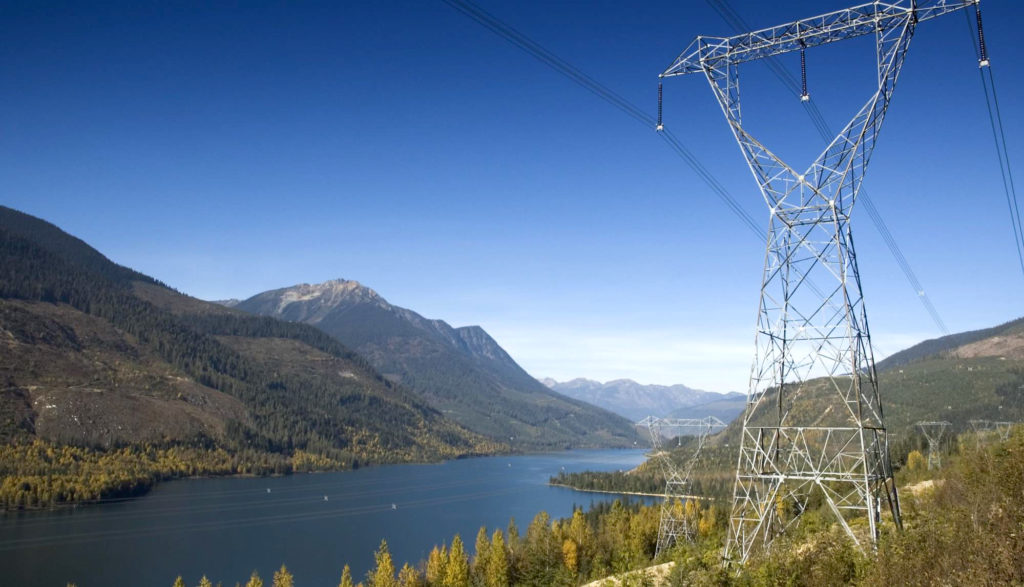
Ottawa’s C$500 million ($352 million) contribution to Newmont’s (NYSE, ASX: NEM; TSX: NGT) proposed Red Chris Block Cave has turned British Columbia’s northern power shortage into a live test of Canada’s critical-minerals push.
The Red Chris money comes as part of a Canada-BC agreement Thursday that also pledges C$3.9 billion toward the first two stages of BC Hydro’s North Coast Transmission Line. The package ties Ottawa’s mine-funding push directly to the grid buildout needed to power new copper, gold, liquefied natural gas and port projects in northwestern BC.
“Transmission doesn’t just lag development,” Mining Association of BC CEO Michael Goehring told The Northern Miner by email. “It actively becomes the constraint that determines which projects get built at all.”
Red Chris, an operating copper-gold mine, would need up to 145 megawatts (MW) from planned Northwest Transmission Line upgrades to support the Block Cave expansion. Newmont, which owns 70% of Red Chris in a joint venture with Imperial Metals (TSX: III), said the federal investment announced Thursday strengthens the project’s business case as it completes a feasibility study and moves toward a final investment decision on Block Cave. Red Chris is about 1,100 km northwest of Victoria.
The money puts Red Chris at the front of BC’s power-and-mining story. Ottawa and Victoria want more copper, gold and critical-minerals output from the Golden Triangle, but mines, liquefied natural gas projects, ports and other industrial users are already competing for grid capacity that can cut diesel use, lower costs and help developers secure financing.

Copper push
Block Cave could extend the mine’s life by about 14 years, create more than 1,800 construction jobs and lift Canada’s copper output by about 15%, Newmont said. BC approved amendments last month allowing the mine to shift from open-pit to underground block cave mining.
The power need remains central. Ottawa conditionally approved C$44.2 million in March for Northwest Transmission Line system upgrades that could supply Red Chris and provide up to 25 MW for construction at Seabridge Gold’s (TSX: SEA; NYSE: SA) KSM copper-gold project.
“When you go from diesel generation, which could be C$0.25 per kilowatt hour-plus, to hydro which is C$0.06 per kilowatt hour, that’s a big deal,” Joe Mazumdar, editor and analyst at Exploration Insights, told The Northern Miner.
BC Hydro plans to twin the 500-kV system between Prince George and Terrace, then add new high-voltage capacity north toward Bob Quinn. The utility says the buildout could more than double power supply in a region where demand is rising from mining, critical minerals, liquefied natural gas, ports and technology.
Grid queue
BC Hydro told The Miner it allocates capacity by queue order, based on when customers file transmission service requests. Some capacity will become available when the first, 165-km stage of the North Coast Transmission Line from Williston substation near Prince George to Glenannan substation near Fraser Lake comes online, the utility said.
A mine that secures grid power can model lower operating costs, cleaner permitting and stronger financing. A project pushed behind other industrial loads may need diesel, gas-fired power or a staged build while it waits for the grid.
Skeena Gold & Silver (TSX, NYSE: SKE) is closest among the new mine builds to securing grid power. The company signed an interconnection and transmission agreement with Coast Mountain Hydro last year, completed first tie-ins to the 287-kV line at Volcano Creek and expects power lines to Eskay Creek to be completed in this year’s second half.
Skeena’s 2023 feasibility study assumed power at about C$0.06 per kilowatt-hour (kWh) for a project requiring about 38 MW to 39 MW of installed capacity, Mazumdar said.
Mine loads
KSM carries a much larger load. Seabridge’s 2022 prefeasibility study also assumed grid power at about C$0.06 per kWh, Mazumdar said, but the project would need about 245 MW of installed power. BC Hydro is building the Treaty Creek Terminal switching station to connect KSM to the existing Northwest Transmission Line north of Terrace.
“Most of these guys are assuming that that grid power is going to be there for them,” Mazumdar said. “They don’t want to be running on diesel.”
The bottleneck reaches beyond the biggest projects. Teck Resources’ (TSX: TECK.A, TECK.B; NYSE: TECK) Schaft Creek, an advanced copper-gold-molybdenum-silver project still being readied for prefeasibility work, would need a private 95-km, 287-kV line to the Bob Quinn substation. A Wood Mackenzie assessment shows Kutcho Copper’s (TSXV: KC) remote copper-zinc project east of Dease Lake still depends on workable power options.
Line buildout
North of Terrace, mines rely on the 287-kV Northwest Transmission Line and a smaller 138-kV line. BC Hydro’s North Coast plan would twin the 500-kV system from Prince George toward Terrace by fall 2030 and mid-2032, then add a later 500-kV line north toward Bob Quinn.
The Prince George-to-Terrace capacitor project, now under construction and expected in service by 2028, is already fully subscribed. That leaves later mine loads dependent on the larger North Coast buildout and the order in which customers secured service.
The MABC wants governments to invest ahead of demand rather than wait for each mine to justify a new line on its own. It says BC should prioritize long-life, high-value projects that are ready to build, align with electrification and use existing or planned infrastructure well.
That puts governments in a familiar northern mining bind. Mines historically built roads, power lines and ports into remote districts, Mazumdar said. But the scale of today’s infrastructure needs makes it hard for one company to fund the grid and still deliver the returns investors expect.
The MABC wants governments to invest ahead of demand rather than wait for each mine to justify a new line on its own. It says BC should prioritize long-life, high-value projects that are ready to build, align with electrification and use existing or planned infrastructure well.
“Can one company’s project build all that? I doubt it,” Mazumdar said.
BC power buildout: Where the bottlenecks are
| Infrastructure piece | Role | Expected completion / status | Main bottleneck | Mine impact |
|---|---|---|---|---|
| Existing Northwest Transmission Line | 344-km, 287-kV line from Terrace to Bob Quinn Lake | In service since 2014 | Limited remaining capacity north of Terrace | Supports current access, but cannot carry all planned mine and industrial loads |
| Prince George-to-Terrace capacitors | Adds capacity on the existing 500-kV system | Saranovich and Palling due fall 2026; Walcott due fall 2027; full project due 2028 | Capacity already fully subscribed | Helps near-term customers, but does not solve the wider Golden Triangle power crunch |
| Northwest Transmission Line upgrades | Adds mine-serving capacity to the existing NTL system | No firm public completion date | Needs construction, interconnection work and funding follow-through | Could supply up to 145 MW for Red Chris and up to 25 MW for KSM construction |
| Treaty Creek Terminal | Switching station to connect KSM to the NTL | Target in service: fall 2026 | Must be paired with KSM’s 30-km, 287-kV line to the plant site | Gives KSM access to BC Hydro power for construction and later mine development |
| North Coast Transmission Line, stages 1 and 2 | Twins the 500-kV system from Prince George toward Terrace | Stage 1 due fall 2030; stage 2 due mid-2032 | Long build timeline, permitting, First Nations partnership and customer queue | Adds capacity for mines, LNG, ports and other industrial users south of Terrace |
| North Coast line north of Terrace | Proposed 500-kV line toward Bob Quinn | No firm date; later stage | Early-stage planning, routing and approvals | Key to larger mine loads deeper in the Golden Triangle |
More News
Column: Battery metals recovery runs into stop-start EV market
Prices of lithium, cobalt and nickel have all recovered from their 2024-2025 lows.
July 05, 2026 | 10:09 am
Zimbabwe lab sees regional gold hunt accelerate as prices soar
July 03, 2026 | 11:49 am
{{ commodity.name }}
{{ post.title }}
{{ post.date }}
Comments