Rare earths get bulk of Trump’s ‘uneven’ $18.6B funding despite small role
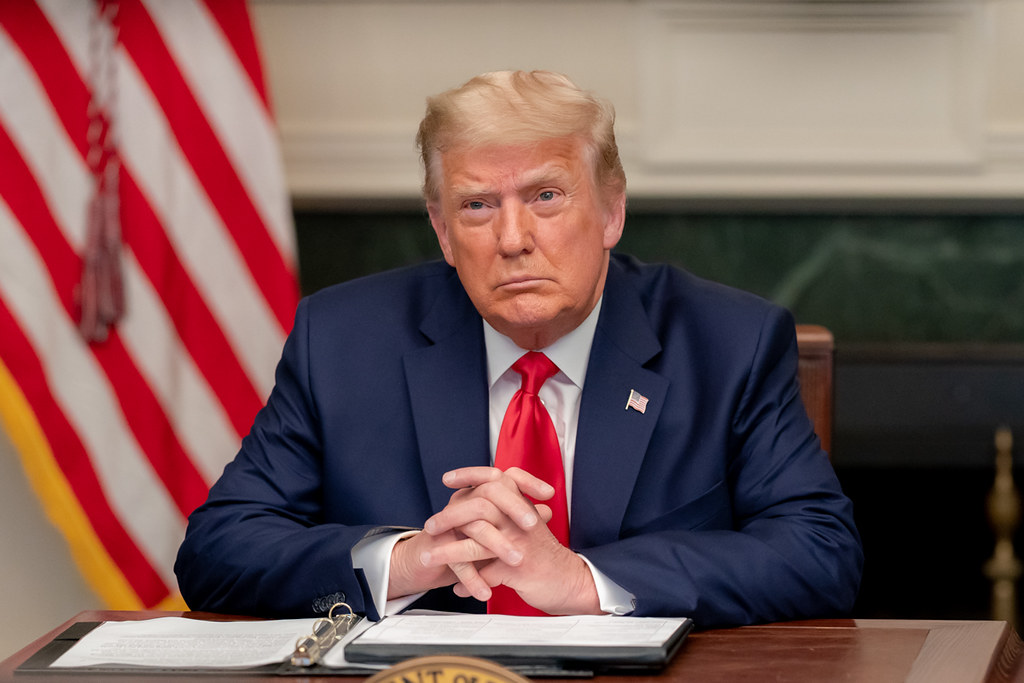
Despite the Trump administration investing around $18.6 billion into critical mineral projects, the investment push is lopsided, with the rare earth supply chain receiving far more funding than other metals, BMO Global Commodities Research says in a new report.
The Trump government’s roughly $18.6 billion in committed and uncommitted funding breaks down into about $15.9 billion in loans, $2.1 billion in equity investments and $615 million in grants across 60 instances of project financing, BMO analysts George Heppel and Max Yerrill said in a note on Monday about their report.
This funding has come through new legislative avenues such as the One Big Beautiful Bill Act and existing sources like the US Export Import Bank (EXIM), the United States’ International Development Finance Corporation (DFC) and the CHIPS Act.
‘Great financial pivot’
“The great US finance machine has pivoted into critical minerals,” the analysts said. “Never before in the USA’s history have we seen a mobilization of capital and policy in support of critical mineral supply at the scale of what has been achieved in the past two years. But [it] has only been partially distributed so far.”
The US government’s work to develop critical mineral – and especially rare earths – supply chains outside China’s control reflects efforts to catch up with Beijing’s significant lead. The country’s state-led investment into rare earths dates back to 1964 and by the 1980s, Chinese chemists had developed methods to affordably separate rare earths into their individual elements, an expensive and complex process that most Western companies are still trying to master.
Despite rare earths’ strategic significance for defence applications, they continue to attract outsized government funding even though their market value is relatively small. The total volume of the elements bought worldwide in 2024 was just $3.5 billion, compared with more than $300 billion for copper, $20 to $35 billion for lithium and $10 to $15 billion for uranium, according to figures from Reuters and the US Geological Survey.
Vast sums for rare earths
US rare earth developers and explorers have significantly benefitted from government investment, a standout example being private Brazilian miner Serra Verde which the DFC backed with a $565 million funding package in February. USA Rare Earth’s (Nasdaq: USAR) $2.8 billion acquisition of Serra Verde is expected to close in the third quarter. Last summer, the Department of Defense (DoD) invested $400 million in MP Materials (NYSE: MP), the sole rare earths miner in North America, making the DoD the largest shareholder in the company.
The BMO analysts note that graphite projects have also been tapped for sizeable investments, such as Graphite One (TSXV: GPH), which might receive about $2.1 billion from EXIM. Most of the loan would go towards a planned graphite anode plant in Ohio and the rest for its Graphite Creek project in Alaska.
Unbalanced funding
The authors estimate that the potential funding available to the Trump administration amounts to hundreds of billions of dollars, yet they note other critical metal projects such as for tungsten, antimony, nickel, cobalt and others are underinvested.
The world’s supply of tungsten is mostly controlled by China. The hard, dense metal is used mainly for cemented carbides for cutting and drilling tools, as well as in alloys for aerospace, electronics and military applications like armour-piercing ammunition.
Tungsten projects have received funding, though it pales in comparison to the sums advanced for rare earths projects. Fireweed Metals’ (TSXV: FWZ) Mactung project in Yukon – said to be one of the world’s largest undeveloped tungsten deposits – has received about $15.8 million from the US Department of Defense. That department also backed Northcliff Resources’ (TSX: NCF) Sisson tungsten-molybdenum project in New Brunswick with $15 million.
Considering its value, government investment in tungsten is “concentrated and underweight” and antimony, nickel, cobalt, tantalum, and tin have received “very little funding relative to their importance,” the BMO analysts say.
More News

Bomb attack damages Ecuador mining agency probing illegal gold
It’s the second blast in recent weeks affecting Arcom offices.
June 29, 2026 | 12:28 pm
{{ commodity.name }}
{{ post.title }}
{{ post.date }}
Comments