Designing primary crushing for consistency and uptime
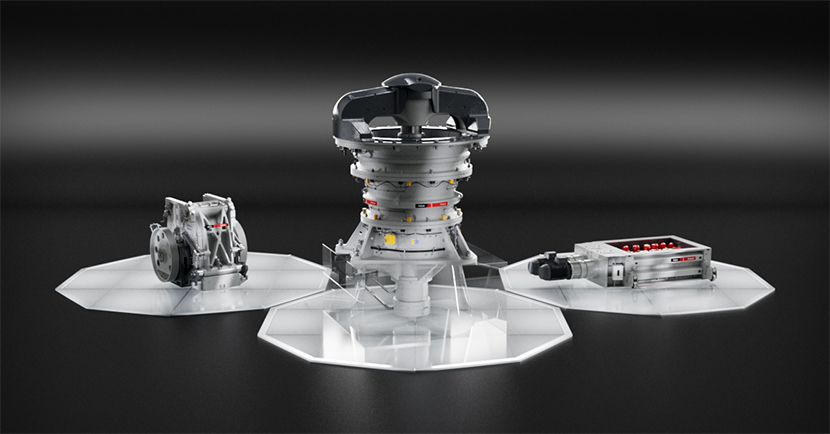
As hard rock operations face greater variability and tighter performance expectations, operations are prioritizing predictable uptime, simpler maintenance and safer access, making sustainable crushing a practical outcome of reliability and reduced disruption.
Primary crushing sets the pace for the comminution circuit. It influences feed consistency, plant utilization, maintenance demand and recovery. Positioned between mining and processing, any loss of availability can quickly disrupt load and haul while sharply reducing throughput. Because of this, study teams are placing as much emphasis on operating time and serviceability as they do on nominal capacity.
These decisions are particularly important in feasibility and late-stage projects. Primary crushers are long-life assets, and early design choices can have far-reaching implications. The right decisions can reduce operational risk and simplify maintenance over time, while the wrong ones can lock in complexity that becomes costly over time.
At the same time, ore bodies are becoming more complex and variable, and operating conditions are more demanding. Capacity still matters, but it is no longer enough on its own. Instead, project teams are asking broader questions around consistency, maintainability and lifecycle value. How can primary crushing deliver predictable uptime as conditions change? How can maintenance be made faster and safer without compromising performance? And how can long-term value be built in, in practical, and sustainable ways?
In practice, sustainability in primary crushing is seen in the outcomes. Fewer unplanned stoppages, fewer reactive maintenance interventions and safer, more predictable service routines all contribute to more stable operations. These factors, in turn, support better use of time, energy and wear parts across the asset lifecycle.
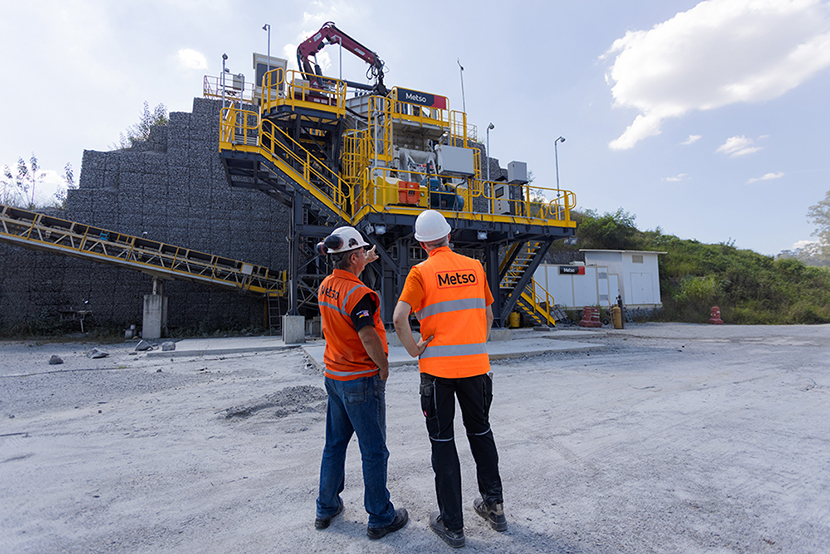
What study teams should examine
One of the earliest considerations is material behavior. While hardness has traditionally been in the forefront, other factors such as fines content, moisture, stickiness and overall variability can be just as important in real operating conditions. Ignoring these characteristics can lead to solutions that perform well on paper but struggle in practice.
Throughput should also be understood in terms of risk, not just capacity. Under tight production targets, even short periods of unplanned downtime can have a large effect on annual output and, ultimately, on project economics. A design that prioritizes stability and availability may therefore deliver more value than one optimized purely for peak capacity.
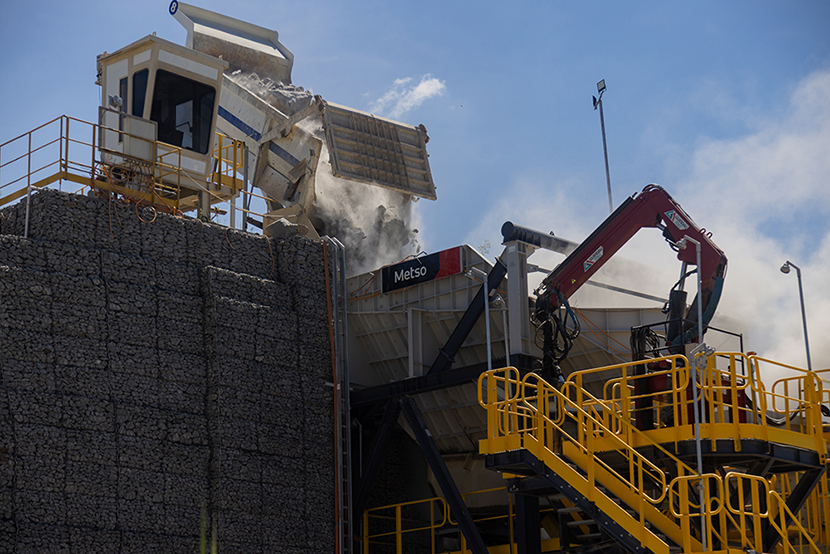
Station design introduces another layer of complexity. While some operations allow for generous space and height, others are constrained by excavation limits, underground layouts or semi-mobile requirements. In these environments, the physical footprint of the crusher, along with installation profile and station geometry, can become as critical as crushing performance itself.
Maintenance philosophy deserves equal attention. Decisions about where service tasks are carried out, how components are accessed and how shutdown work is structured all have direct implications for safety, outage duration and operational risk. Addressing these factors early in the design phase can significantly improve both efficiency and working conditions over the life of the asset.
Matching equipment to operating realities
Selecting the right primary crusher is ultimately about aligning the equipment with the realities of the operation. Throughput requirements, footprint constraints, installation environment and material characteristics all play a role. The challenge is to achieve this alignment without compromising on reliability, serviceability or safety.
High-throughput operations
Large, high-tonnage circuits depend on stable primary crushing that can absorb variation in feed size while maintaining consistent throughput. In these settings, the primary crusher effectively sets the rhythm for the entire plant and any instability can quickly propagate downstream.
The Metso Primarok™ primary gyratory crusher is designed for this type of duty. Its large feed acceptance, combined with optimized kinematics and chamber design, supports steady operating behavior even under variable conditions. This consistency helps reduce fluctuations in downstream processes and contributes to a more stable overall circuit.
Maintenance and availability are central to the concept. Features such as top access and simplified concave and spider handling are intended to reduce the need for complex in-situ procedures. By making service tasks faster and safer, the design helps minimize downtime, which is an especially important consideration in high-capacity operations where even short interruptions can carry significant production losses.
Space-constrained and underground installations
In contrast, some projects are defined primarily by their physical constraints. Limited footprint, underground installation requirements or compact civil designs place strict limits on how equipment can be configured. The challenge in these cases is to achieve the required capacity and reduction without introducing additional maintenance complexity.
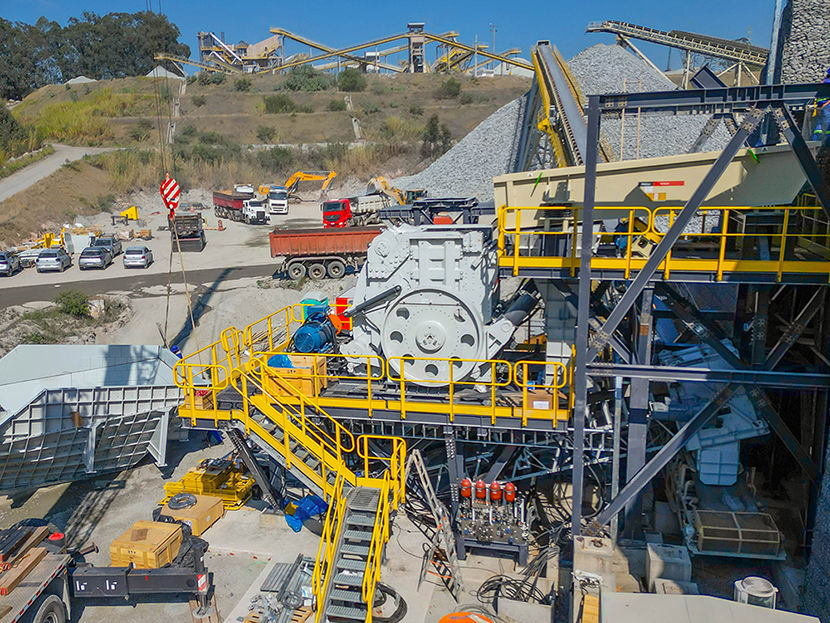
The Metso Optirok™ eccentric crusher is designed to address these conditions. Based on a compression crushing principle, it delivers high capacity and reduction performance within a relatively compact footprint. This makes it well suited to installations where space is limited but performance expectations remain high.
An important feature is integrated scalping, which allows fines to bypass the crushing chamber. This enables a more semi-continuous crushing process, reducing unnecessary breakage, lowering wear and improving energy efficiency. At the same time, it supports more consistent product quality under demanding conditions.
From a maintenance perspective, the design emphasizes accessibility and safety. Foldable and hydraulically assisted components make it easier to access critical areas, reducing exposure and simplifying service tasks. This contributes to improved mechanical availability over time.
Challenging material conditions
Some applications are less defined by layout constraints and more by the nature of the material itself. Sticky ores, mixed feed and high fines content can create instability in conventional primary crushers, leading to blockages, inconsistent performance and increased maintenance demand.
For these conditions, controlled size reduction becomes critical. The Metso Durarok™ primary sizer takes a different approach, using a low-speed, high-torque roll-based system that focuses on controlled crushing rather than conventional compression.
This approach allows finer material to pass through without unnecessary additional breakage, which can reduce both wear and energy consumption. At the same time, it helps maintain more stable operation when handling difficult or variable feed.
Maintenance is designed around controlled and safe access. Hydraulic lifting systems allow the machine to be positioned for service quickly, while modular wear components and automated lubrication systems support faster, more predictable maintenance routines. Together, these features contribute to longer machine life and reduced operational disruption.
A shared design philosophy
Although these solutions are designed for different conditions, they are built around a common set of priorities: uptime, serviceability and long-term efficiency. These principles are increasingly seen not as added benefits, but as essential requirements for modern operations.
Availability, in particular, is treated as a fundamental design driver. The goal is to reduce unplanned downtime and enable a shift toward planned, predictable maintenance. Design features such as improved access, modular components and simplified systems all contribute to keeping equipment running more consistently.
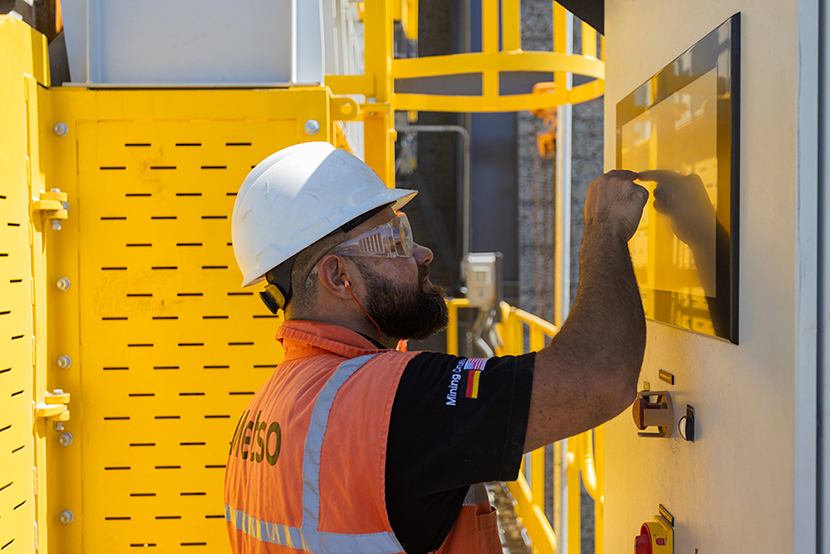
At the same time, maintenance is approached with a strong focus on people and processes. Clear access routes, simplified service steps and the use of hydraulic assistance help reduce physical strain and improve safety during maintenance activities. This not only lowers risk but also helps shorten service durations and improve overall efficiency.
Over the lifecycle of the asset, these factors combine to support better operating performance. Reducing unnecessary energy use, limiting wear and avoiding instability all contribute to more efficient use of resources and more predictable outcomes.
Designing for long-term value
Primary crushers are long-life assets. Their selection shapes project economics well beyond flowsheet approval. The right fit for the ore, the station and the operating model sets a more reliable start. It also reinforces core priorities. Uptime. Ease of maintenance. Maintenance safety.
For projects looking to reduce ramp-up risk and improve lifecycle performance, the path is clear. Design primary crushing for long-term value. Do it early. Do it safely. Build it in before constraints become costly to change.
Learn more about Metso primary crushing solutions
More News
{{ commodity.name }}
{{ post.title }}
{{ post.date }}
Comments