Sweden grants 25-year concession to heavy rare earth deposit
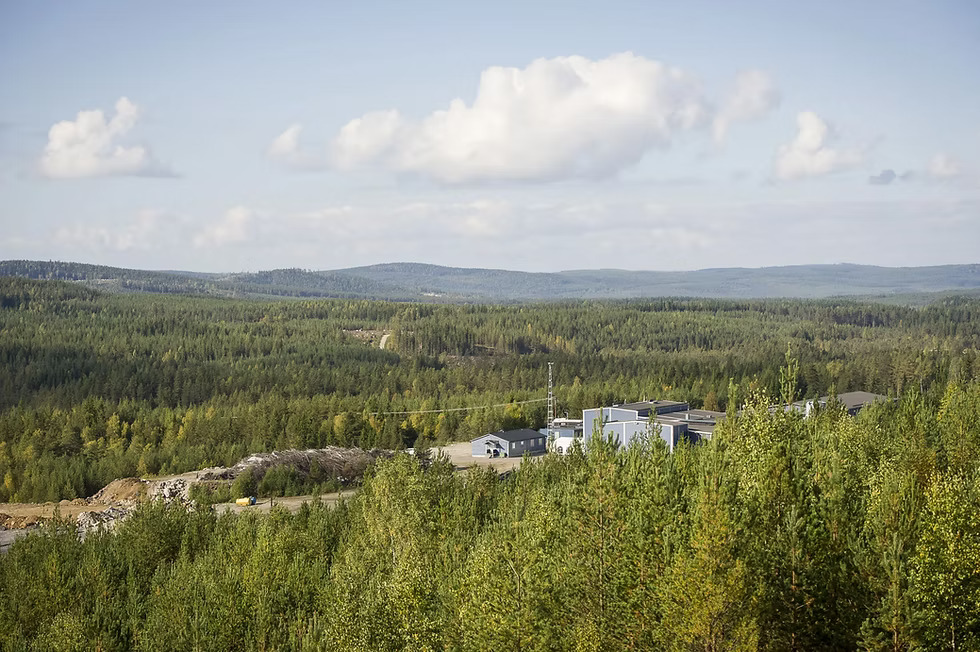
The Swedish government has granted Leading Edge Materials (TSXV: LEM) a 25-year mining lease for what the company calls one of the most significant rare earth deposits in Europe.
In a statement on Monday, the Canadian critical minerals explorer said its Norra Kärr project in southern Sweden was awarded the exploitation concession following a formal recommendation from the country’s mining inspectorate endorsing its development.
According to Leading Edge, a decisive factor in the government’s decision was the project’s strategic importance to Sweden and the EU, citing a prior study by the Geological Survey of Sweden that confirmed Norra Kärr as one of Europe’s richest rare earth deposits.
Specifically, the report highlighted the project’s particularly high proportion of the so-called “heavy rare earths” — terbium, dysprosium and yttrium — all of which are key inputs in the production of permanent magnets used in electric vehicles, wind turbines and other advanced technologies, including defense applications.
With no rare earth production anywhere in the EU today, the government concluded that supplying Sweden and Europe with these critical raw materials clearly outweighs competing land-use interests, the company said.
“The government’s decision affirms that this is a strategically important heavy rare earth deposit, located in a Tier 1 jurisdiction,” Kurt Budge, CEO of Leading Edge, commented in a press release.
Shares of Leading Edge Materials soared nearly 28% following the announcement, taking the company’s market capitalization to approximately C$85 million ($59.8 million).
Rich in heavy rare earths
In the company’s release, Budge also noted that the Norra Kärr project has “the capacity to supply all of Europe’s annual dysprosium requirements alongside meaningful terbium and yttrium production,” offering a “realistic solution” to the continent as it looks to reduce its reliance on Chinese imports.
A 2021 preliminary economic assessment (PEA) on the project had outlined a potential 26-year mine operation producing an average of 5,340 tonnes per annum of mixed rare earth oxides (MREOs), based on material representing approximately 30% of the project’s inferred resource of 110 million tonnes grading 0.5% total rare earth oxides (TREOs).
A key differentiator of the project, said Leading Edge, was its high ratio of the far scarcer heavy rare earths (dysprosium and terbium) to light rare earths (neodymium and praseodymium) contained within the resource. At 2.5 to 1, it means that for every kg of NdPr produced, Norra Kärr is expected to yield 0.4 kg of DyTb. Meanwhile, the average ratio for projects in its peer group is 38.5 to 1, it said.
Based on older and much lower rare earth prices for Dy and Tb, the PEA report gave Norra Kärr a post-tax net present value (at 10% discount) of $762 million, an internal rate of return of 26.3%, and average annual EBITDA of $206 million.
PFS, permitting next
With the mining lease now secured, Leading Edge said it will move the project towards an updated pre-feasibility study (PFS) and enter talks with potential offtake partners and financiers in order to bring Norra Kärr into production.
“With European supply chain resilience now a policy imperative, Leading Edge Materials is on track to develop Europe’s first heavy rare earths mine,” Budge said.
At the same time, the company will also look to advance its environmental permitting process, pledging that it will be “developed to the highest environmental standards, in close dialogue with the local community, including those who remain skeptical of the project.”
The Norra Kärr project previously had its mining concession revoked in 2016 due to environmental concerns, three years after its initial issuance. Since then, Leading Edge has taken steps to address those concerns and reduced the project to a 65% smaller footprint.
{{ commodity.name }}
{{ post.title }}
{{ post.date }}
Comments