Aluminum price spike from Mideast war fans costs for US solar industry
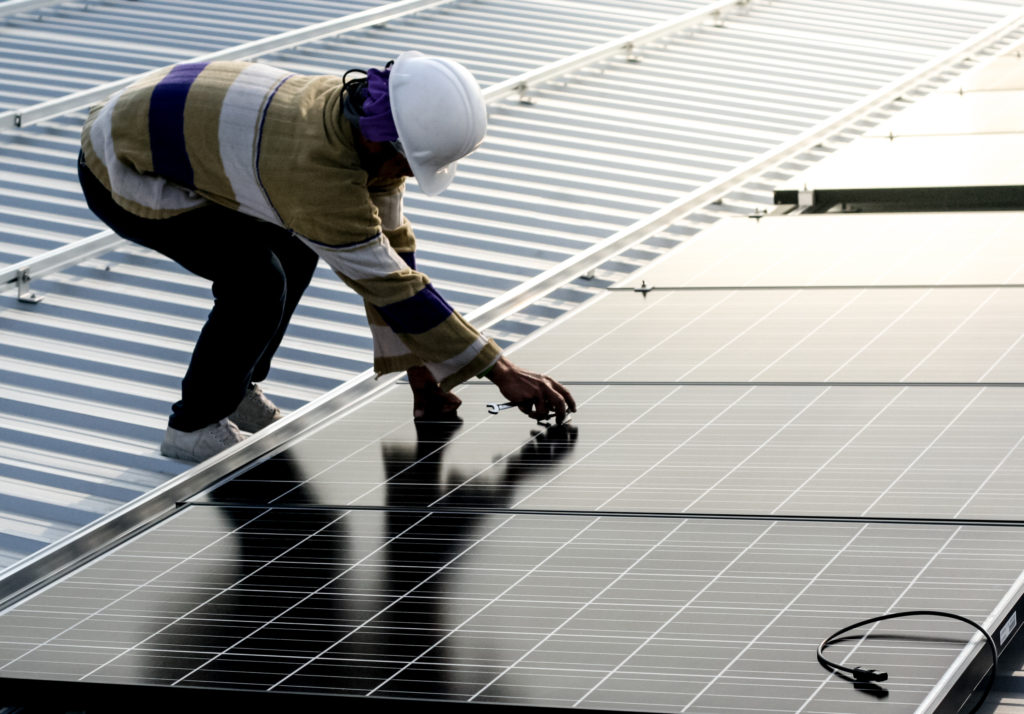
Commercial US solar customers are seeing installation costs spike as the war in Iran chokes supply of aluminum and makes racking systems more expensive, compounding financial pressures on an industry already grappling with elevated silver prices.
Aluminum is vital for solar racking components such as rails, clamps and brackets to mount solar panels.
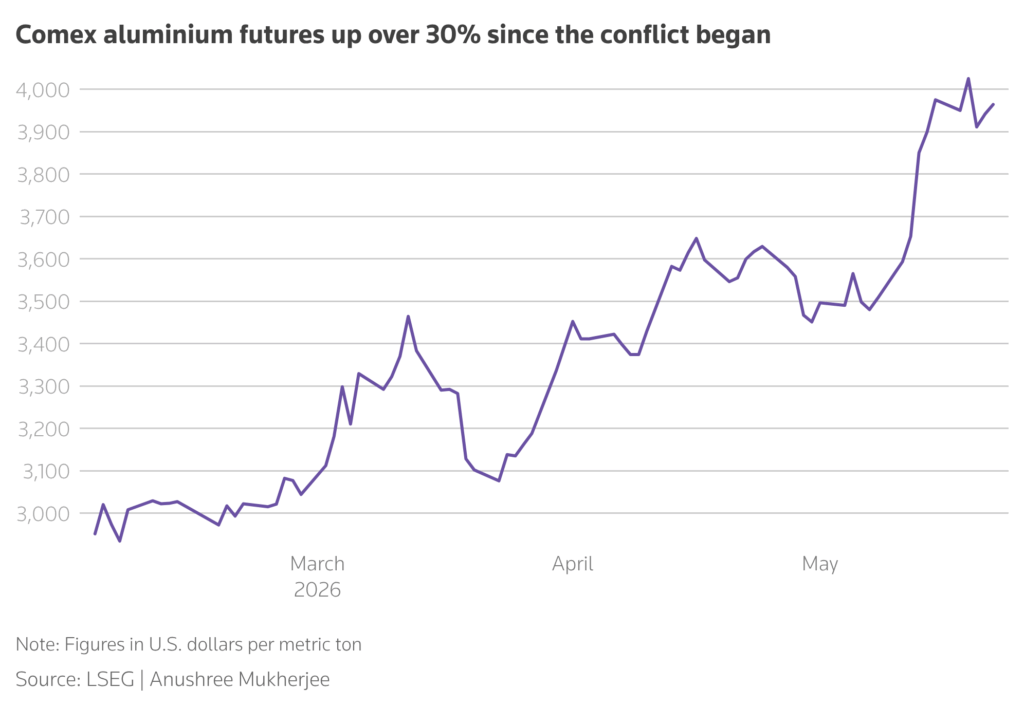
Damage to Gulf refining facilities and disruptions to shipping via the Strait of Hormuz, a conduit for over 5 million metric tons of aluminum annually, have pushed benchmark aluminum prices on the London Metal Exchange up 15% since late February, while CME’s COMEX aluminum futures contract has gained more than 30%.
“I’m seeing roughly a 20% increase in racking selling price across solar projects,” said Jim Wood, CEO of SEG Solar Inc. “I would expect some marginal projects—particularly those with very tight returns—to fall off.”
The United States imported over 5 million metric tons of aluminum in 2025, according to the US Geological Survey. Canada supplied over 50%, while the UAE and Bahrain accounted for 12% of US aluminum imports, USGS data showed.
However, since most aluminum is priced in reference to the global benchmarks, Gulf supply risks have translated into higher costs for Canadian imports as well.
“The US and Canada operate in a globally integrated market, Canadian producers will adjust their prices to match rising global rates,” said Derek Schnee, senior commercial solar consultant at JK Renewables.
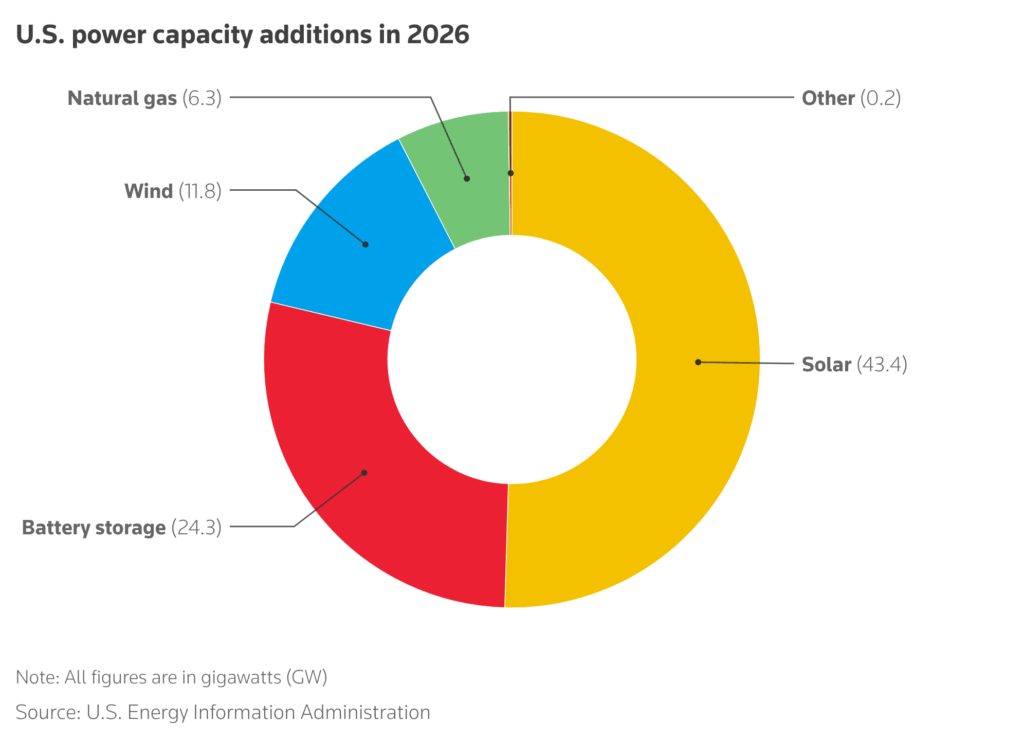
The aluminum price rally also comes against a backdrop of rapid US solar growth, with demand from the AI hyperscaler buildout also rising. The US Energy Information Administration expects developers to add 43.4 gigawatts (GW) of utility-scale solar capacity in 2026, a 60% jump from last year. The mounting equipment expenses could ultimately make some of these projects less profitable, analysts said.
The sector is also navigating tariffs on imported panels currently and Trump administration policies prioritizing fossil fuels over renewables.
Costs to trickle down
Aluminum accounts for about 9% to 10% of total project costs through mounting and structural components, said Linda Zeng, senior power & renewables analyst, BMI, a unit of Fitch Solutions.
“Assuming a 500-watt module, in general, the aluminum frame accounts for $10 per module in 2025 pricing. Aluminum usually accounts for about $0.02 per watt, or $10 per panel, but would increase by 50% to about $0.03 per watt, or $15 after the supply constraint,” said Ben Damiani, chief technology officer at Cherry Street Energy.
“So, for 500 gigawatts, this would represent $5 billion of increased cost,” he added.
One gigawatt can power about 750,000 homes.
Experts said even small per-watt increases in costs can become significant when applied across large volumes of planned solar capacity.
“I expect to see this have a direct cost to the consumer in Q3 and Q4 2026,” JK Renewables’ Schnee said, referring to higher costs being passed through to commercial end-users, including utility scale developers, office buildings, data centers and factories.
(By Anushree Mukherjee; Editing by Arpan Varghese and Devika Syamnath)
More News
{{ commodity.name }}
{{ post.title }}
{{ post.date }}
Comments