BHP, Port Hedland union make progress, talks to resume next week
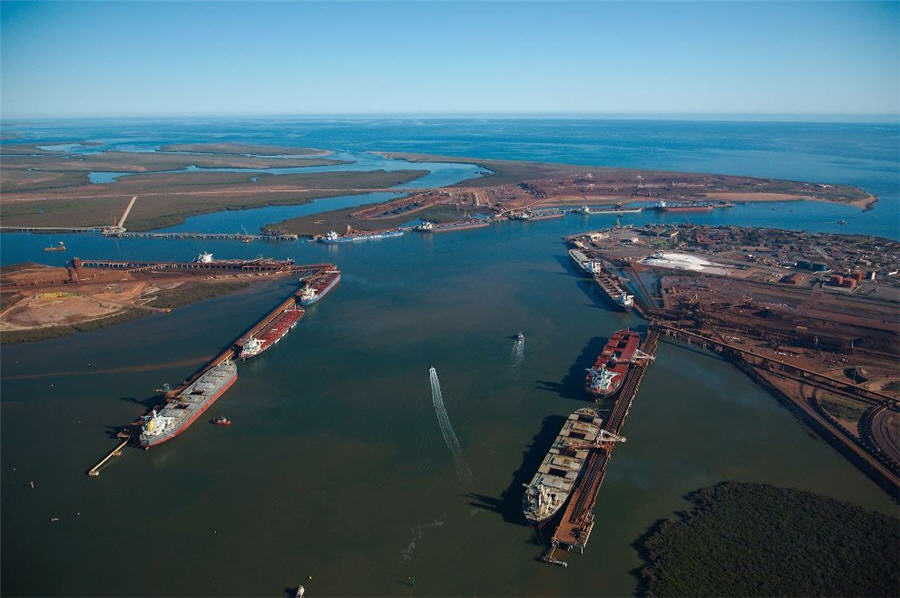
BHP and unions representing workers at Western Australia’s Port Hedland, the world’s largest iron ore export hub, edged closer to a deal on Tuesday, though talks ended without an agreement and will resume next week, the union said.
Port Hedland is a major artery for Australia’s iron ore, through which $80 million of BHP’s products transit each day.
“Some progress was made, though no agreement was reached,” said the Combined Ports Unions in a statement. “We will continue negotiations for a safe, fair and productive iron ore industry on 28 July.”
Progress in the discussions suggests a lower chance that fresh industrial action will be announced before next Tuesday.
The world’s largest-listed miner has been in negotiations for more than seven months with unions representing around 450 operators and maintenance workers for a four-year enterprise agreement.
Last week, “well over” 100 workers at its Port Hedland iron ore operations downed tools for an eight-hour stoppage on Thursday, according to a union estimate. Combined Ports Unions, which represents three unions, had previously estimated as many as 200 workers would join the action.
“Our focus remains on making constructive progress towards fair and reasonable agreements,” BHP said earlier in a statement.
“We are committed to continuing to bargain in good faith on new workplace agreements across our iron ore operations and believe that the involvement of the independent Fair Work Commission for Port bargaining is the most constructive way to achieve the best outcome.”
The Fair Work Commission is an industry regulator that can be brought in to assist in the bargaining process and can ultimately become the final arbiter of any deal.
“It hasn’t seemed to have disrupted operations too much at the moment,” said portfolio manager Andy Forster of Argo Investments, which holds BHP shares.
“It’s clearly concerning if it starts to lead to further action and more interruptions,” he said, adding that for now, any impact appeared to be contained, and that BHP appeared hopeful an agreement could be reached.
The Electrical Trades Union, which represents electrical workers at Pilbara port, estimated that on average it was asking for an extra A$25,000 ($17,510) per worker for the 450 workers.
Fly-in-fly-out roles, where workers commute by plane to remote mine sites, missing family time, could no longer compete with city conditions, the ETU said in a statement. “In the past, workers could double Perth wages if they worked in the Pilbara … This is no longer the case.”
Its analysis found that wages for long-standing employees across BHP’s iron ore operations remained largely stagnant over the last five to six years, despite consistent corporate growth and rising living costs in regional and remote areas.
“In contrast, new hires are being offered higher rates to attract them to site, often creating a two-tiered workforce where experience is undervalued and equity is undermined,” it said.
Last week, electricians maintaining BHP’s high-voltage power network in Western Australia’s Pilbara region overwhelmingly backed strike action, escalating labour unrest. They will meet with BHP for talks on Thursday.
($1 = 1.4278 Australian dollars)
(By Melanie Burton; Editing by Thomas Derpinghaus and Jacqueline Wong)
More News

{{ commodity.name }}
{{ post.title }}
{{ post.date }}
Comments