China expands strategic mineral toolkit with new investment firm

A new, Beijing-backed mining investment vehicle is aimed at bolstering China’s grip on overseas resources, as the country pushes back against US and European efforts to curb its dominance of the mineral supply chain.
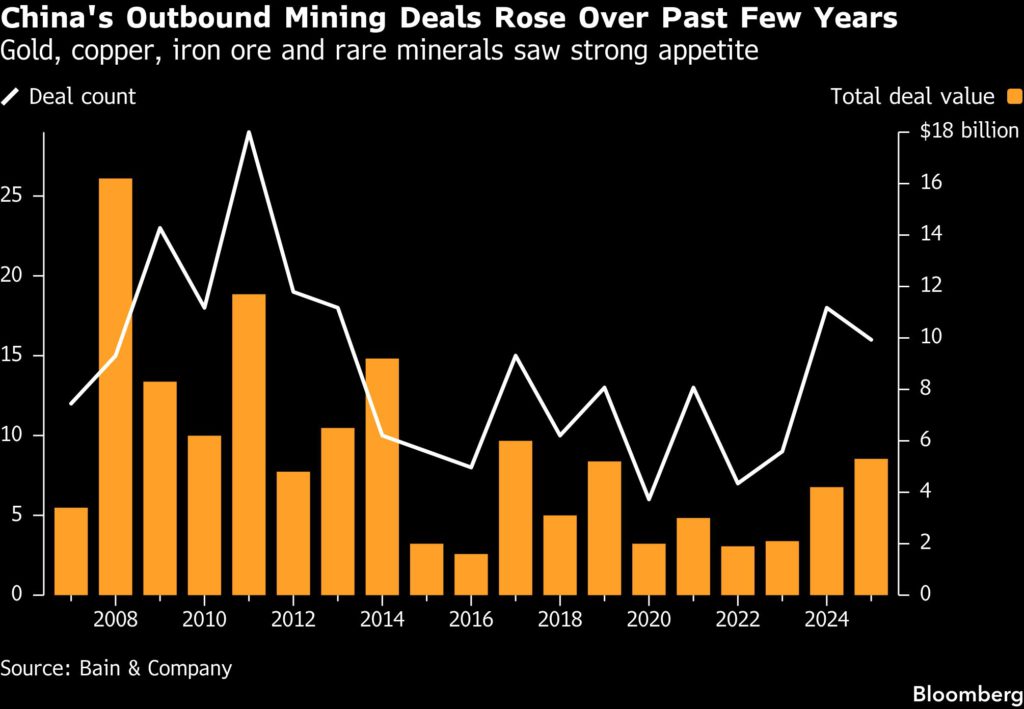
Chinese companies have been aggressive buyers and builders of overseas mining assets for more than a decade, with a few champions leading the way. At a time when Western rivals were under shareholder pressure to cut spending, firms from the world’s top metals consumer expanded in Congo’s copper and cobalt production, took stakes in key iron ore projects and transformed Indonesia’s nickel industry.
But fresh challenges — including more demanding producer nations and rising geopolitical tensions — have prompted Beijing to increase the number of tools at its disposal when it comes to managing strategic supply chains, according to people familiar with the matter.
Guangyan International Investment Co. will be part of a broader effort led by the National Development and Reform Commission, which oversees economic planning, the people said. The relatively new company will be used to provide support ranging from direct equity investment to advice on compliance, risk-management and market conditions.
China is seeking to standardize its process for international metals deals to improve oversight of proceedings, the people said, asking not to be identified given the sensitive nature of discussions. Miners will also be encouraged to manage their risk by bringing in other partners, rather than taking full ownership of projects, especially as costs rise and political challenges become more complex.
Guangyan, which also uses the English name Vast Rock International Investment Co., does not appear to sit within the upper ranks of Chinese political hierarchy — but it fits neatly with Beijing’s efforts to increase control over its supply chain. In the iron ore industry, China Mineral Resources Group has already been working to tighten the country’s control of purchasing and to increase the steel sector’s bargaining power.
NDRC did not immediately respond to faxed queries. Guangyan did not respond to telephone calls and questions sent to its registered email address.
China has been a major investor in overseas resources for since the early 2000s, taking large bets on vital minerals, including in jurisdictions where most Western mining giants have been reluctant to buy, from Tajikistan to the Democratic Republic of Congo. The spree, combined with heavy investment in processing at home, helped create an unparalleled grip on the mineral supply chain.
Over the last two decades, Chinese companies have spent over $100 billion in strategic outbound M&A deals in the mining sector, according to Bain & Co., with copper, iron ore and gold assets among the most sought after.
But increasingly, deals have become fraught. Minerals have become a flashpoint in global geopolitics, as supply chain shocks and an increased awareness of China’s dominance pushes countries to respond with investment and industrial policies of their own.
The US has been seeking allies to build an alternative supply chain from China, including by concluding partnerships with Congo to grant US investors preferential access to the African nation’s metal deposits of copper, cobalt, lithium and tantalum. The European Union, and countries including Japan, are trying to catch up too.
Producer nations have also begun demanding more from natural resources companies, eager to create higher-value jobs and more tax revenue.
Congo began export controls on cobalt last year. Guinea, the world’s biggest bauxite producer, has discussed plans to limit shipments of the material used to make alumina. The country also wants the companies behind the massive Simandou iron ore project to build a factory to produce iron pellets or steel. Zimbabwe, meanwhile, has told producers that they must make additional investments in refining if they want to avoid an export ban on lithium concentrate. The Chinese embassy in Harare, in response, warned companies to strengthen risk prevention.
Working with Guangyan is not mandatory and, as with CMRG, larger companies may resist the effort to share information and delegate risk assessments, the people said. Still, some domestic companies are being encouraged to communicate plans so that they can be assessed.
Job postings advertisement on China’s social media WeChat showed that Guangyan has stepped up hiring since around February.
(By Annie Lee and Heng Xie)
{{ commodity.name }}
{{ post.title }}
{{ post.date }}
Comments