China squeezes Japan over rare earths in repeat of 2010 showdown
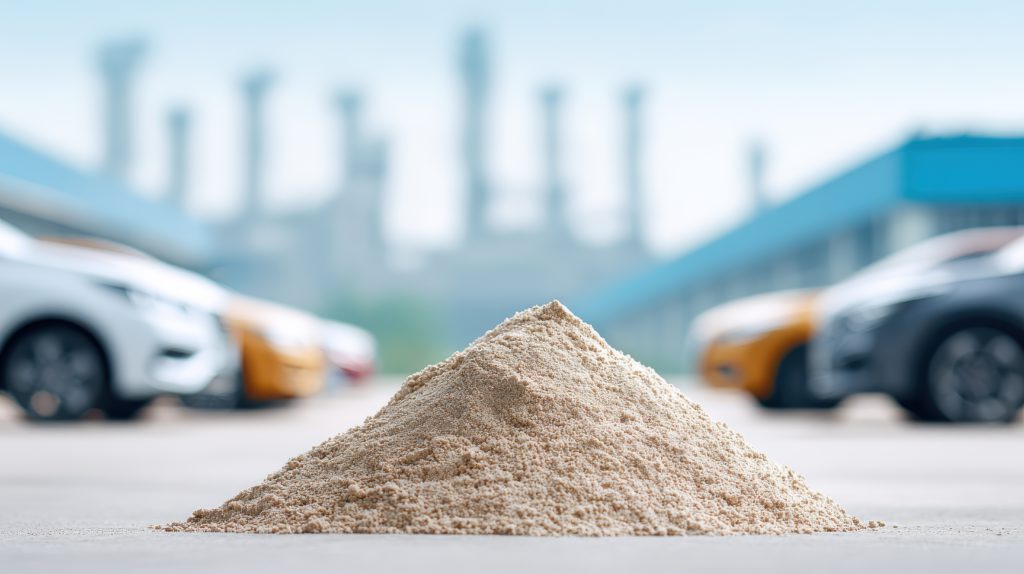
China has cut Japan off from several heavy rare earths and other materials for at least four months, coinciding with a dispute between the two countries over Taiwan, suggesting Beijing is using its control over critical minerals as diplomatic leverage.
Japan is the largest rare earth magnet maker outside China but like the rest of the world is overwhelmingly dependent on Beijing for imports of certain so-called heavy rare earths used in magnet-making, aerospace and defence, as well as gallium, a minor metal vital for chip-making.
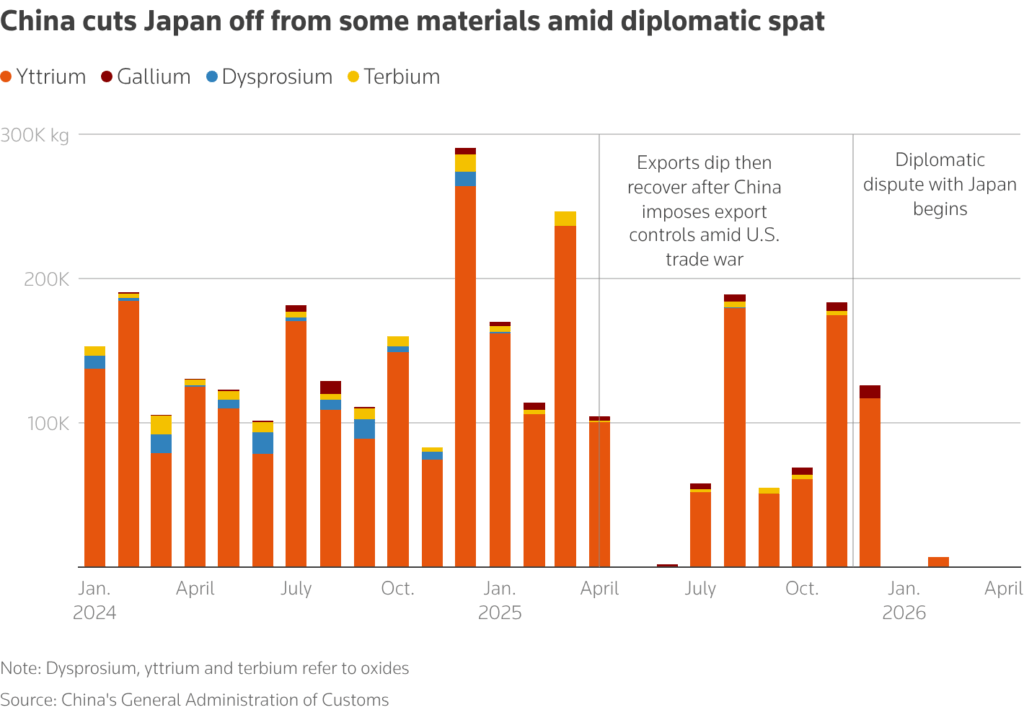
Since December, Chinese exports of rare earth minerals like dysprosium, terbium and yttrium oxide, as well as speciality metal gallium, to Japan have stopped except for a few tiny shipments of yttrium, Chinese customs data shows.
Major Japanese magnet maker Shin-Etsu has stopped accepting new orders for dysprosium-containing magnets, according to a Western customer who spoke on condition of anonymity. The company declined to comment.
The halt to exports, which began shortly after a diplomatic row over Taiwan erupted in November, is similar to Beijing’s throttling of exports of such materials to the US during the current trade war.
Beijing publicly tightened export controls to Japan in January, and then twice again the following month, targeting major conglomerates including the shipbuilding and aero engine divisions of Mitsubishi Heavy Industries.
Japan’s Trade Minister Ryosei Akazawa, who is currently in China, is scheduled to attend meetings on Saturday. He is the most senior Japanese official to visit China since the dispute erupted.
Tokyo is taking measures such as releasing stockpiled supplies where necessary although it does not disclose details, said an official at the Japanese industry ministry, adding that the government is aware of concerns over rising prices and tightening supplies.
Rare earth deja vu
Japanese companies are better insulated from the pressure campaign after a similar slowdown in Chinese exports of rare earth minerals in 2010 prompted the building of stockpiles, said David Merriman, research director at Project Blue. They have also sought to curb usage of heavy rare earths in magnets and look for alternatives.
China continues to export normal quantities of the finished rare earth magnets used by the automotive industry and other industrial companies, according to data.
Components manufacturer TDK told Reuters it currently doesn’t expect any major impact and is diversifying its supply sources. Mitsubishi Motors said in February it had secured rare earths until mid-year.
Japan has helped fund alternative producers such as Australia-based Lynas Rare Earths, which last year became the first commercial producer of separated terbium and dysprosium outside of China. It has also launched rare earth projects in Australia and France and a gallium project in Australia.
However, it is likely to take years to replace Chinese supply for heavy rare earths. In the first quarter of 2026, Lynas produced 8 metric tons of dysprosium and terbium. China exported about 14 tons a month of the two minerals to Japan in 2024.
(By Solomon Cefai, Yuka Obayashi and Sam Nussey; Editing by Lewis Jackson and Raju Gopalakrishnan)
More News
{{ commodity.name }}
{{ post.title }}
{{ post.date }}
Comments