Column: China’s surging exports a sign of global metals turmoil
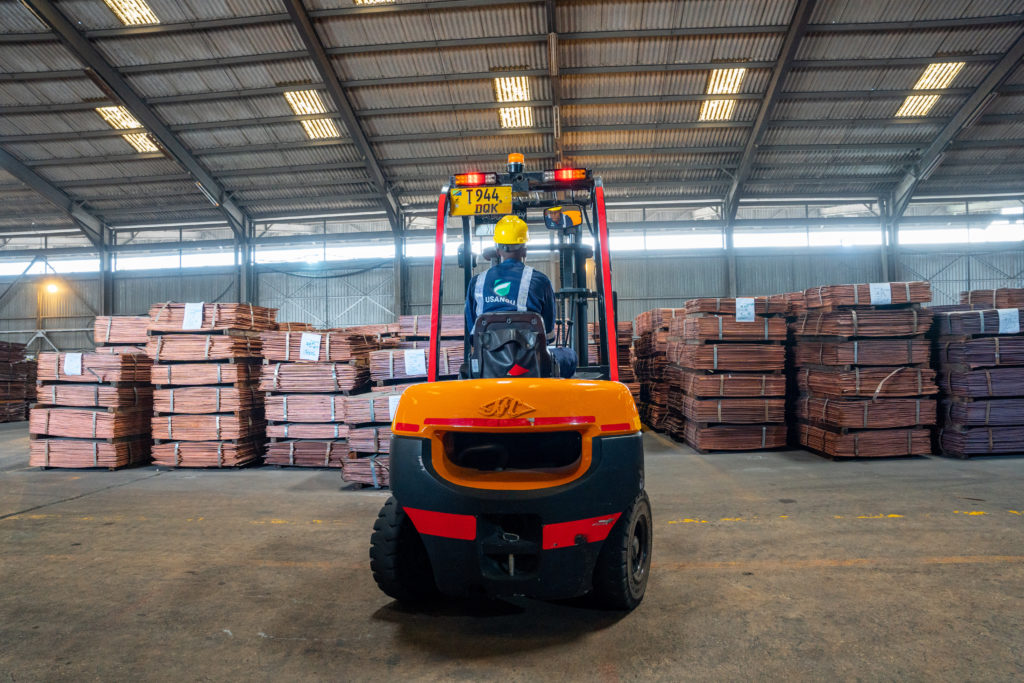
China’s net imports of refined copper last year were the lowest since 2017 at 3.03 million metric tons.
While inbound shipments dropped by a relatively modest 5% relative to 2024, the big change was a dramatic jump in exports. The world’s largest buyer of copper shipped out almost 800,000 tons.
The unprecedented counter-flow was driven by the global dislocation created by the threat of US import tariffs and the resulting high premium for physical delivery to the United States.
But it’s also a reflection of China’s ever-growing processing capacity across the base metals spectrum.
Exports of refined nickel also reached record levels, while those of primary aluminum and zinc were the strongest since 2006 and 2015 respectively, according to the World Bureau of Metal Statistics, which sources data from China’s General Administration of Customs.
China’s metals trade was once a one-way street but that’s changing.

Bonded roundabout
The threat of US tariffs on imports of refined copper, deferred until June, opened up a yawning gap between the US price represented by the CME contract and the international price traded on the London Metal Exchange (LME) .
Traders capitalized on the arbitrage by shipping huge amounts of metal to the US, including from China’s bonded warehouse zones.
China’s trade figures show 203,000 tons departing to the United States last year, while US customs registered just 17 tons of Chinese imports through October, proving that these shipments were non-Chinese brand metal stripped out of bonded warehouses.
China’s bonded stocks are part of the country’s metals ecosystem. Metal entering these bonded zones is classified by Chinese customs as imported material and is normally intended for eventual release into the mainland market rather than being re-shipped elsewhere.
The US tariff trade has changed that dynamic. Copper was also dispatched to Germany, Italy and the Netherlands last year to replace units, particularly Chilean copper, redirected to the United States.
With LME stocks equally denuded of brands eligible for US delivery, some Chinese smelters exported directly to LME warehouses in both Hong Kong and Taiwan.
Chinese-brand copper accounted for 79% of LME-warranted tonnage at the end of December.
Similar disruption to global aluminum flows has resulted from the hike in US import tariffs to 50% in June last year.
US President Donald Trump’s threat of even higher tariffs on Canada, a major supplier to the US market, has caused the premium for US delivery to widen to an eye-watering $2,177 per ton over the LME cash basis price.
As with copper, the gravitational pull of that premium has reached China’s bonded warehouses.
Outbound shipments of primary metal reached almost 300,000 tons last year. The two main destinations were South Korea and India with smaller volumes heading for the Netherlands and the United States in the fourth quarter.
While China remained a net importer of primary aluminum last year, the scale of exports significantly reduced the country’s net call on metal from the rest of the world.

Shipping into price strength
China has also lifted exports of zinc, tin and nickel in response to recent price strength on the LME.
The country turned net exporter of refined zinc in November and December after a vicious squeeze on the LME contract in October.
Outbound shipments totalled 78,500 tons in the fourth quarter. The top destinations were Taiwan, Singapore and Hong Kong, all of which host LME warehouses.
Exports of refined tin accelerated to near 3,000 tons over the same period as the LME tin contract went on a turbo-charged rally.
Indeed, last year China was a net exporter of the soldering metal for the first time since 2021, when Western supply was hit by multiple smelter closures due to Covid-19.
In both cases, China’s ability to plug Western supply-chain gaps reflects its growing dominance of global smelting. This has long been the case in tin but is a newer phenomenon in zinc, reflecting China’s aggressive build-out of new processing capacity in recent years.

Two-way traffic in nickel
China has also massively expanded its nickel processing capacity, sourcing raw materials from Indonesia’s booming nickel sector.
What was intended to feed demand from the electric vehicle battery sector has instead increasingly found its way to LME warehouses as Chinese auto companies pivot to non-nickel battery chemistry.
Chinese exports of refined nickel jumped by 40% year-on-year to 171,000 tons, an annual record. The export flow has lifted LME warehouse inventory to multi-year highs with Chinese brands representing 69% of registered stocks at the end of 2025.
Somewhat counter-intuitively, Chinese imports grew even faster to 231,000 tons, the highest tally since 2021.
The inference is that while commercial operators were shipping surplus metal to the West, Chinese state entities were simultaneously adding to strategic reserves, preferring to source metal from long-time suppliers such as Russia and Norway.
China’s refined nickel trade was largely one-way traffic until the middle of 2024, when a new generation of refineries entered production and started listing their brands with the LME.
But the same could be said of just about every base metal with the exception of aluminum, a market long dominated by China, which has historically exported domestic market surplus in the form of semi-manufactured products rather than primary metal.
As the country replicates its aluminum dominance in other base metals, two-way traffic looks set to become the new normal.
(The opinions expressed here are those of the author, Andy Home, a columnist for Reuters.)
(Editing by Marguerita Choy)
More News

Pentagon strikes deal with Canada’s 5N Plus
February 02, 2026 | 11:36 am
{{ commodity.name }}
{{ post.title }}
{{ post.date }}



Comments