Column: Europe falling behind in critical minerals race
The European Union has taken action to strengthen critical mineral supply chains that support the energy transition but the US is moving faster and offering greater support, leaving Europe vulnerable to China’s dominant position.
China already dominates the global supply of solar power components and Europe has minimal production and processing capacity for key materials used in battery storage like lithium, nickel, cobalt, manganese, high-purity graphite, as well as rare earths and permanent magnets for wind turbines and electric motors, Ruben Davis, senior policy officer at Cleantech for Europe, told Reuters Events.
For clean power developers, over-reliance on dominant suppliers of critical minerals increases the risk of project delays due to licensing issues, export controls or other sudden supply disruptions.
In 2024, 95% of EU rare earth imports came from just three countries: China, Malaysia and Russia, according to Eurostat. China hosts 32% of global lithium production and Chinese companies control another 18% based in other countries, including Zijn’s Tres Quebradas scheme in Argentina and Gangfeng Lithium’s Sonara project in Mexico, according to Wood Mackenzie.
Importantly, China dominates critical minerals processing, holding 81% of global capacity, Wood Mackenzie said.

In a bid to speed up investment, the EU adopted the ResourceEU action plan in December 2025 which aims to expand the primary extraction and refining of critical minerals on EU territory, promote recycling and reduce dependence on dominant suppliers.
Funded by 3 billion euros ($3.5 billion) from the EU’s 2024 Critical Raw Materials Act (CRMA), the action plan includes measures to speed up project permitting and ban scrap exports and sets a target of extracting 10% of EU critical minerals needs on home territory and hosting 40% of processing capacity on EU soil by 2030, while setting a minimum recycling threshold of 15%.
The CRMA comes from existing financing sources and “falls short of a fully funded industrial strategy,” Arthur Leichthammer, geoeconomics policy fellow at the Jacques Delors Centre, told Reuters Events.
European policymakers have understood the importance of diversification but current efforts are too slow and policymakers have not focused enough on promoting processing, Luc Pez, chief commercial officer at Viridian Lithium, said.
“Investment momentum has weakened globally because of low prices,” Pez noted.
According to Davis, the EU’s regulations “have not yet fundamentally shifted the bankability or business case of most projects.”
Huge challenge
Europe and the US have a long way to go to reduce their reliance on dominant critical mineral suppliers. For copper, lithium, nickel, cobalt, graphite and rare earth elements, the average market share of the top three producers increased from about 82% in 2020 to 86% in 2024, according to the IEA in May 2025, with almost all supply growth coming from the single top supplier: Indonesia for nickel, and China for all other minerals.
In one example, the EU sources 93% of its permanent magnets for wind turbines from China, according to the Centre for Strategic and International Studies.
Critical minerals projects that have stalled in Europe include the Chvaletice manganese project in the Czech Republic, which hit long delays in permitting and grid access despite Strategic Project designation by the European Commission. The fast-track permitting provisions in the CRMA have not yet been incorporated into Czech law.

In November, the UK updated its national critical mineral strategy to reduce permitting hurdles, accelerate diversification of supplies and support more recycling of waste.
“Our Critical Minerals strategy will see us collaborate with the EU as we look to build more secure and resilient supply chains”, a spokesperson for the UK’s Department for Business and Trade, told Reuters Events.
The UK strategy provides just 50 million pounds ($67.4 million) in funding and lacks “credible instruments to shift investment decisions in new projects or mandatory diversification,” Leichthammer warned.
Europe has historically looked to market forces to solve supply issues but “we’re now reassessing that,” Cillian O’Donoghue, policy director at European Electricity Association Eureletric, told Reuters Events.
The EU should create a single market for the recycling of PV and battery storage systems to help diversify critical raw material supply, a spokesperson for industry group SolarPower Europe said.
This market would help build a circular economy and allow recycling businesses to scale up, the spokesperson said.
Europe trails US
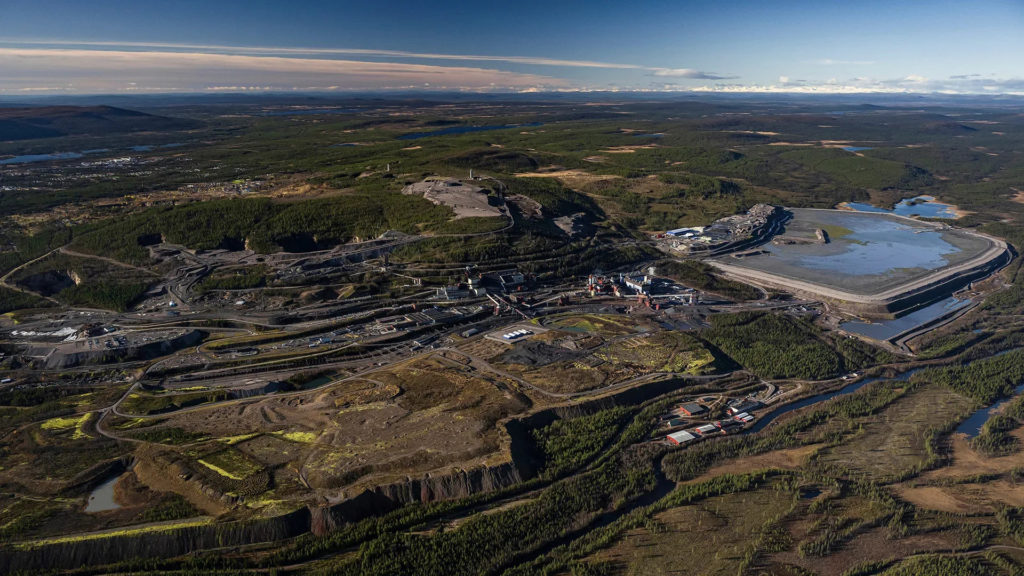
Projects underway in Europe include Swedish group LKAB’s $800 million demonstration plant for processing phosphorous and rare earth elements. The facility is scheduled to become operational in 2026 and will be scaled up with additional processing facilities to achieve “full operation during the 2030s,” the company said in a statement.
But the US is moving faster to diversify its critical mineral supply, pursuing a more “security-driven and deal-based” strategy, Davis noted.
The Trump administration has enacted policies to ramp up the supply of critical minerals in the US and from allied countries, while engaging in a high-stakes trade and tariff battle with China.
Measures in President Joe Biden’s 2022 Inflation Reduction Act and President Trump’s 2025 One Big Beautiful Bill provides private companies with tax credits, loans, price floors, grants and offtake guarantees.
This range of incentives will help to “build mine-to-magnet or mine-to-battery chains at speed,” Davis said.
The US has also used the Defense Production Act to provide supplier guarantees that help make projects commercially viable.
In contrast, many European strategic minerals projects are shelved by private companies before the final investment decision stage, Davis said.
“Europe’s challenge is that, compared with the US or China, public tools to de-risk projects are still relatively small,” he said.
(Opinions expressed are those of the author, Neil Ford, an energy reporter for Reuters Events.)
(Editing by Robin Sayles)
{{ commodity.name }}
{{ post.title }}
{{ post.date }}
Comments