Column: History suggests gold price will drop more, but are new drivers in charge?
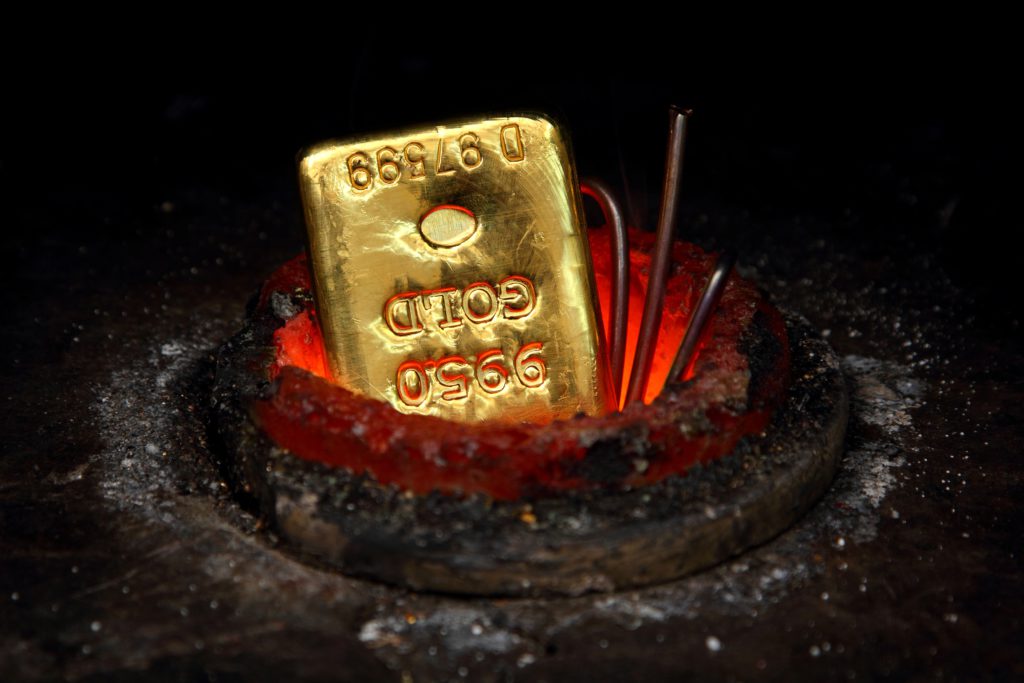
Should gold investors be disappointed that the precious metal has failed to kick on from its January record high above $5,500 an ounce, or should they be relieved the pullback hasn’t been more severe?
The price history over the past two decades suggests that strong rallies, such as the one from September 2022 to January 2026 when gold gained 245%, are followed by substantial declines, even if the bulk of the gains are consolidated.
In the rally from a low of $697.45 an ounce in October 2008 to a then-record-high of $1,884.40 in September 2011 gold gained 170%. It then declined by 37% to a low of $1,191.35 by August 2018.
From that low it jumped 74% to a high of $2,072.49 an ounce by August 2020, before retreating 22% to $1,620.20 by September 2022.
It’s worth noting that the bigger the increase in prices the bigger the subsequent decline, and a further point is that the rallies tend to happen over shorter time spans than the retreats.
From the September 2022 low gold went on a tear, rising to an all-time high of $5,594.82 an ounce on January 29.
Since then it has softened by 20% to end at $4,473.89 an ounce on Thursday.
Based on the previous rally and retreat pattern there would seem to be the possibility of a bigger decline in coming months and even years before the uptrend resumes.
But this assumes that the same dynamics that drove the previous rallies and periods of consolidation still exist today.
There is an obvious risk to saying “this time it’s different,” and markets are littered with examples of this kind of thinking ultimately proving incorrect.
That said, the current rally was largely achieved by a combination of bullish factors, and it was unusual insofar as all of them were pulling in the same direction at the same time.
Three main factors stand out, namely increased central bank purchases, strong retail demand by the top two buyers China and India, and support from investors in what can broadly be described as the fear trade.
This includes fear of higher inflation, fear of adverse geopolitical developments, and since the return of Donald Trump to the US presidency, fear that his policies will undermine the status of the US dollar as the global reserve currency, and with that the associated loss of US economic hegemony.
However, in recent months central bank buying has moderated, as has consumer demand in China and India.
Buying eases
The latest World Gold Council quarterly report showed central banks bought 243.7 metric tons of gold in the first quarter of this year, up 3% from the same quarter in 2025.
However, purchases have been levelling off in a range either side of 200 tons per quarter since the start of 2025, and are well below the highs from mid-2022 to the end of 2024, when buying exceeded 300 tons a quarter for five quarters and only once dipped below 200 tons.
Jewellery demand in China was 85.2 tons in the first quarter, down 31% from the same period in 2025, while India slipped 19% to 66.1 tons.
Global jewellery demand dropped 25% to 260.2 tons in the first quarter of this year, according to council data.
Higher gold prices have acted as a brake on consumer demand, and India’s government has moved to increase taxes on gold imports in a bid to lower purchases and thereby ease balance-of-payments pressures.
Investment flows into gold exchange-traded funds have also dropped, with inflows of 62 tons in the first quarter being down 73% from the same quarter in 2025.
Overall, total gold demand dropped by 9% in the first quarter of 2026 to 1,195.9 tons from 1,315.6 tons in the same period last year.
This makes the relatively modest pullback in gold prices seen since the January high seem like a good performance.
The problem for gold investors is the price is currently being driven mostly by monetary policy expectations rather than the usual factors.
The inverse correlation in recent weeks with crude oil is an example of this.
When crude oil prices rise amid the ongoing conflict between the United States and Iran, then gold eases. Conversely when oil prices slip on hopes that a peace deal is imminent, then gold recovers somewhat.
The oil price is driving US interest rate expectations, with higher prices opening the possibility of higher rates, but also eliminating the hope for cuts.
Lower oil prices lift hopes that rates will fall, and lower rates tend to support non-yielding assets such as gold.
Ultimately this makes gold as much a hostage to developments in the Iran war as other assets.
(The views expressed here are those of the author, Clyde Russell, a columnist for Reuters.)
{{ commodity.name }}
{{ post.title }}
{{ post.date }}
Comments