Congo taps Portugal’s Mota-Engil to revive copper rail link
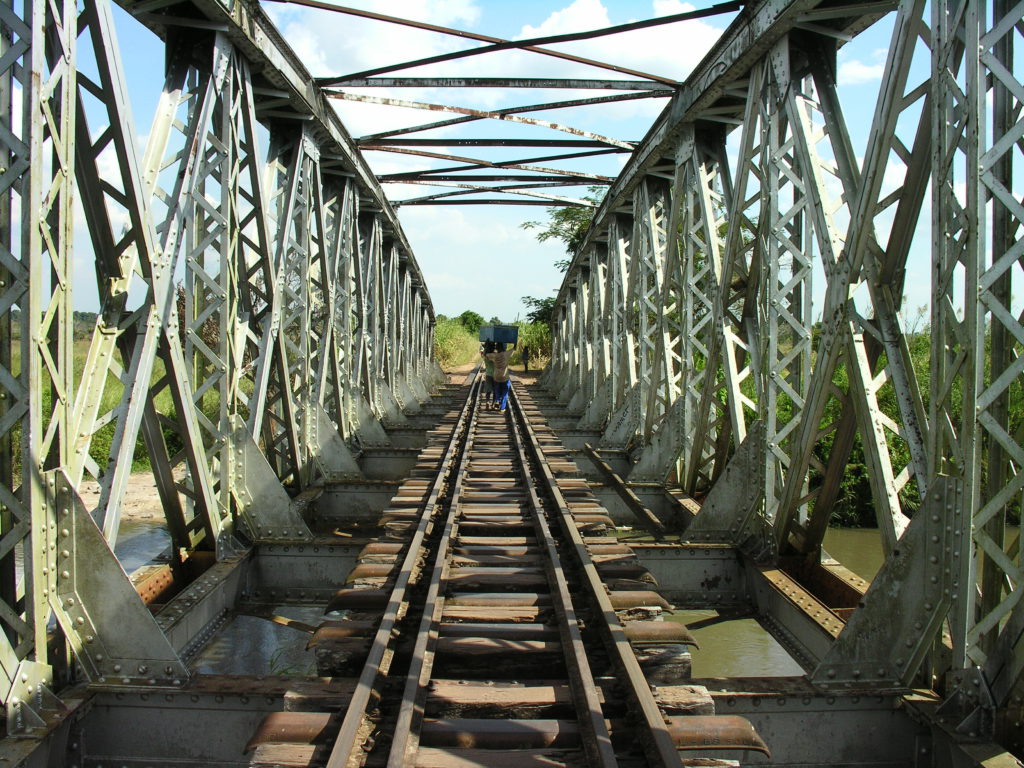
The Democratic Republic of Congo approved a plan to partner with Portuguese construction company Mota-Engil SGPS SA on a key copper and cobalt railway project that’s backed by the US.
The Congolese part of the Lobito Corridor will undergo a “complete rehabilitation” through a public-private partnership endorsed by Congo’s government on July 10, according to minutes of a cabinet meeting read out the same day on state television. Mota-Engil is already part of a consortium that operates a connecting rail line in neighboring Angola that runs to the Atlantic Ocean coast, allowing for cross-border continuity.
The major railway project linking Angola’s Port of Lobito to Africa’s Copperbelt promises to significantly reduce transport times for critical minerals being exported to Western markets. The infrastructure has received financial backing from the US, and President Donald Trump’s administration has been supportive of Mota-Engil’s efforts to win the deal in Congo as American involvement in the country’s booming mining sector deepens.
The Central African nation is the world’s second-biggest copper producer and the top source of battery material cobalt. US interest in Congo’s natural resources has accelerated since Trump returned to the White House as he seeks to reduce dependence on China for a wide range of mineral products.
The US and Congo signed an agreement in December that gives American investors preferential access to some deposits of metals including copper, cobalt, lithium and tantalum, with the pact emphasizing the “strategic nature” of the Lobito Corridor. Chinese miners including CMOC Group Ltd. and Zijin Mining Group Co. Ltd. currently account for most of Congo’s copper and cobalt production.
While the contract still needs to be finalized, Mota-Engil now looks set to become responsible for renovating and running the dilapidated railway that passes through the mining hubs of Kolwezi, Tenke and Lubumbashi. The firm’s venture with Trafigura Group on the Angolan side has an existing track access agreement with Congo’s state rail company.
Mota-Engil and the government are negotiating a contract that would let the firm operate the railway for 30 years, people familiar with the matter said, asking not to be named discussing non-public information.
Congo’s transport ministry didn’t immediately respond to requests for comment.
In December, the DFC said it had signed a letter of interest for up to $1 billion with the Portuguese company to help it repair and manage the rail line in Congo.
There’s also a separate endeavor to connect Zambia – Africa’s No. 2 copper producer – to the Lobito Corridor. At the same time, China is progressing with a $1.4 billion overhaul of an export railway that can move minerals from Zambia to the Indian Ocean port of Dar es Salaam in Tanzania.
The Mota family is Mota-Engil’s largest single shareholder and holds the top executive posts at the firm, while China Communications Construction Co. owns a 31% stake. The company has engineering, industrial and mining projects in 20 countries across Africa and South America, as well as in Spain and Portugal.
Last year, Mota-Engil secured a €230 million contract from Dubai-based logistics giant DP World Ltd. to lead the development of Congo’s first deep-water port.
(By William Clowes)
{{ commodity.name }}
{{ post.title }}
{{ post.date }}
Comments