For Danish army, the threat to Greenland isn’t Trump but Russia
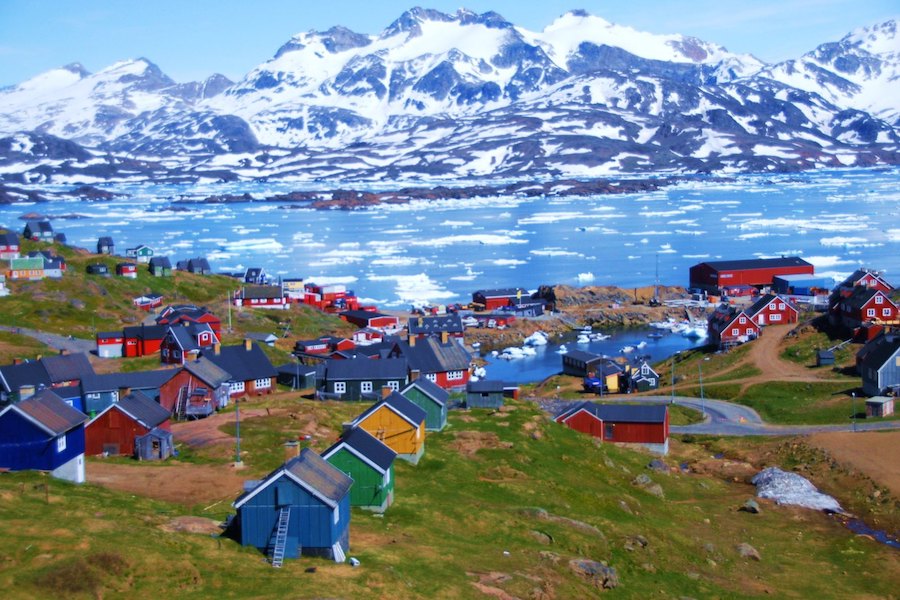
Private Mads Hansen acknowledges that it can get lonely surrounded by nothing but mountains, drifting ice and a vast polar sea.
One of three Danish soldiers permanently stationed at a former mining outpost called Mestersvig on the desolate coast of eastern Greenland, his role includes patching roofs ripped away by storms, plowing back meter-high snowdrifts, training sled dogs for their next patrol, or stitching them up after a fight.
“You get used to it,” he said while showing off the base’s snowplows, a radio and handgun hanging from his belt.
Hansen and his colleagues are becoming familiar with another aspect of a soldier’s life in the Arctic: The station, along with much of Greenland’s eastern flank, is set to play a bigger role, supporting an expanded military presence as part of a broader defensive build-up directed at Russia.
Danish intelligence services have shifted their tone in the past year, warning that the risk of an escalation between NATO and Moscow in the Arctic is higher than ever, outlining in some detail what Russia’s nuclear submarines and other capabilities are “in the event of war.”
The government in Copenhagen launched a second Arctic military package on Oct. 10, including investments in additional capacities for defense at sea in Greenland, with maritime patrol aircraft for monitoring and combatting submarines, more Arctic ships and icebreakers.
“We are looking into a future threat scenario that we have to deal with,” Soren Andersen, head of the Joint Arctic Command in Greenland, said in an interview in Nuuk, the island’s capital.
Russia’s tactics and hardware in Ukraine, its growing cooperation with China in the Bering Strait, shifts in activity off Norway, and the persistent challenge of the shadow fleet all reinforce his concerns of a looming threat that Denmark and its allies must prepare to confront.
Denmark consequently held its biggest exercises in Greenland to date in September. Where prior drills have been focused on rescue missions and civilian tasks, this was about preparing for war.
A Danish colony for more than 200 years, Greenland today is a semi-autonomous part of the kingdom, with a local government that controls most domestic issues. Foreign and security policy, though, remain in Copenhagen’s hands, and in practice much of that is executed by Major General Andersen, who oversees Denmark’s military presence across Greenland’s territory.
He describes Russia as a “regional superpower in the Arctic,” with Moscow having built out its bases and deployed offensive capabilities in recent decades. President Vladimir Putin’s forces are fully occupied in Ukraine for now, but Andersen anticipates Moscow will redirect resources north and repurpose new weapons technology for the region once the war is over. Danish intelligence services have similarly warned that Russia would in that event be able to “pose a direct threat to NATO.”
It’s a charge laughed off by Moscow. Putin addressed the proliferation of Western warnings about Russia’s intentions on Oct. 2 at the Valdai discussion club, dismissing them as “nonsense” and accusing Europe’s leaders of whipping up “hysteria.”
Yet there’s no denying that Russia is expanding its arsenal. In July, Putin lauded the addition to the navy of nine submarines in six years with four more latest-generation Borei-A class nuclear boats to be delivered in the coming years, armed with “cutting-edge weaponry.”
The Borei, named after the Greek god of the north wind, Boreas, is constructed at the Sevmash yard near Archangel, across the White Sea from the Kola peninsula, home to Russia’s northern fleet and key to its Arctic presence.
Defending the Arctic “is crucial for our security,” North Atlantic Treaty Organization Secretary General Mark Rutte said Oct. 13. Recent drone incidents on Danish soil, which officials linked to Russia, further underscore how Nordic nation Denmark, a strong supporter of Ukraine, is itself a target, with consequences for all of its territory.
Yet the question of Greenland’s defense has exposed a rift with Washington.
To President Donald Trump, the island is so vital to US security he’s suggested taking control of it, frustrated by what he sees as Denmark’s chronic underinvestment. While European leaders rallied behind Copenhagen, Trump’s remarks have awakened Denmark, Greenland and NATO to the fact the region demands far greater attention — and resources. Still, Danish military officials say defense cooperation with the US in Greenland remains strong and hasn’t changed since Trump took office.
“We know that there is increased focus on us and the Arctic, and that obliges us to do more,” Greenland’s premier, Jens-Frederik Nielsen, said in early October.Play Video
The day after Trump revived talk of buying Greenland in December, Denmark’s government proposed more Arctic defense spending, with lawmakers since agreeing to invest an additional 42 billion kroner ($6.5 billion) in the military in the region. The geographic focus has also shifted east, to expanding special forces units patrolling the northeastern part of the island, establishing a nuclear monitoring station and air warning radar in East Greenland, and funding new surveillance drones.
Denmark was joined by France, Germany, Sweden and Norway in the drills rehearsing the defense of NATO’s northern flank.
Off Nuuk in southern Greenland, helicopters thundered overhead as Danish soldiers and dogs in special harnesses slid down ropes onto the deck of a frigate seized by mock adversaries in a simulated hijacking at sea. Reinforcements raced in by boat soon after, and the enemy was subdued.
Days later, in the mountains around Kangerlussuaq, the sound of gunfire echoed off the slopes as French and Danish infantry rehearsed direct confrontations, while F-16s roared through the air, practicing mid-air refueling. In the same rugged terrain, Swedish and Norwegian home guard units trained for the defense of the airport, sending drones ahead to scout the area before advancing.
Greenland has historically been an important military outpost during times of conflict. During World War II, the US established bases and weather stations that proved vital for Allied operations, and in the Cold War it expanded its footprint to more than a dozen installations. Pituffik in the northwest hosted as many as 15,000 troops along with long-range bombers and early-warning systems. Today, it’s staffed by fewer than 200 personnel, but remains a strategic vantage point for detecting missile launches.
Greenland has a population of just 57,000 people spread across a landmass more than three times the size of Texas, with 80% of the island lying beneath ice and no roads connecting its settlements. Its location between North America and Europe is what makes it indispensable to Western security.
Across the Arctic Ocean, Russian nuclear submarines can hide beneath the ice, able in the event of war to fire missiles at targets in North America and Europe. If they slip undetected through the narrow sea corridor between Greenland, Iceland and the UK — known as the GIUK gap — they can carry nuclear-armed missiles into the North Atlantic, where they’d be near impossible to track.
A Russian invasion is seen as unlikely, but the military assesses that Moscow might seek to block allied use of Greenland by attacking installations that are crucial to NATO. Pituffik is especially vulnerable, while the Danish airport at Kangerlussuaq, critical energy infrastructure and even the civilian population and government in Nuuk are “obvious targets,” according to Andersen.
Protecting an island the size of Greenland in such a climate comes with unique challenges. Aside from the weather, hundreds of thousands of square miles are nothing but snow, ice and mountain, unreachable by vehicles.
“The environment is unforgiving,” Laura Swaan Wrede, head of Sweden’s home guard, said during an exercise in Kangerlussuaq. Swedes are familiar with the north, but Greenland’s scale and sparse infrastructure makes operations especially complicated. “There are a lot of things we can learn,” said Wrede. With the Arctic moving to the fore, “it’s important to practice as much as possible.”
The expanded military presence means locals in Greenland are having to adjust to a new reality, too.
It can be jarring. Some Greenlanders say it undermines their desire for greater autonomy. For others, it revives painful memories, including of the Inuit families displaced to make room for Pituffik in the 1950s, and a 1968 B-52 crash that scattered radioactive waste.
Most Greenlanders back the idea of their island as a zone of “low tension,” a vision first advanced by Soviet leader Mikhail Gorbachev, who called for the Arctic region to be a space for scientific cooperation and reduced military confrontation. According to Vivian Motzfeldt, who oversees foreign policy in Greenland’s government, today’s geopolitical situation requires “new positions.”
“Low tension actually requires military build-up,” Motzfeldt said while on a Danish frigate observing the exercises.
Trump’s assertive rhetoric and approach to Greenland has left many residents uneasy. The US notably didn’t take part in the NATO drills in September.
But Denmark’s military also has to tread carefully. So it informs communities ahead of exercises, and lets the public tour its ships. Exercises are timed to avoid disturbing muskox and reindeer during calving season; flights are rerouted so as not to spook animals that hunters rely on. Even ice-breaking requires coordination with local authorities to avoid trapping seal hunters on the sea ice.
Greenlanders themselves remain only marginally involved in their island’s defense. Very few serve in Denmark’s armed forces, a gap Copenhagen is trying to close with plans to establish a permanent Greenlandic unit under the Arctic Command in Nuuk. A new unit of “Greenlandic Rangers” who can carry out tasks in remote and isolated coastal areas is also under consideration. Last year, the Armed Forces launched a six-month Arctic basic-training program, teaching recruits skills like weapons handling, survival and rescue support. Such was its popularity that enrollment has already been expanded.
NATO, however, still badly trails Russia in Arctic hardware. In addition to its submarine capabilities, Moscow operates the world’s largest icebreaker fleet, can field Arctic-hardened brigades, and has built or modernized dozens of bases along its northern coastline, complete with airstrips, radar stations, and air-defense systems.
Denmark, by contrast, has faced criticism for outdated radar and aging patrol ships. The frigate Niels Juel toured southern Greenland this summer, but isn’t built for winter ice. Planned new Arctic-capable ships will take years to design and build. Long-range surveillance drones on order aren’t due until 2028.
Greenland’s military infrastructure is concentrated on the west coast, where milder weather, larger populations and easier access to North America made it the natural location for Cold War bases.
With conditions in the east so harsh, the bulk of military operations fall to Denmark’s dog sleds, the Sirius patrol, an elite special forces unit created during World War II. Two-man teams and their dogs cover thousands of miles of territory that would otherwise be inaccessible, monitoring foreign activity, carrying out rescues — and asserting Denmark’s sovereignty. The patrol will now be expanded, and a specialized Arctic unit is being established for rapid deployment to provide additional first-responder capacity.
At the Mestersvig station, Kent Peter Ronshoj sat outside in the Arctic sun petting a dog. Ronshoj, who oversees the Sirius patrol and stations in eastern Greenland, said that Mestersvig hadn’t yet noticed any perceptible increase in the threat level. But staff stand ready to serve as a support hub for the increased military activity in the area, a role he sees taking on increased importance as their focus shifts.
“We are turning our gaze more towards the east,” he said.
(By Sanne Wass)
More News
Chile’s Novandino Litio seeks environmental approval for $3B Atacama lithium project
July 03, 2026 | 11:29 am
LME approves Adani’s major copper smelter in India as listed brand
July 03, 2026 | 09:33 am
{{ commodity.name }}
{{ post.title }}
{{ post.date }}
Comments