Mining billionaire calls on China to push green ship fuel deal
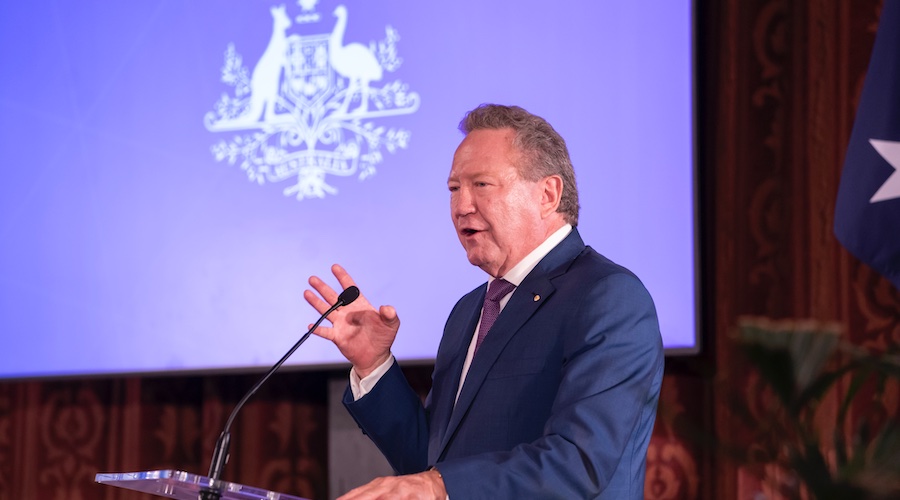
China should be pushing to decarbonize global shipping fuel after plans to charge emissions fees stalled last year because of US opposition, according to Australian billionaire miner Andrew Forrest.
The International Maritime Organization in October postponed by a year a decision on the landmark charge after attacks on the proposal from US President Donald Trump. China had supported a draft proposal in April 2025, but didn’t push back against the delay.
Penalties against shipping emissions would stand to benefit green hydrogen, a technology touted by both China and Forrest, who made his fortune as the founder of iron ore miner Fortescue Ltd. The billionaire in recent years has focused on pivoting to green technologies, although progress has been uneven.
“I need China to really lean forward on the International Maritime Organization proposal to trend itself to go green,” Forrest said Tuesday during a panel discussion at a World Economic Forum event in Dalian, China. “There’s huge vested political interest in the United States because they don’t want to see the world’s shipping industry go green.”
The US is the world’s largest oil and gas producer, while China is investing heavily in green hydrogen, which is made from water and carbon-free electricity. That hydrogen can then be blended into ammonia or methanol to produce an emissions-free shipping fuel.
BloombergNEF projects China will have 5 million tons of green ammonia production by 2030, far above the next biggest producer India at a projected 1.6 million metric tons. China is the cheapest producer, but the fuel remains two to three times more expensive than the ammonia generated by natural gas.
Securing demand for all that fuel has been more difficult. In 2025, for example, hydrogen output only rose by 11,000 tons in China despite the country adding 44,000 tons of production capacity, indicating that many projects are operating at only a fraction of their full utilization, according to BloombergNEF.
(By Lili Pike)
{{ commodity.name }}
{{ post.title }}
{{ post.date }}
Comments