MMG bemoans Congo cobalt curbs that threaten investment
China’s MMG Ltd. wants more clarity on the Democratic Republic of Congo’s cobalt-export policy after the state-controlled miner received a disappointing quota, as questions mount over how curbs have been imposed.
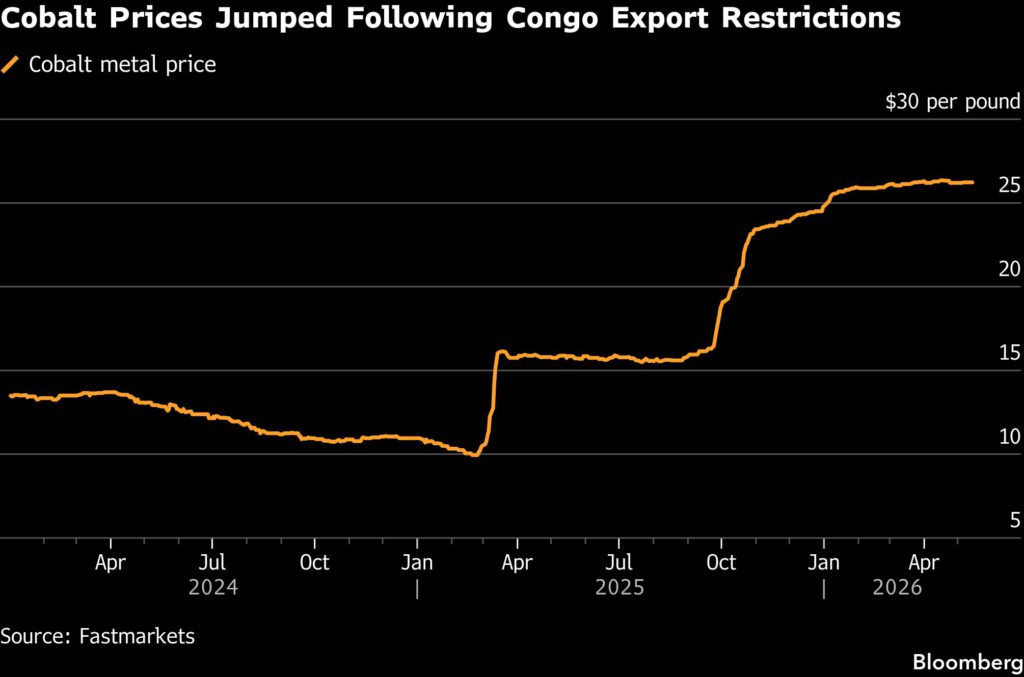
Congo, the top producer of the battery metal, first banned exports in February 2025 to reduce a glut and capture more value from its output. It followed that with strict quotas from October, which for most companies are mainly calculated on a pro-rata basis according to their exports in the three years to the end of 2024. The restrictions have slowed shipments and boosted prices.
The quota calculation has posed challenges for MMG and makes its cobalt production “economically unviable,” Aaron Chen, the general manger of MMG’s Kinsevere operations, said at the Cobalt Institute’s annual congress in Madrid this week. “MMG is proud of our economic and ESG contribution to the DRC and we were disappointed that this was not considered in the cobalt quota.”
MMG’s comments add to signs that Congo’s cobalt policy is creating a predicament for some miners, which for now cannot reap the full benefit of their assets there, and that it could deter future investments in the industry. Chinese firms have spent billions of dollars developing mines in African nations including Congo to dominate supplies.
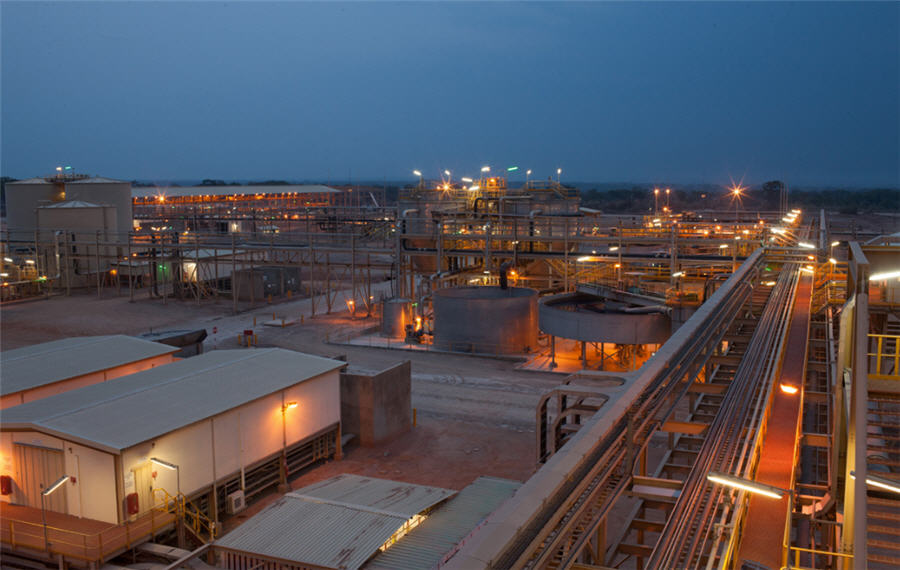
MMG, which counts China Minmetals Corp. as its major shareholder, commissioned a cobalt plant at its Kinsevere mine in September 2023. But it mothballed it in late 2024 amid weak prices, before Congo suspended exports. While the company initially targeted cobalt output of 4,000 to 6,000 tons a year, it was granted a quota of only 360 tons for this year.
The firm last month said the cobalt plant was still on care and maintenance, with exports coming from on-site inventories. Kinsevere is primarily a mid-sized copper mine that produced 53,000 tons of copper last year. Cobalt is often extracted as a byproduct of copper mining in Congo.
Benchmark cobalt prices have rallied about 160% since the restrictions were imposed, while cobalt hydroxide — the main product shipped from the country — has more than quadrupled. Difficulty implementing the new policy has slowed the resumption of exports, limiting any benefit to companies or the government from the higher prices.
“I hope that the DRC government can further detail or identify what are the specific requirements — how Chinese companies should behave,” and how quotas are allocated, Ning Wang, a researcher at China Chamber of Commerce of Metals, Minerals & Chemicals Importers & Exporters, said in Madrid.
Congo’s government could have looked at other factors when determining individual quotas, said Elisabeth Caesens, founder of advocacy group Resource Matters, noting that MMG’s cobalt plans were publicly available.
“By only taking into account past production to define the quota, the government is rewarding some of the companies who created the overproduction problem in the first place,” she said in Madrid. Quota allocation could have also taken into account things like “planned investments, value addition and environmental, social and fiscal compliance,” she said.
Entreprise Generale du Cobalt, a Congolese state-owned firm that holds a monopoly on hand-dug supplies, received the fourth-largest quota at 5,640 tons for this year, despite only just starting production at the end of 2025. Given the size of artisanal and small-scale mining in Congo, it wants an even bigger quota, chief executive officer Eric Kalala said in an interview.
Quotas were imposed to guarantee a fair market, according to Patrick Luabeya, head of Congo’s Authority for the Regulation and Control of Strategic Mineral Substances’ Markets. The main objective is to generate more local processing and employment, rather than higher prices, he said.
“We remain interested in exploring downstream value-added opportunities in DRC,” MMG’s Chen said. “To support such investment, we would appreciate greater policy clarity regarding the quota mechanism.”
(By Annie Lee and Michael J. Kavanagh)
More News
Congo withdraws unused cobalt export quotas
All export quotas allocated for January to June that remain unused by June 30 will be forfeited.
June 29, 2026 | 10:42 am
Gold price falls nearly 2% as rebound proves short-lived
Since the war started in late February, bullion has fallen by more than 22%.
June 29, 2026 | 10:15 am
{{ commodity.name }}
{{ post.title }}
{{ post.date }}
Comments