Trump’s NATO deal would mean US mining and missiles in Greenland
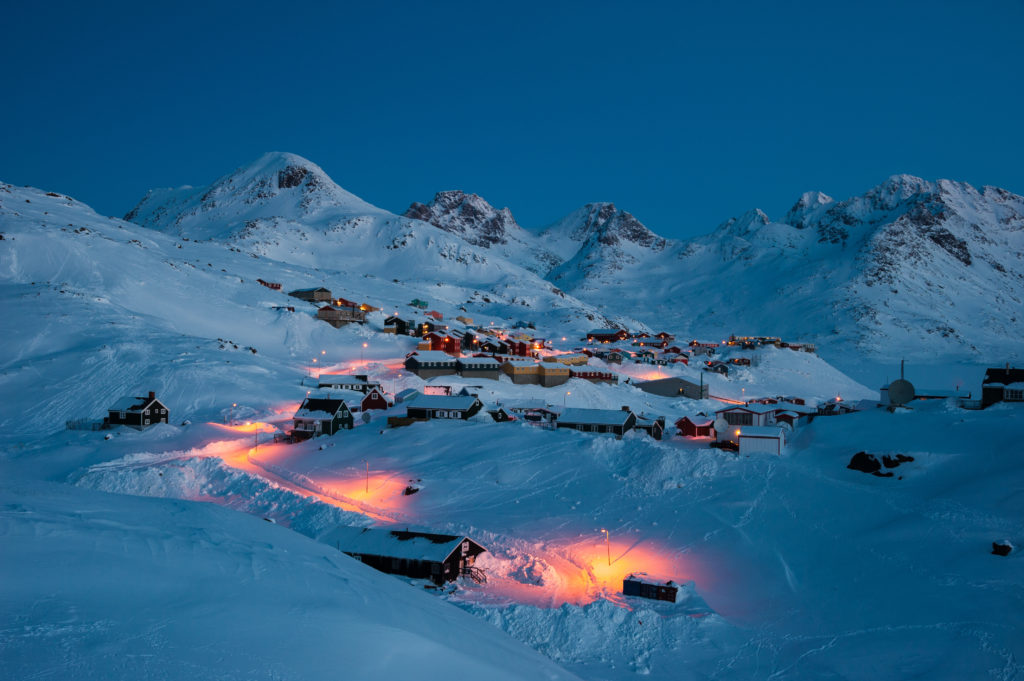
The deal that persuaded President Donald Trump to defuse an escalating crisis over Greenland paves the way for NATO to beef up security in the Arctic region and fend off any threat from Russia or China.
The “framework” cited by Trump after his meeting with NATO Secretary General Mark Rutte at the World Economic Forum in Davos, Switzerland, late Wednesday entails the stationing of US missiles, mining rights aimed at keeping Chinese interests out and a bolstered NATO presence, according to a European official briefed on the talks.
The pact locked in soon after Trump’s arrival Wednesday at the Swiss resort also hinges on the US leader standing by his promise not to impose tariffs against European nations, the official said on condition of anonymity as talks remain behind closed doors. For now, it dials down the gravest threat to the transatlantic alliance since the North Atlantic Treaty Organization’s founding after World War II.
“When it comes to the protection of the Arctic, with a priority on Greenland, we have to spend more energy, more time, more focus on this because we know the sea lanes are opening up,” NATO Secretary General Mark Rutte told Bloomberg News editor-in-chief John Micklethwait in an interview in Davos.
Not on the table was the issue of sovereignty, a clear breakthrough in the weeks since Trump — increasingly alarming European leaders — repeatedly made dramatic claims to Greenland, a semi-autonomous territory of NATO ally Denmark.
“We didn’t go into those details at all,” Rutte said. Nor was the issue of an increased US troop presence, although the Danish government has said it’s “completely open” to such a scenario Rutte said.
While Trump was enthusiastic about the prospects for a deal, the leaders still only have an outline of what the final accord should include — and there remains a lot of work to be done.
Danish Prime Minister Mette Frederiksen emphasized that in an interview with Danish media, where she underlined that Rutte has no mandate to negotiate on her country’s behalf — and reinforced her position that ceding territory to the US is non-negotiable.
“We need to find a path that respects international law and respects sovereignty,” Frederiksen told DR and TV2.
Beyond the main points on Arctic security and defending Greenland, the format of the framework — and to what extent any agreement was made — remained elusive.
‘Everything we want’
Elements of what was discussed in Davos were already on the table. Some was along the lines of what was produced last week in Washington, when a Danish delegation met with Vice President JD Vance and Secretary of State Marco Rubio, according to people familiar with the talks. That involved a working group to address US security concerns.
European NATO allies had also introduced a proposal for alliance-led activity focused on the Arctic and Greenland. Another element of the deal involves refreshing a 1951 agreement that gives the US military wide latitude to defend Greenland in the context of NATO, the people said.
Trump told Fox Business that the terms of the deal are being negotiated, “but, essentially, it’s total access.”
“There’s no end, there’s no time limit,” Trump said. “We’re getting everything we want at no cost.”
Asked if the US would ultimately acquire Greenland, he said: “It’s possible. But in the meantime, we’re getting everything we wanted, total security.”
The icebound territory — the world’s largest island — has become crucial to the alliance’s interests in the Arctic, as melting ice has opened sea lanes in the far north that could give adversaries a direct route to the Atlantic. Trump had framed his claim as a way to defend the US against threats, a strategic point that NATO leaders have echoed.
On his arrival, Trump issued an address to WEF participants to renew his demand that Denmark hand over Greenland, and reinforced his threats to impose sanctions beginning next month on eight European countries that had sent military personnel to the Danish territory. Still, he softened his stance somewhat by ruling out the use of force, calling for talks on an “acquisition.”
The US president’s rhetoric has been most keenly felt by Greenlanders themselves, fueling fear and hardening the islanders’ opposition to the US. The territory’s prime minister, Jens-Frederik Nielsen, this week told inhabitants to start preparing for a possible military invasion, even if it remained unlikely.
The backlash risks complicating any effort by Copenhagen to persuade Greenland’s government to accept a deal expanding an American military footprint, a senior Danish lawmaker said.
(By Arne Delfs, Andrea Palasciano and Sanne Wass)
{{ commodity.name }}
{{ post.title }}
{{ post.date }}



Comments