US rare earth champion views Iran war as demand ‘accelerant’
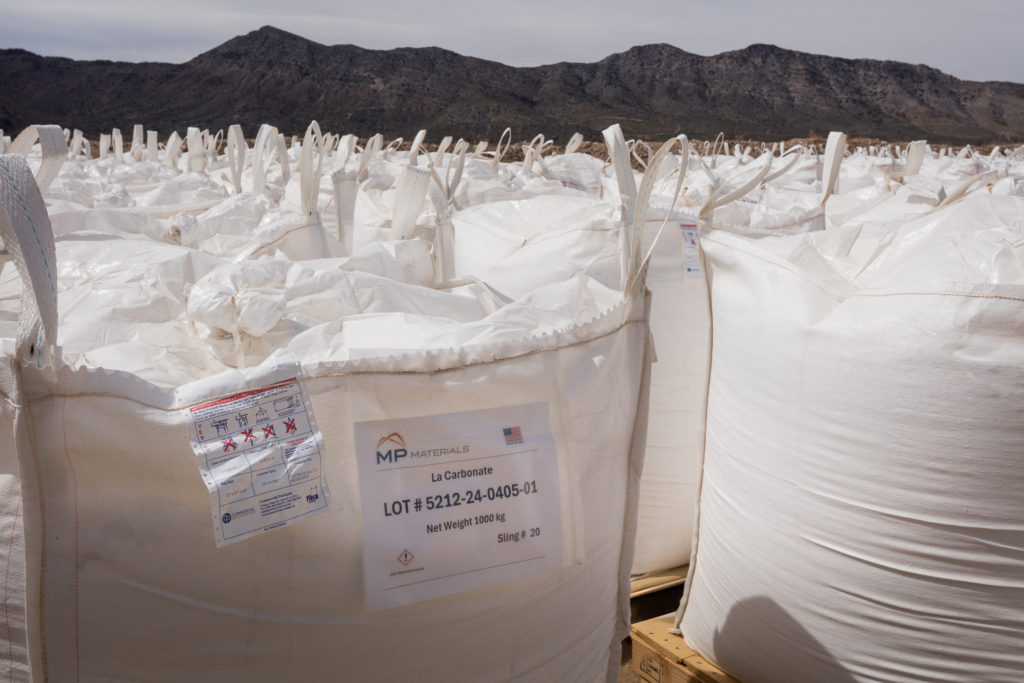
The conflict in the Middle East has highlighted how future wars will be underpinned by rare earth magnets that are vital in drones and robots, according to MP Materials Corp., the Pentagon-backed producer.
“I think the importance of this supply chain was already widely known,” MP’s chief executive officer James Litinsky said on a quarterly earnings call. But this year’s conflict has offered “further recognition, maybe even pulling the timetable and scale of that demand forward.”
MP got a $400 million equity investment from the Department of Defense last year to back its planned expansion from America’s sole rare earths miner to the country’s leading producer of magnets. The tiny-but-powerful components enable precise coordination and movements of parts in unmanned equipment.
“The future of warfare will be around millions if not billions of robots and drones working in cohesion, and obviously that is just a huge demand accelerant for rare earth magnetics,” Litinsky said.
The company is among a cluster of ventures vying to ramp up magnet plants in the US, a push that has intensified after China placed some rare earths under export controls in 2025. MP has started one magnet facility in Texas, and recently broke ground to build another one ten times times the size nearby.
The firm beat profit forecasts with core earnings before interest, tax, depreciation and amortization of $36.6 million in the quarter through March. Production of separated “heavy” rare earths — among the most expensive — will begin imminently, it said.
Heavy rare earths are used as additives to help magnets maintain strength under high temperatures, making them especially important for vehicles, power systems and weapons. They were the target of China’s export curbs, and are now a key focus for western industry as it looks to loosen China’s supply grip.
Light and heavy
Litinsky played down worries about supplies of “heavies”, saying magnet producers were finding ways to reduce usage. MP and some of its peers are increasingly able to make high-performance magnets with little or no heavies content, a shift that could weaken prices for materials like dysprosium and terbium, the CEO said.
The main building block for most rare earth magnets is an alloy of “light” rare earths called NdPr, with heavies often making up a small percentage of the content. Prices for all rare earths have spiked this year, but the heavy rare earths have seen particularly strong demand.
“Prices will go up for NdPr, but I don’t think as much for the heavies,” Litinsky said. “Nobody knows with commodities prices, but I think that, versus market expectations, I wouldn’t be surprised to see the heavies decline quite substantially from here.”
MP extracts both light and heavy rare earths from its Mountain Pass mine in California, which is one of only two major sources of the materials operating outside of China’s orbit. The other is run by Australia’s Lynas Rare Earths Ltd., which earlier this year committed a large chunk of its supply to Japanese customers well into next decade.
“As a result, there is very limited uncommitted NdPr supply available to support what research projects to be more than 60,000 tons of existing and announced Western magnet capacity over the coming years,” Litinsky said.
(By Jacob Lorinc and Martin Ritchie)
More News

{{ commodity.name }}
{{ post.title }}
{{ post.date }}
Comments