US snubbed by Lula government at critical minerals summit
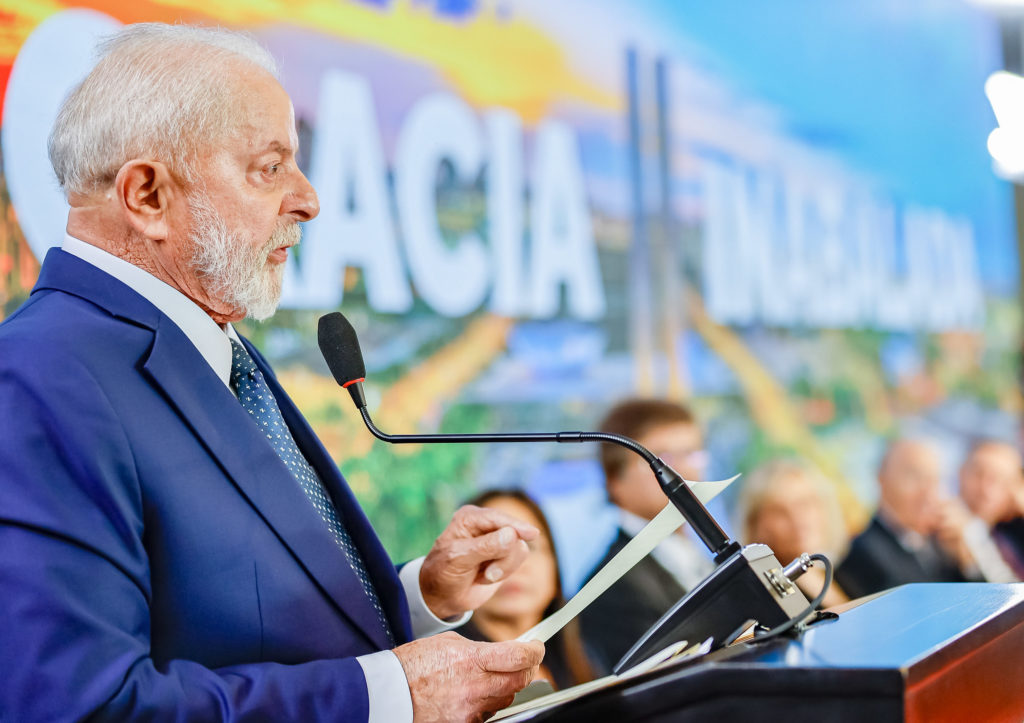
US efforts to forge a major critical minerals partnership with Brazil are stalling as the South American nation struggles to finalize its own plans for the sector and political tensions rise ahead of presidential elections later this year.
Washington has sought to deepen ties with Brazil — home to the world’s largest rare earths reserves outside China as well as significant deposits of other minerals essential to modern technology — especially as Beijing places new restrictions on supplies. Brazil is eager for the investment necessary to realize its potential as a critical minerals powerhouse.
But President Luiz Inacio Lula da Silva’s government has failed to deliver a national mining plan it initially aimed to complete last year and a bill establishing a policy for critical minerals remains stuck in Congress.
The Trump administration has since pursued deals with other Brazilian partners, sparking frictions that were on display Wednesday, when the US Embassy hosted a critical minerals summit in Sao Paulo without any senior members of Lula’s administration in attendance.
Among the sources of discord were US plans to sign a memorandum of understanding with the state of Goias, led by Governor Ronaldo Caiado, a conservative who has considered a presidential bid against Lula, according to people familiar with the situation.
Brazil, meanwhile, blocked State Department official Darren Beattie from traveling to attend the event after he planned to meet former President Jair Bolsonaro, who is currently serving a 27-year prison sentence for plotting a coup after losing to Lula in 2022.
Bolsonaro, whose son Flavio is also running against Lula, is an ally of Donald Trump, who last year imposed punishing tariffs on the country in an effort to stop the former leader’s trial. Foreign Minister Mauro Vieira said Beattie’s planned visit could constitute “undue interference” in Brazilian affairs, while Lula said he would not allow Beattie to enter until Trump lifted visa restrictions placed on Brazil’s health minister last year.
US officials hoped that Brazil’s government would take part in the event, and wanted to see a clear signal from Lula’s administration that it’s ready to advance on a substantive agreement, an embassy spokesperson said prior to the event.
Brazil Vice President Geraldo Alckmin, who has led broader trade talks with the US, was initially expected to attend, but missed the event due to a busy schedule, his office said. Another notable absence was Mines and Energy Minister Alexandre Silveira, whose office didn’t respond to a request for comment.
That bodes poorly for a major breakthrough in discussions that ramped up after Lula and Trump began mending ties in September.
Open for business
Critical minerals have featured prominently in subsequent trade negotiations, with Lula stressing that no topic is off limits. The US has been working to diversify partnerships to reduce reliance on China, and sees Brazil, already a major producer of iron ore, copper and bauxite, as a key potential partner.
The US sees potential for billions of dollars in investments in Brazil and is monitoring more than 50 projects in the country, an embassy spokesperson said. But it also has laid out priorities for Brazil, including discussions around price floors, the encouragement of responsible investment that benefits industrial bases of both nations and the streamlining of permitting processes.
The summit also showed that US interest in critical minerals is growing regardless of political tensions.
“Brazilian critical minerals are too great for any potential political impediments to stand in the way. It makes too much sense from a strategic, economic and investment perspective for both countries not to engage in this sector,” Neil Harrington, senior vice president for the Americas at the US Chamber of Commerce, said at the summit’s opening session.
A spokesperson from the US embassy in Brazil said the summit sought to signal that the US is “open for business” and is “interested in exploring more agreements and cooperation possibilities with those interested in working with us.”
The US charge d’affaires to Brazil, Gabriel Escobar, said that while the absence of top Brazilian officials was notable, “we already have a proposed agreement with the federal level. We are in discussions, we had some preliminary discussions and we are still waiting for a political response.”
Lula had planned to visit the White House this month before the trip was delayed. He has emphasized that Brazil doesn’t want to merely remain a commodities exporter and intends to ensure that extracted critical materials are processed domestically. He’s also sought a diverse array of partners, recently signing a critical minerals accord with India during a meeting with Prime Minister Narendra Modi.
Despite the lack of a federal-level agreement, the US has already expanded its footprint with Brazil’s mining sector, a push the agreement with Goias is likely to bolster.
The state is home to Serra Verde, the country’s only rare earth producer. The company has already secured a $565 million loan from the US International Development Finance Corporation, a deal that includes an option for the US to acquire a stake in the company.
The agreement with Goias aims to strengthen cooperation in critical minerals and rare earths by promoting research and partnerships between government and the private sector, according to the US Consulate in Sao Paulo. It would also support the development of processing and manufacturing capacity in Goias.
While Serra Verde has not said whether the financing will be tied to future supply agreements, it has moved to renegotiate rare earth contracts previously signed with Chinese customers. Those agreements are expected to expire by year-end, potentially opening the door to new deals with Western buyers.
Other companies are also attracting US backing. Meteoric Resources NL and Aclara Resources Inc., both developing early-stage rare earth projects in Brazil, have also secured US financing, albeit at smaller scales.
(By Mariana Durao, Daniel Carvalho and Mie Dahl)
{{ commodity.name }}
{{ post.title }}
{{ post.date }}

Comments