Vale to more than double sail-equipped iron ore carrier fleet
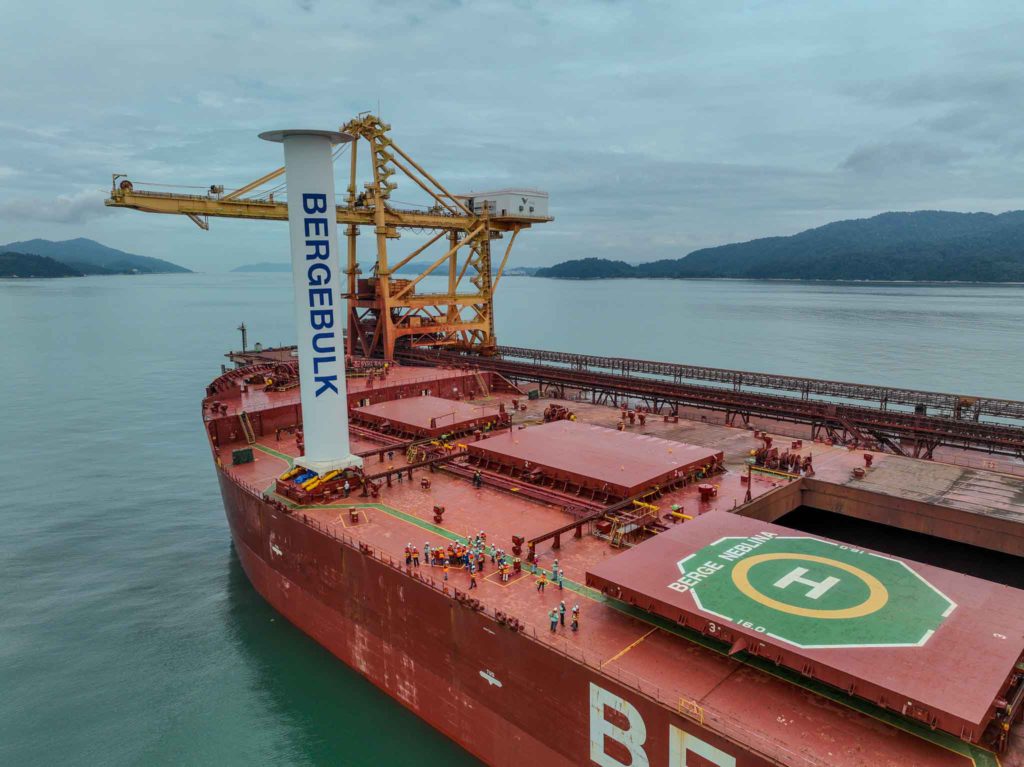
Vale plans to more than double its fleet of sail-equipped iron ore carriers, with the cost-saving technology to expand to at least 20 vessels within the next three years, easing the Brazilian miner’s exposure to marine fuel price volatility.
The spinning cylindrical sails about as high as a 10-storey building harness wind power during transoceanic voyages saving up to 10% in fuel consumption depending on the vessel, Vale’s general manager for shipping, Rafael Fischer, said on Tuesday.
Freight costs are significant for the mining sector and have climbed during the Iran war.
“Energy efficiency means we rely less and less on fuel, which reduces the impact of any variation in bunker fuel prices,” Fischer told Reuters aboard one of the sail-equipped vessels, docked at the Tubarao port in Espirito Santo state.
Vale currently has eight sail-equipped vessels, the result of a decade-long strategy focused on lowering emissions and improving efficiency that has shielded the company somewhat as the Middle East conflict drives up oil product prices.
Saving on fuel is a major concern at Vale, as it mainly ships iron ore to China, where it faces competition from suppliers in Australia.
“We have a geographic disadvantage compared with our competitors, so we are using innovation as a lever to mitigate that effect,” Fischer said.
Ethanol-powered ships
Beyond adding sails, Vale is also making its vessels fuel-flexible, said Fischer.
Earlier this month, it announced a 25-year charter agreement with China’s Shandong Shipping Corporation for the construction of two of the world’s first ethanol-fueled transoceanic vessels equipped with sails.
The ships will also be able to run on methanol or conventional bunker fuel, with future conversion options for liquefied natural gas and ammonia.
“In the future, we will have the option of at least five fuels, which gives us the flexibility to adapt to different situations and market conditions,” said Fischer.
(By Marta Nogueira and Fabio Teixeira; Editing by Joe Bavier)
{{ commodity.name }}
{{ post.title }}
{{ post.date }}
Comments